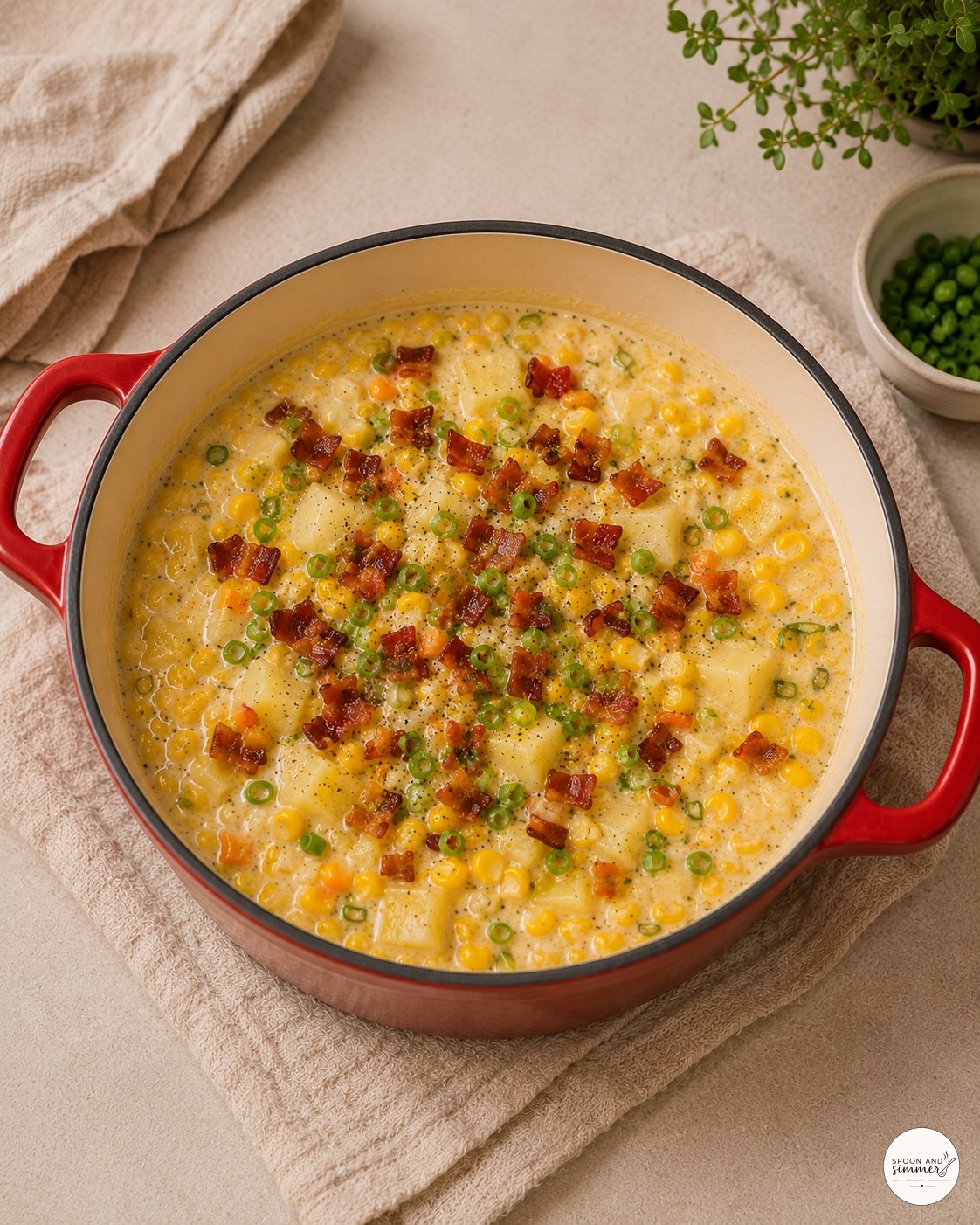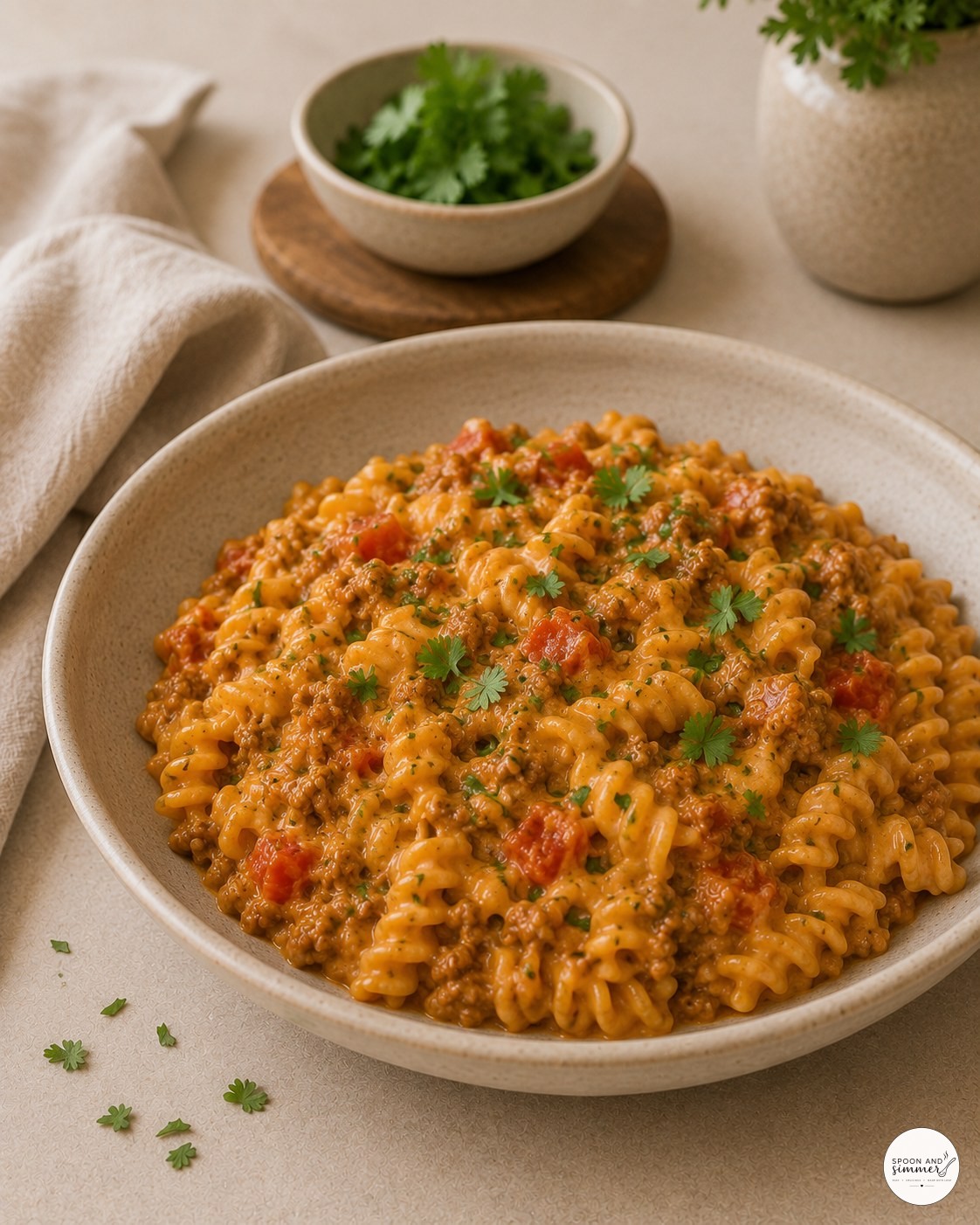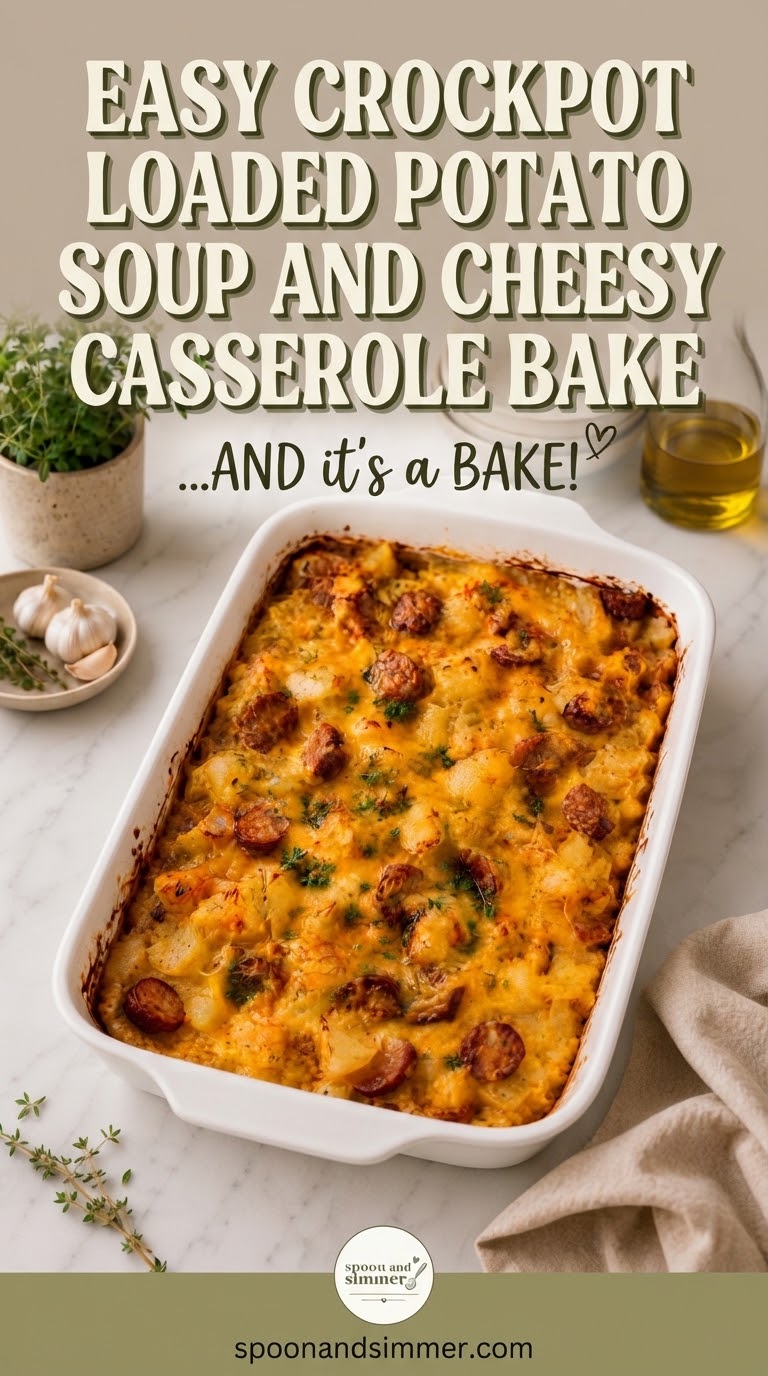
Some nights I don't want a recipe with fifteen steps, I want one bowl, one dish, and an oven that does the heavy lifting. This cheesy potato sausage casserole is exactly that: small-diced potatoes and smoked sausage stirred into a creamy sauce, baked under foil until tender, then finished bare under the broiler-hot cheddar until it's bubbling at the edges. It's the kind of dinner that survives distracted Mari on a Tuesday, and it reheats like a dream for Dave's lunch the next day.
Getting Your Mise en Place Right
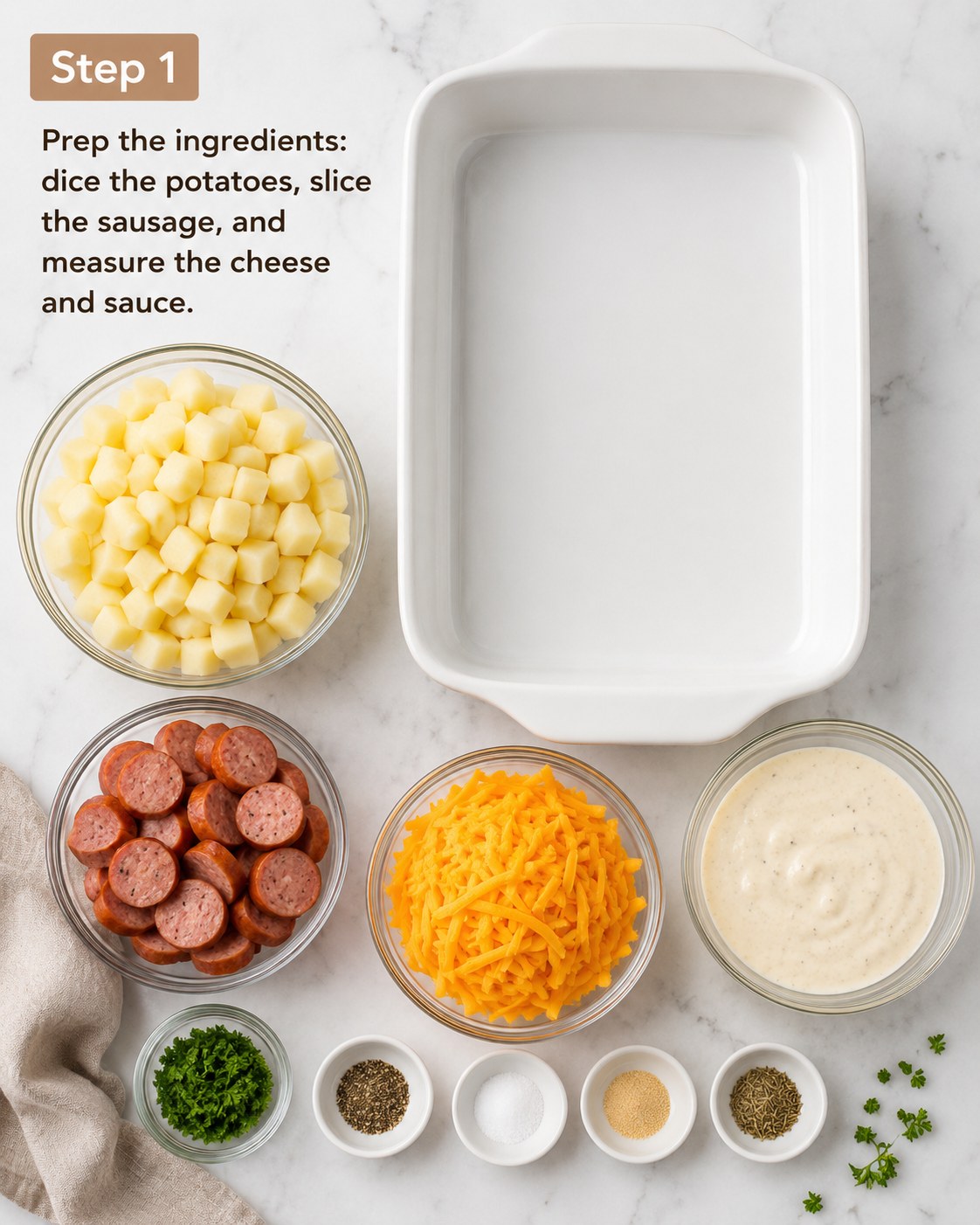
The whole dish lives or dies on potato size. I dice mine to about a half-inch cube, small enough that they cook through in the same window as the sausage warming and the cheese melting, no par-boiling required. Look at the bowls lined up: diced potatoes, sliced sausage rounds, shredded cheddar, and that pale, creamy sauce, plus a little army of seasoning bowls off to the side.
- Potatoes: Yukon Gold or russet, peeled, cut evenly so they cook at the same rate.
- Sausage: a good smoked kielbasa, sliced into rounds about a third of an inch thick.
- Sauce: mixed ahead so you're not fumbling with cans mid-assembly.
Prepping everything before you touch the baking dish is the single habit that separates a calm dinner from a chaotic one.
Seasoning Before the Sauce Goes In
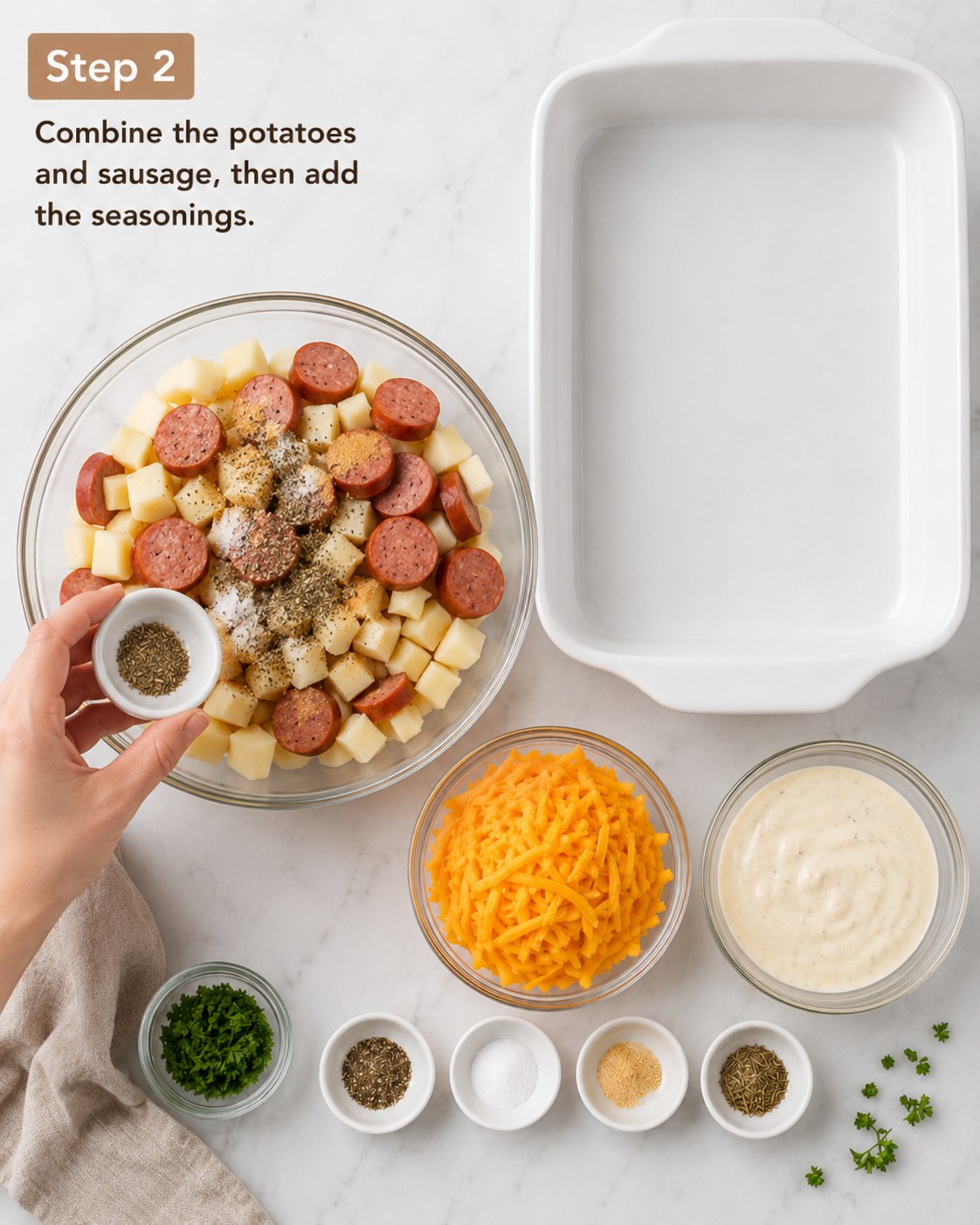
Once the potatoes and sausage are tumbled together in one big bowl, this is the moment to season — not later, once everything's drowning in sauce. I add kosher salt, cracked black pepper, garlic powder, and a pinch of dried thyme directly onto the raw potatoes so it clings to every cube instead of just coating the top.
Season the bones of a dish before you sauce it — that's a line I picked up in restaurant kitchens, and it applies just as much to a Tuesday casserole as it does to a braise.
Toss it gently with your hands or a spoon until every potato cube has a light dusting of seasoning. It looks like very little seasoning for this much food, but remember the cheddar and sauce both bring their own salt later.
Bringing In the Creamy Sauce
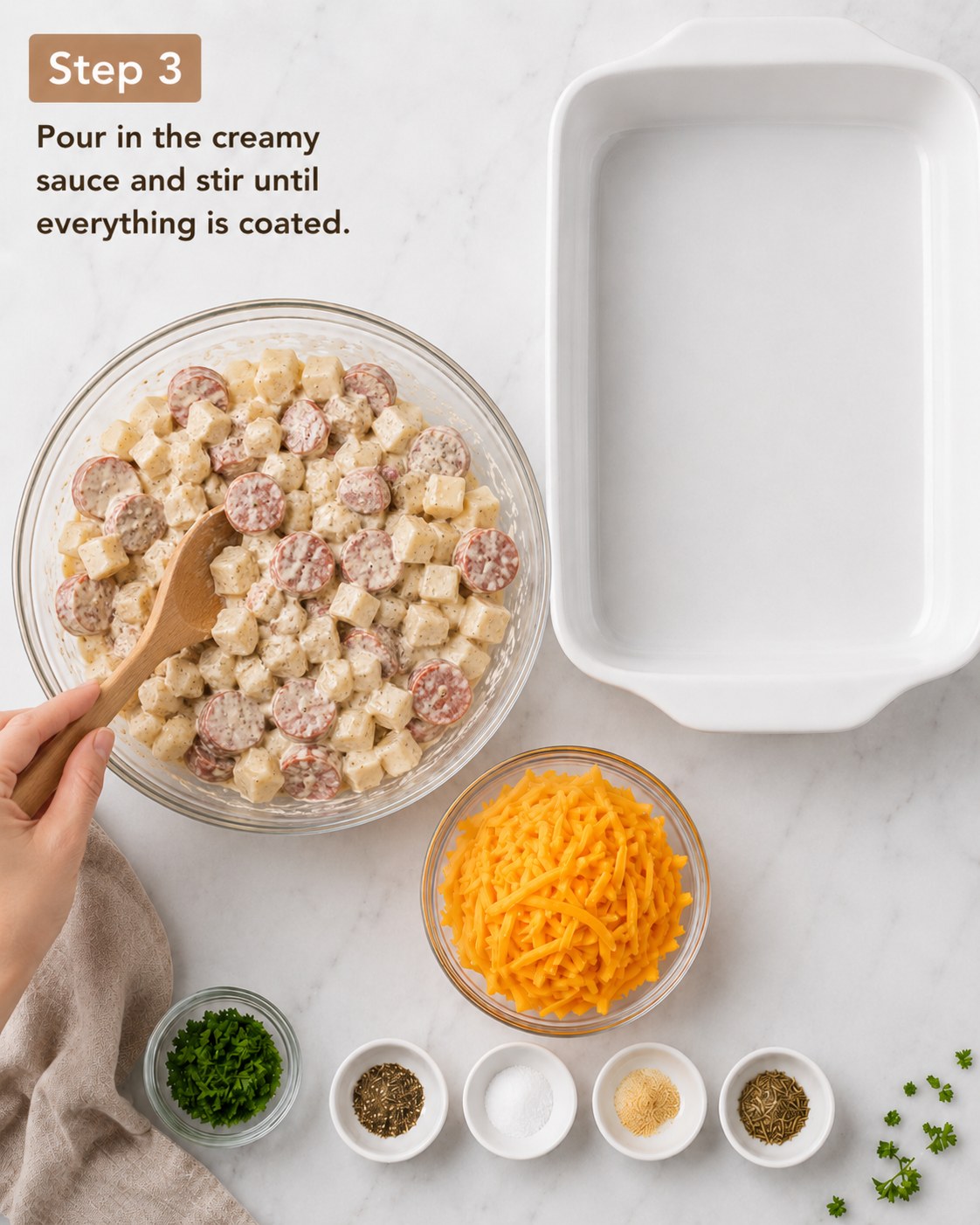
Now the sauce goes in, and this is where the bowl starts looking like an actual casserole instead of a produce bin. Pour it over the seasoned potatoes and sausage, then stir with a wooden spoon until every piece is glossy and coated — not swimming, just evenly dressed, the way you'd toss a potato salad.
- Undercoated spots mean dry patches after baking — scrape the bowl's edges.
- Too much stirring can start breaking down the potato cubes — a firm fold is all you need.
If your sauce looks a little thick straight from the fridge, a splash of milk loosens it right up before it hits the dish.
Loading the Baking Dish
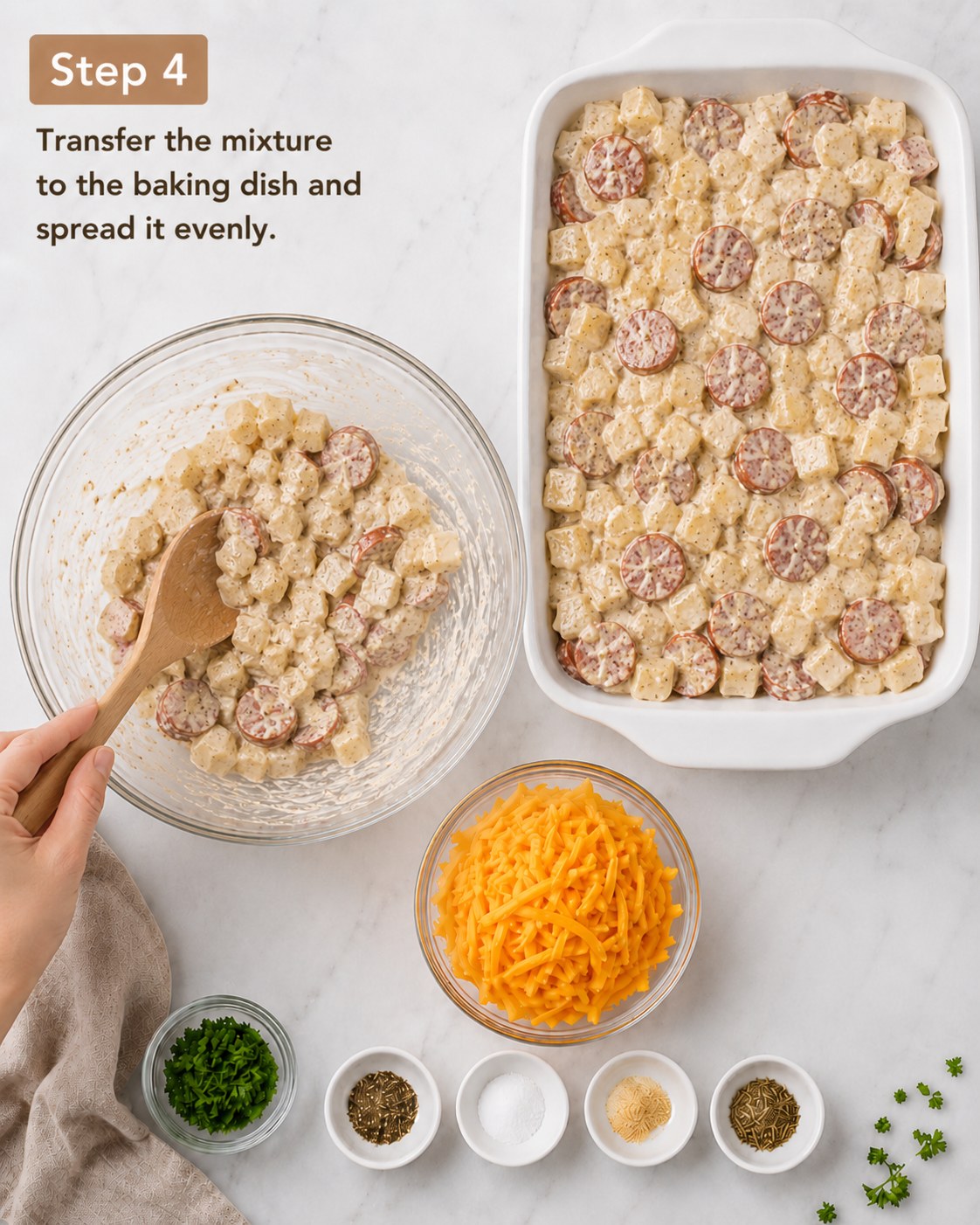
Scrape every bit of that creamy mixture into a 9x13-inch baking dish and spread it into an even layer with the back of your spoon. Even thickness across the dish matters more than people think — a pile in the middle bakes slower than the thin edges, and you'll end up with raw potato in the center while the corners are done.
Don't press it down hard. A loose, even spread lets steam move through the whole dish once it's covered, which is exactly what gets those potato cubes tender without drying out the sausage.
Quick check before it goes in the oven
Give the dish a gentle shake — the surface should look level, no deep valleys or towering peaks.
Covering and the First Bake
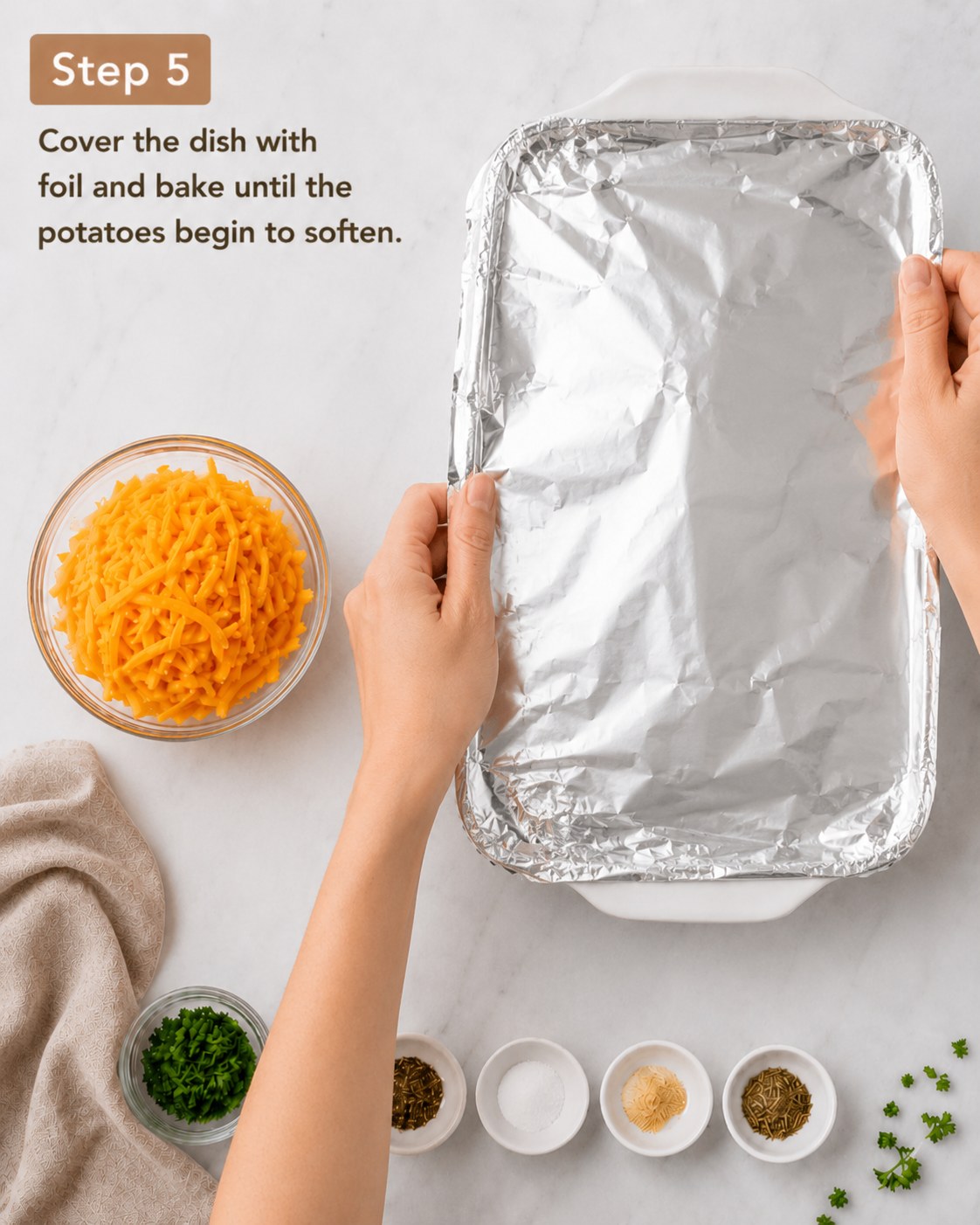
Tent the dish tightly with foil, sealing the edges so steam stays trapped inside — this is what turns raw diced potato into fork-tender in the same time it takes the sausage to heat through. Bake at 400°F for about 40 minutes, until you can pierce a potato cube easily with a fork and it gives no resistance.
If you peek and the potatoes are still firm after 40 minutes, re-cover and give it another 5 to 8 minutes rather than cranking the heat — a hotter oven at this stage just dries the top before the center catches up.
Uncovering and Loading on the Cheddar
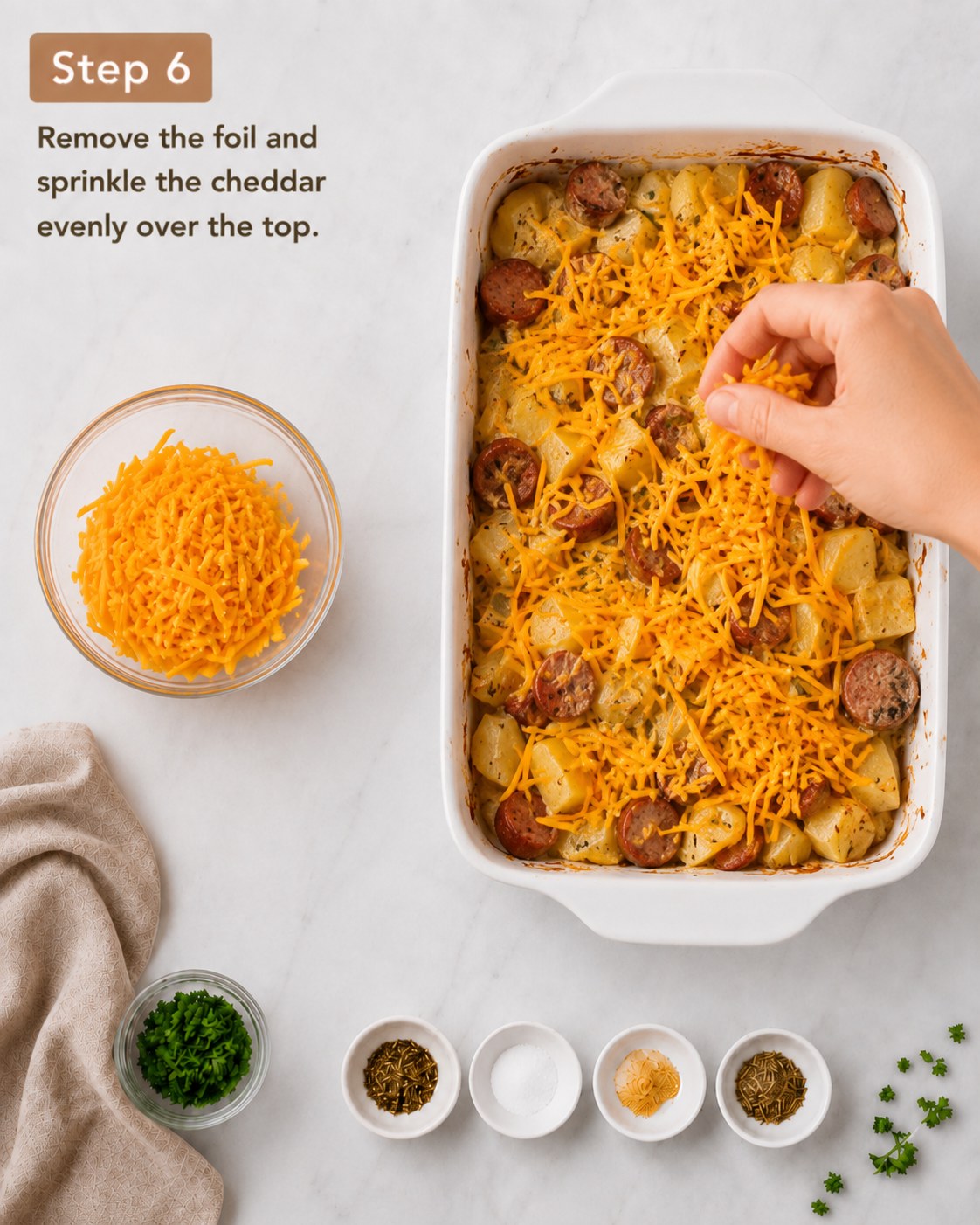
Pull the foil off and you'll see the potatoes have gone slightly translucent at the edges, softened and glistening in the sauce. This is the moment for cheese, and I go generous — sprinkle the shredded cheddar evenly across the entire surface, right out to the corners, so no bite comes up bare.
- Shred your own cheddar if you can; pre-shredded blends often have anti-caking starch that keeps it from melting as smoothly.
- Cover the corners — they're the driest spot and benefit most from extra cheese.
The Final, Uncovered Bake
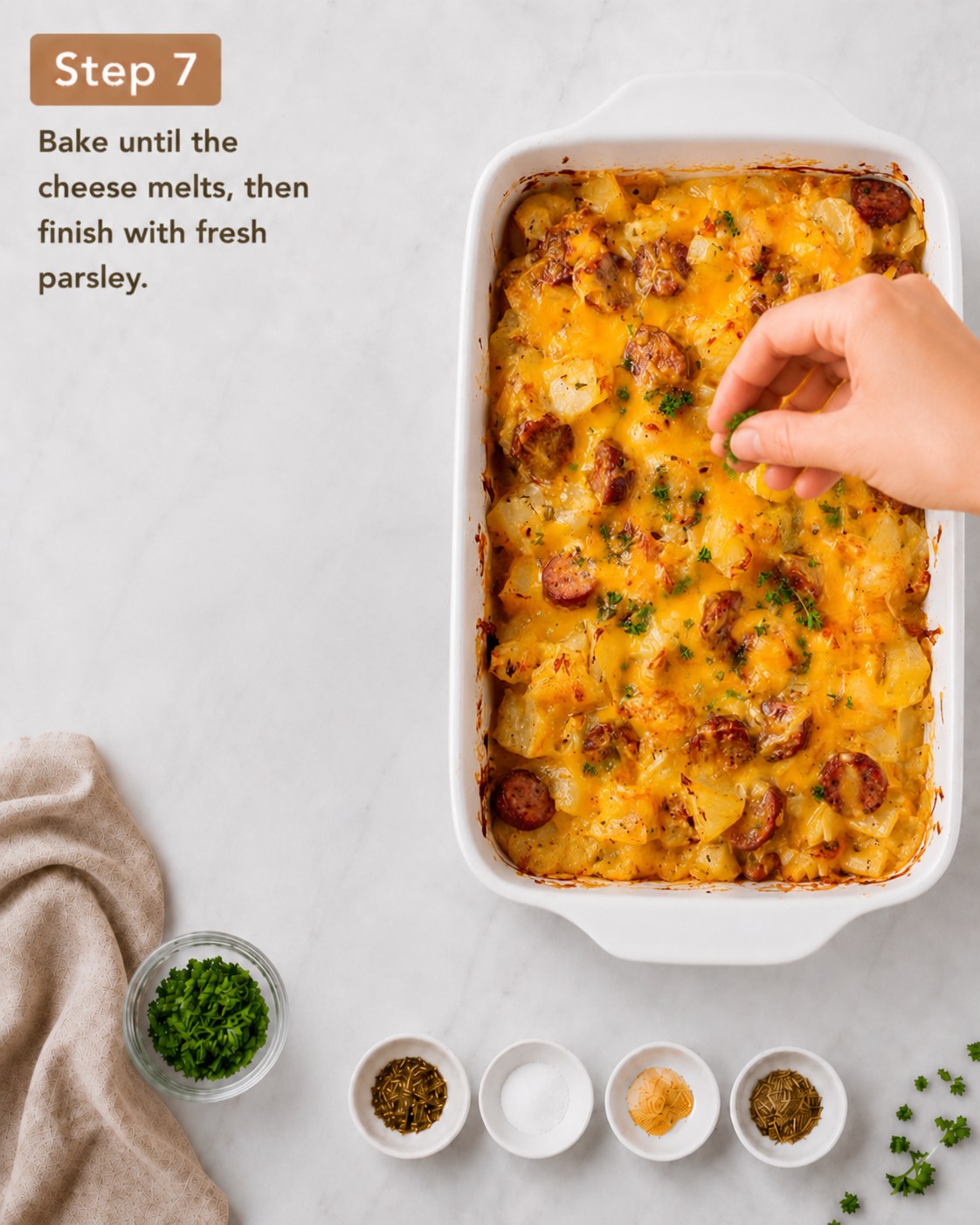
Back into the oven it goes, uncovered this time, for roughly 15 minutes at 400°F, until the cheddar is fully melted, slightly browned at the sausage edges, and bubbling gently at the sides of the dish. Pull it the moment it looks like that — a minute or two longer and the cheese starts to break and go greasy instead of glossy.
Scatter fresh chopped parsley over the top the second it comes out. The residual heat wilts it just slightly and it brightens what is otherwise a very rich, golden dish.
Letting It Rest Before You Dig In
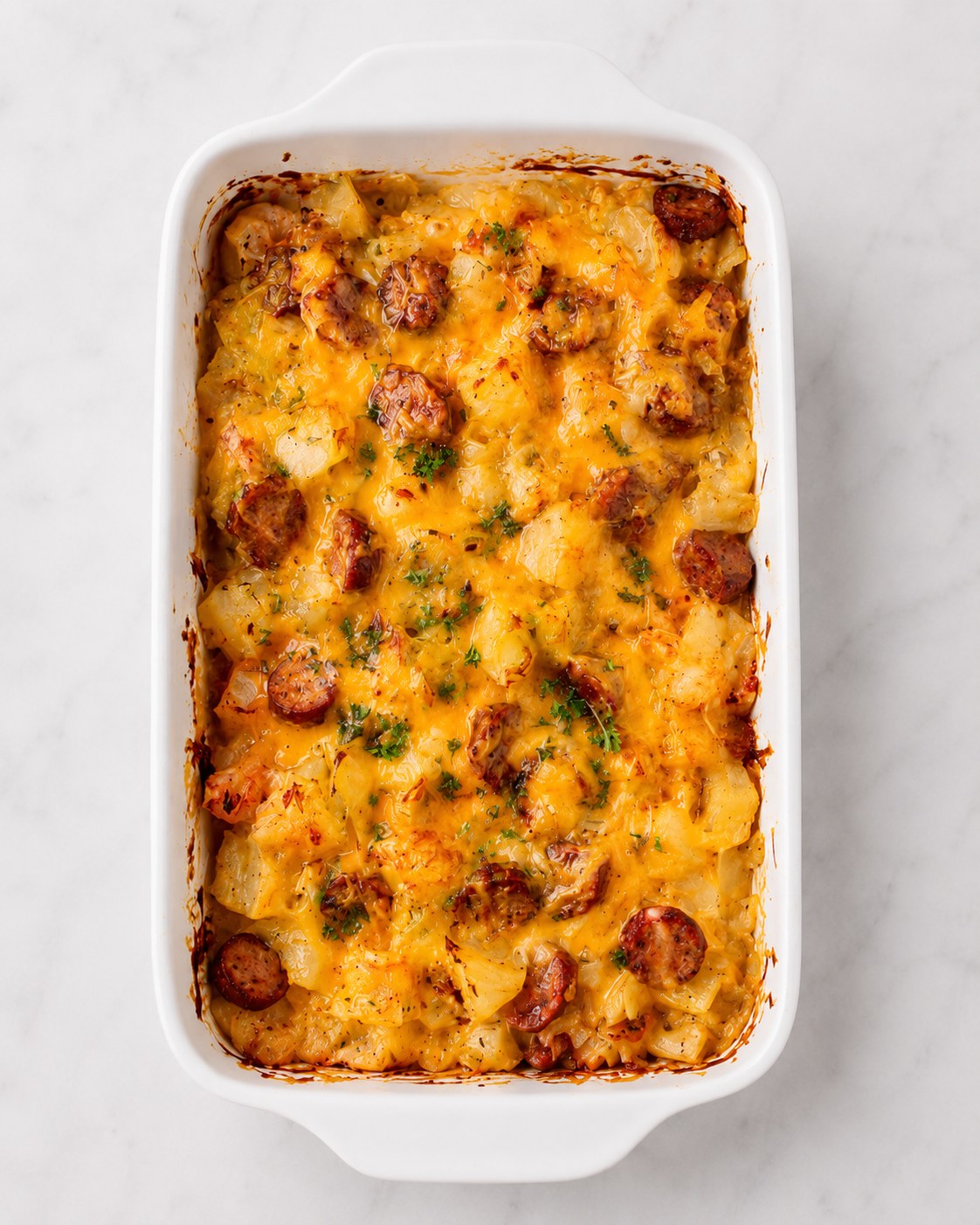
Here's the part nobody wants to hear: let the casserole sit for 5 to 10 minutes before serving. Straight from the oven, the sauce is loose and will run all over the plate; after a short rest it firms up just enough to hold a spoonful together, crisped sausage edges and all.
Leftovers keep beautifully — covered in the fridge for up to 4 days, reheated in a 350°F oven or a covered skillet with a splash of milk so it doesn't dry out. I've never successfully frozen it without the potatoes going a little grainy on thaw, so I treat this one as a fresh-and-leftovers dish, not a freezer stockpile.
How This Casserole Actually Happens in My Kitchen
The step photos above show the method clean and staged, but here's what it looks like on an actual weekday afternoon in my kitchen, apron on, Biscuit somewhere underfoot. I wanted you to see the real hands, the real counter clutter, and the small things that never make it into a numbered step but make the dish easier anyway.
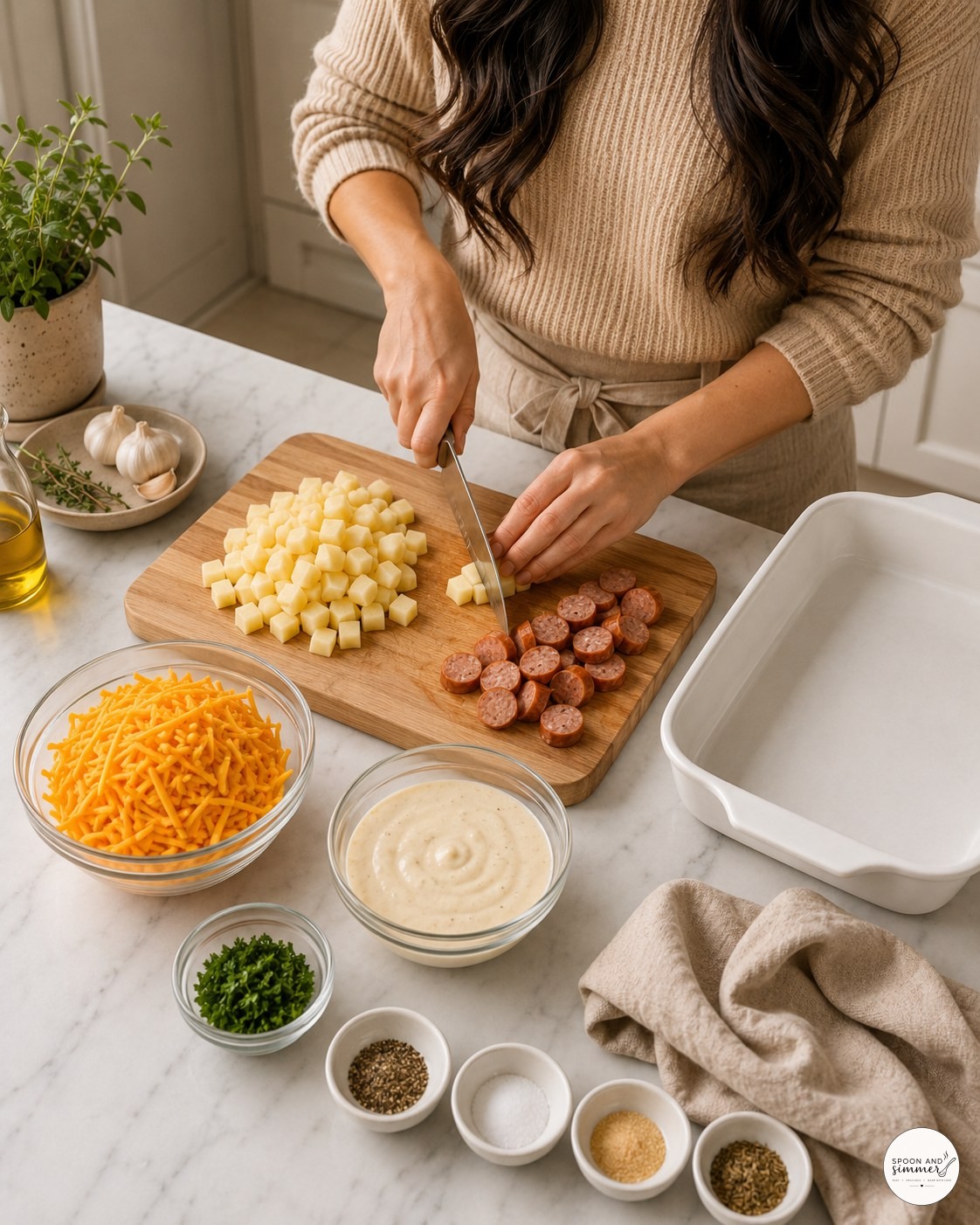
That's my everyday cutting board, the one with the water stain Leo swears he didn't cause. I keep the garlic and thyme plant close by out of habit, even on nights they're not going into this particular dish.
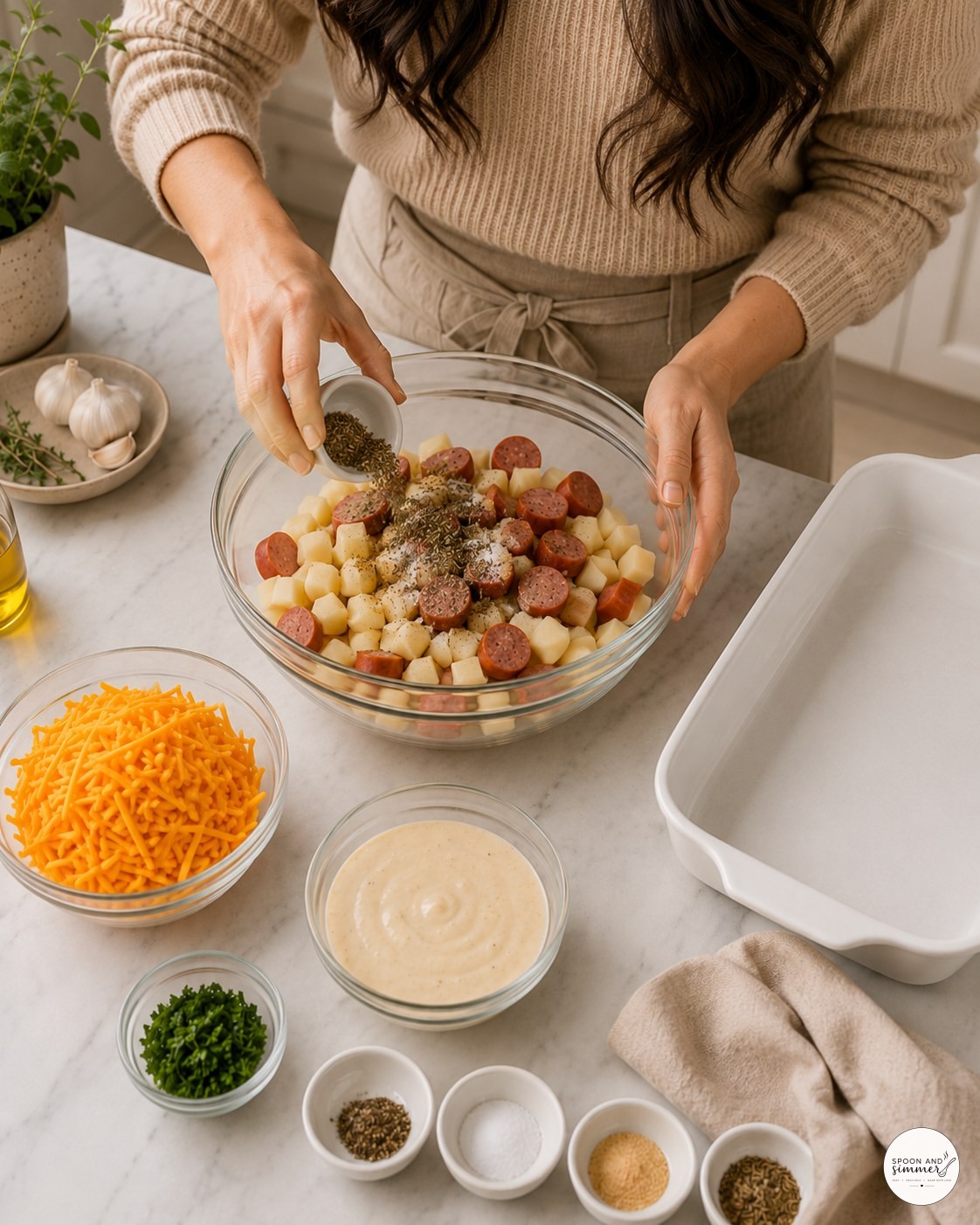
This is the point where I always add more pepper than feels reasonable, because it mellows out once it bakes. My hands smell like garlic powder for the rest of the afternoon and I don't mind one bit.
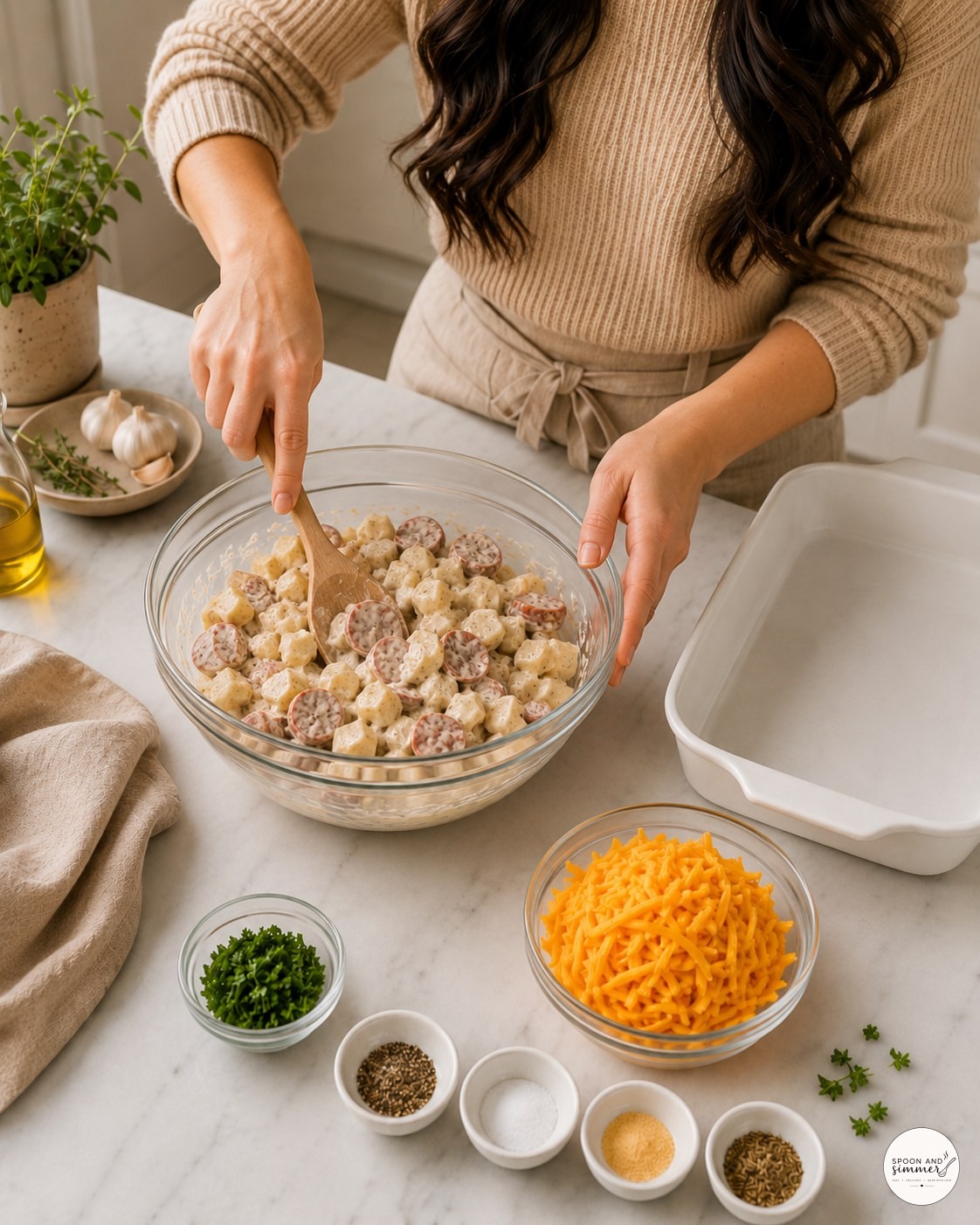
Folding with a wooden spoon instead of a fork keeps the potato cubes intact — I learned that the hard way after mashing a whole batch by stirring too aggressively one distracted Sunday.
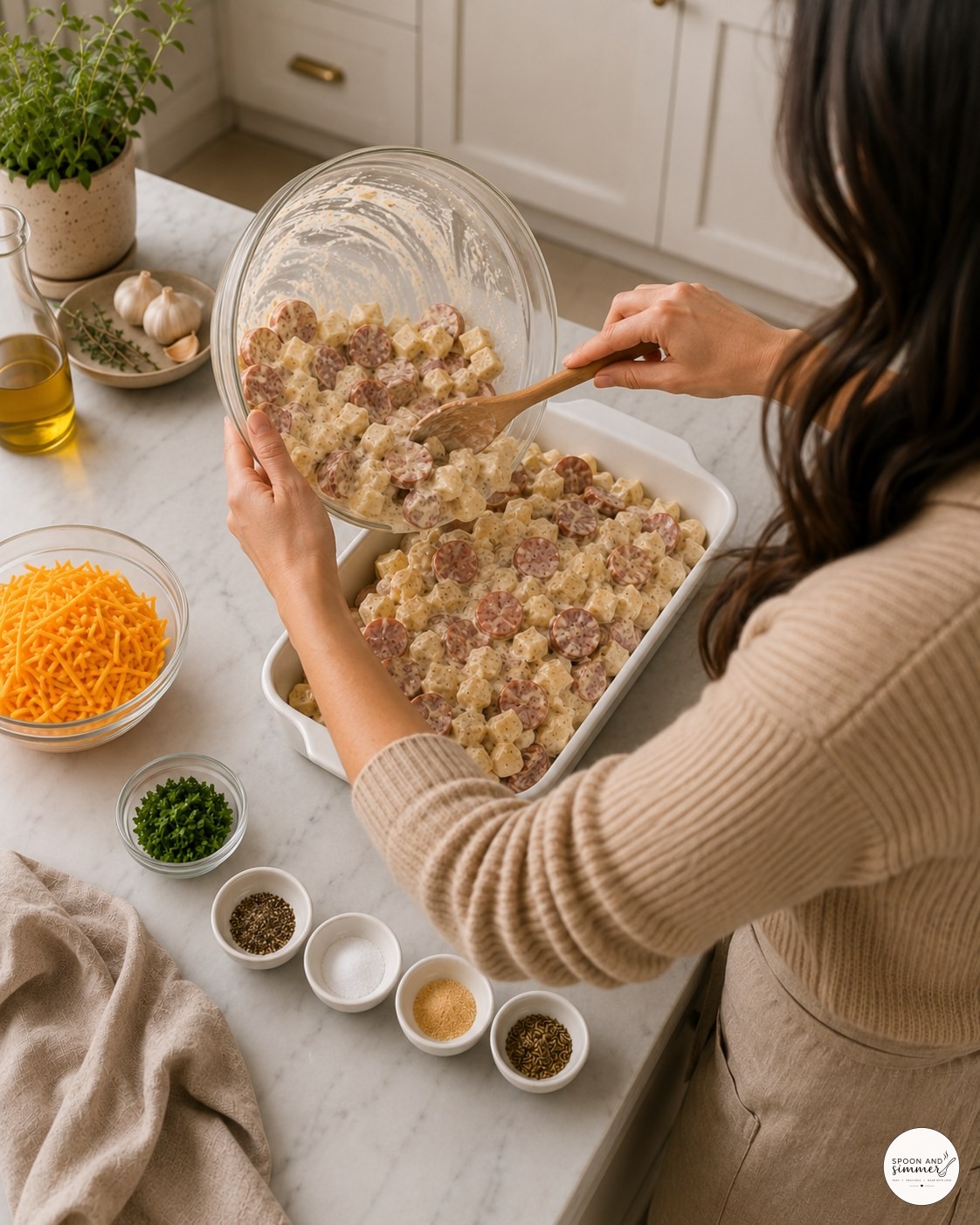
Tilting the mixing bowl to scrape every last bit of sauce into the dish matters more than it looks like it should — that scraped-clean bowl is the difference between a dry corner and a saucy one later.
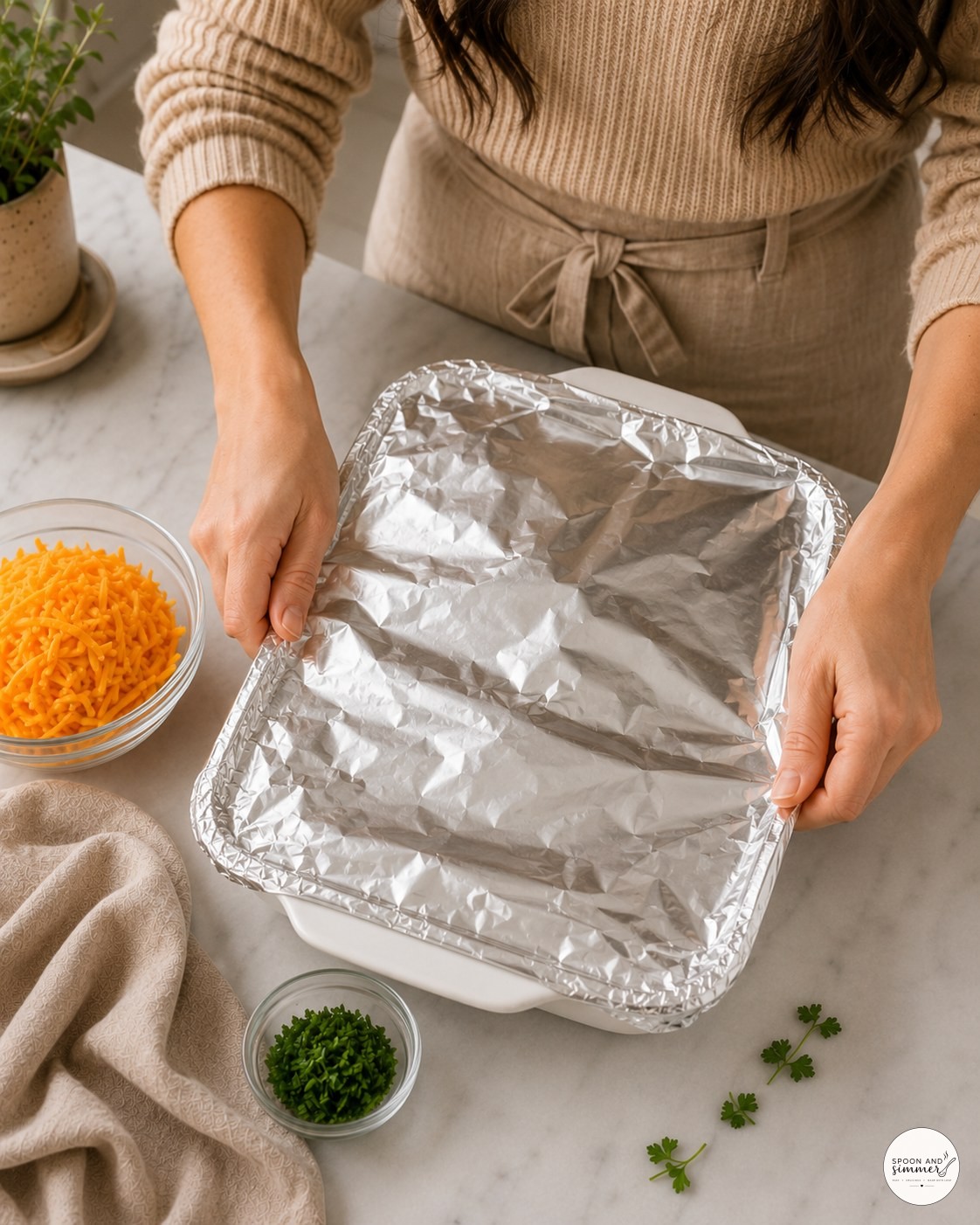
I tent the foil rather than pressing it flat against the top, giving the steam a little room to move so it softens the potatoes instead of just steaming a wet layer on top.
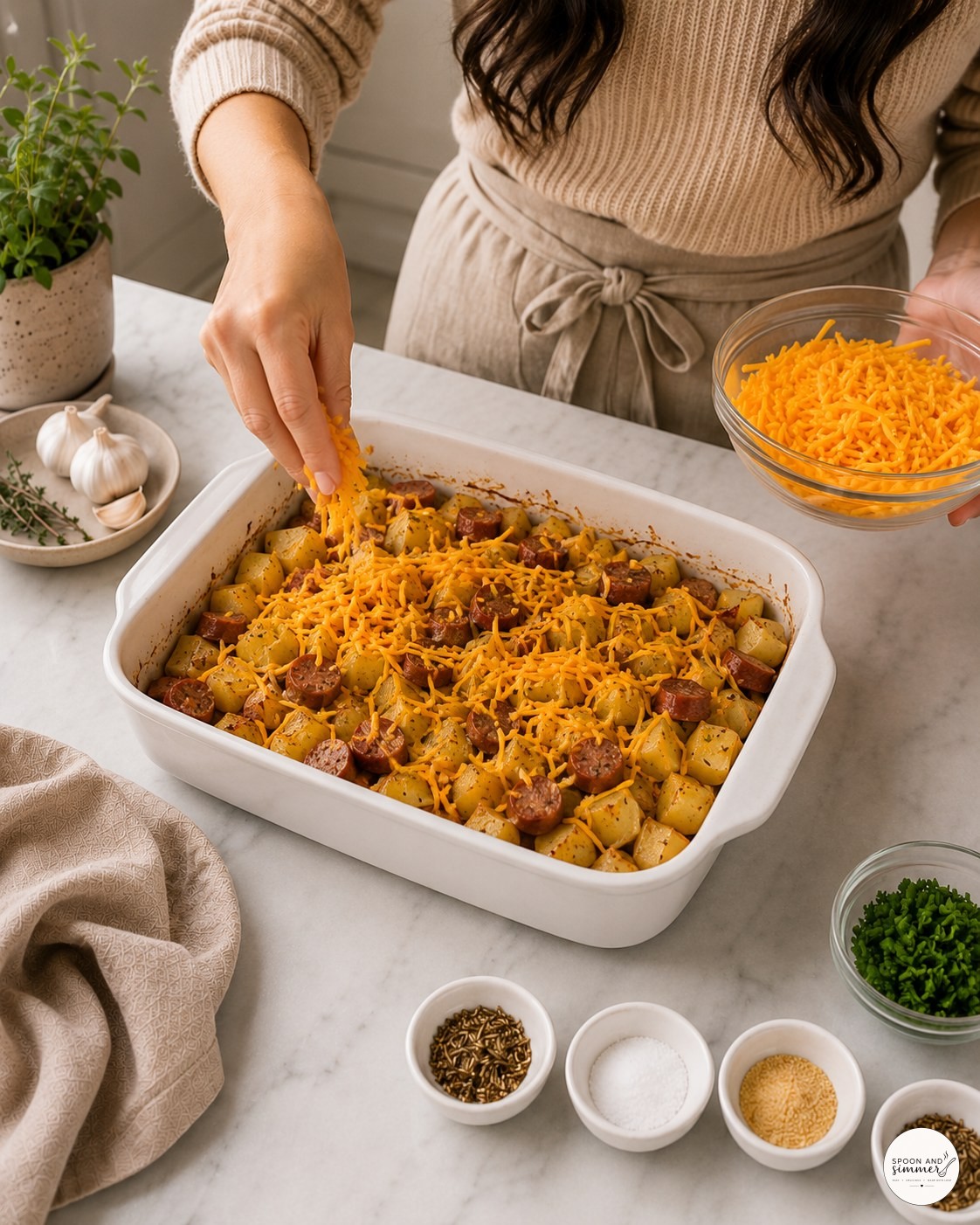
By the time I get to this step my kids have usually wandered in asking when dinner's ready, cheddar smell traveling through the whole house. I always sprinkle more toward the edges than the center, since the middle holds heat longer and melts evenly on its own.
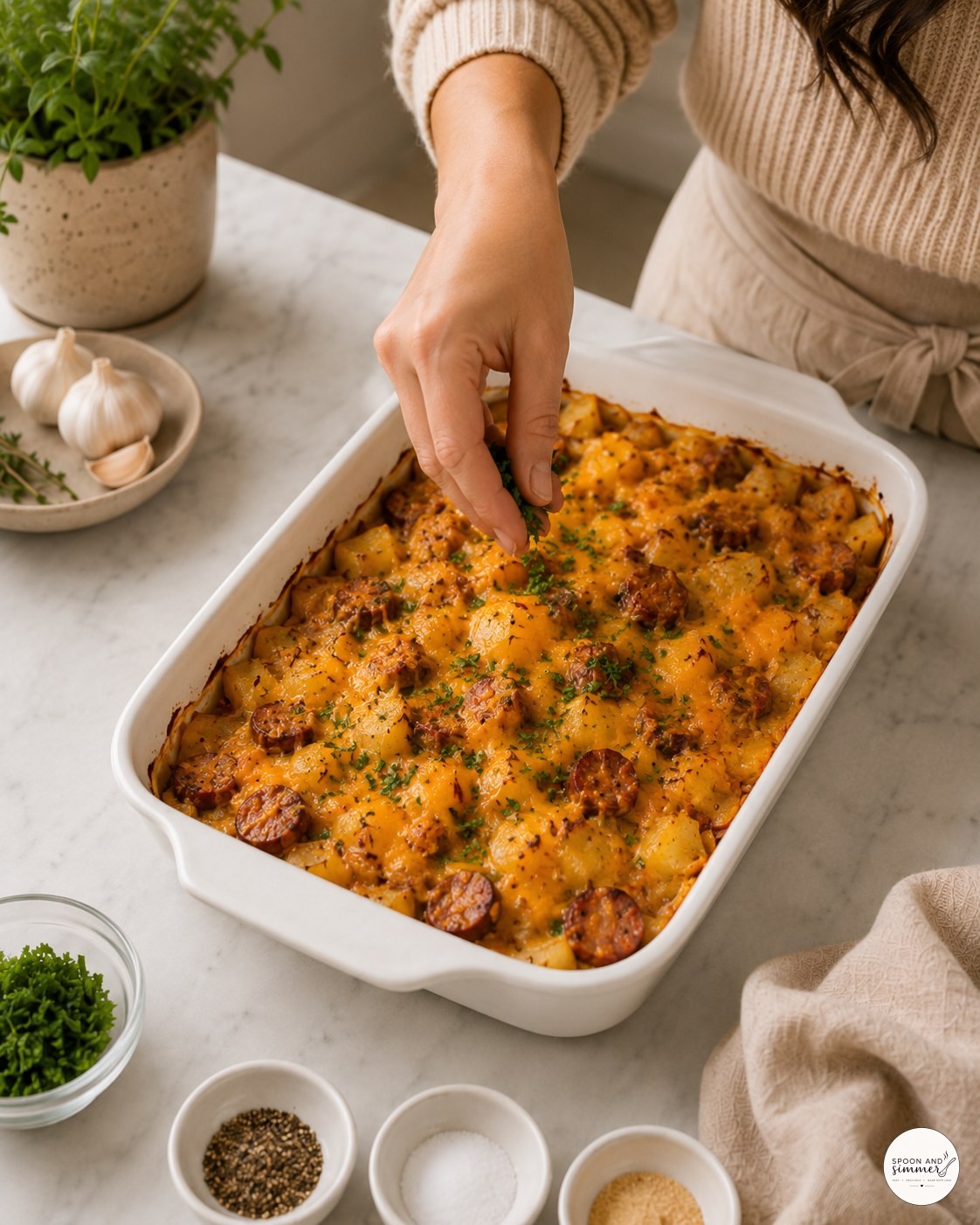
Fresh parsley from a pot on my counter, not the dried stuff from the seasoning bowls — I like the contrast of something green and a little sharp against all that rich cheese.
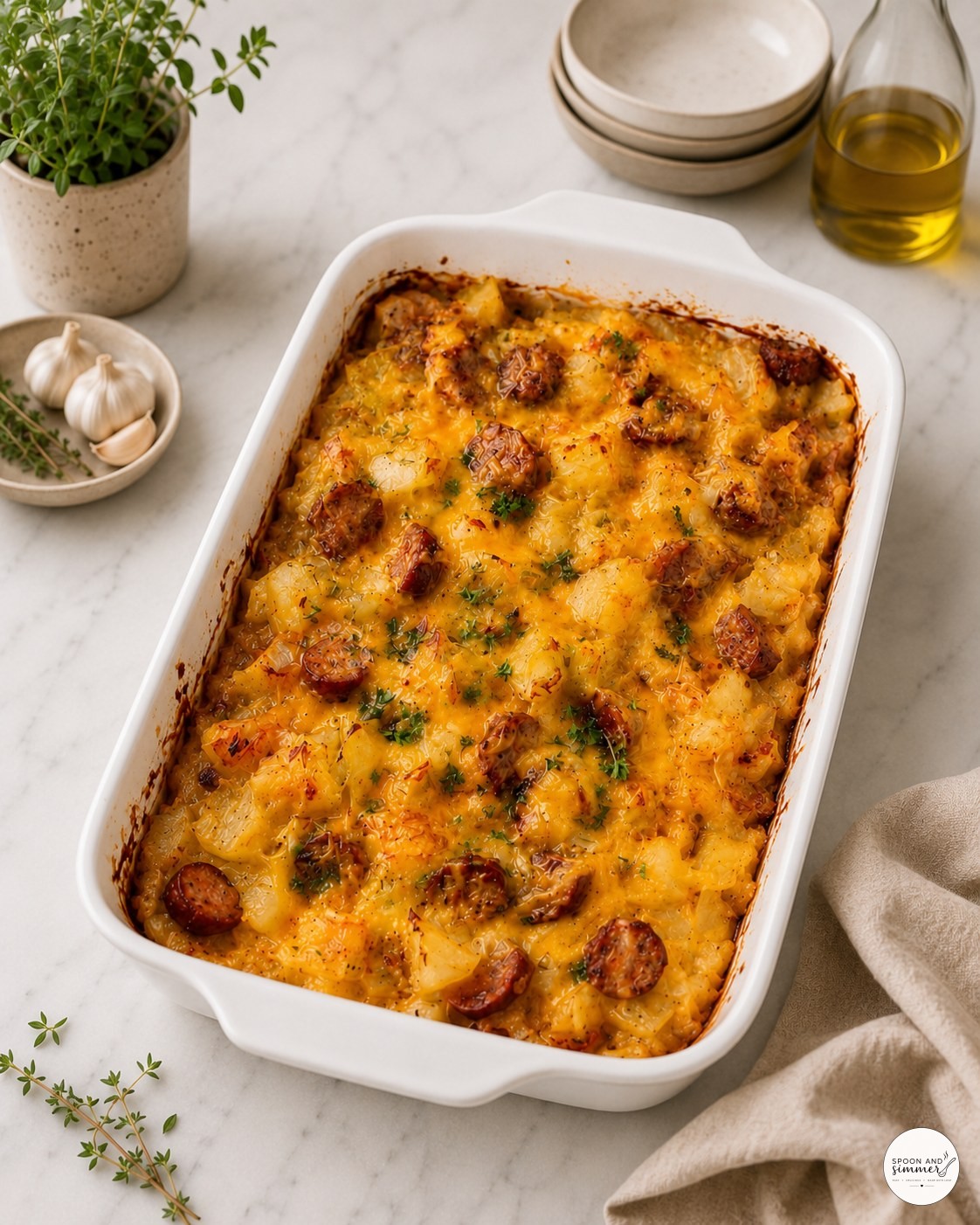
This is dinner on a weeknight at my house, straight from the oven onto the trivet, with bowls waiting nearby because nobody has the patience to plate it fancy once it smells like this.
This is the kind of dish I make when the week has gotten away from me and I still want something that feels like dinner, not damage control. Once you've got the rhythm of it down, it barely needs the recipe at all.

- For the casserole
- For the sauce
- For seasoning
- To finish

Frequently Asked Questions
Can I use a different sausage?
Absolutely — any fully cooked smoked sausage works here, andouille if you want more spice, or a chicken sausage if you're cutting back on fat. Just slice it into rounds similar in size to what's in the photos so it cooks evenly with the potatoes.
My potatoes are still firm after the covered bake — what do I do?
Re-cover the dish and give it another 5 to 8 minutes at 400°F rather than raising the oven temperature. A hotter oven at that stage dries the top layer before the center catches up.
Can I make this ahead of time?
You can assemble the potato, sausage, and sauce mixture up to a day ahead and refrigerate it in the baking dish, covered. Bring it toward room temperature for 20 minutes before baking, since a cold dish straight from the fridge needs extra time under foil.