Corn chowder with bacon is exactly the kind of dinner I reach for when I want one pot, minimal cleanup, and a bowl that even my pickiest eater will actually finish. It's become a regular at my monthly big pot night, where one enormous pot feeds a table full of friends while everyone else just shows up with bread. The corn does the heavy lifting for sweetness, the bacon does the heavy lifting for flavor, and the cream ties it all together into something that tastes like a lot more effort than it actually takes.
Prep Everything Before You Turn On the Stove
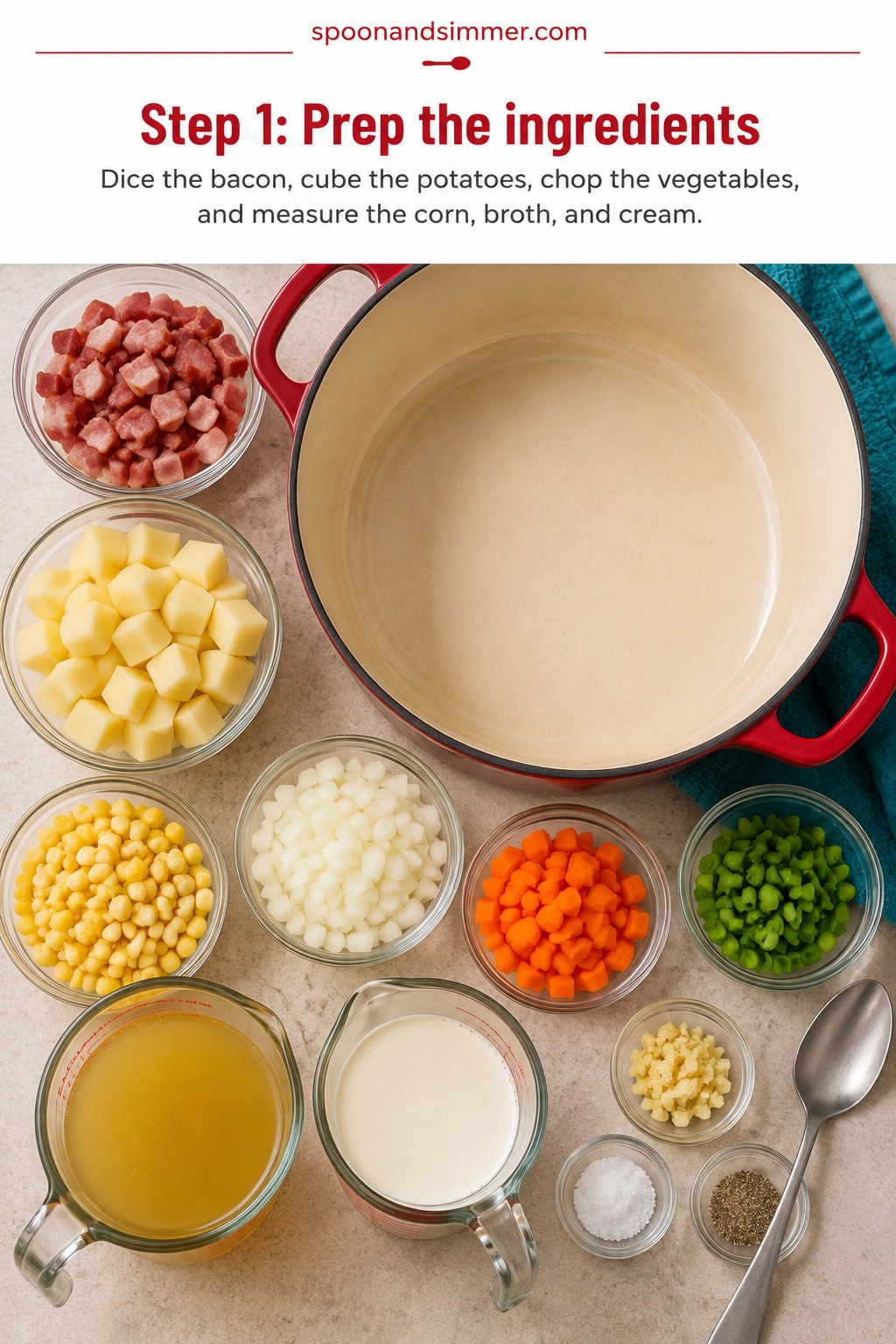
I learned the hard way, back in my restaurant days, that mise en place isn't a fussy chef word — it's what keeps you from burning garlic while you're still chopping onions. For this chowder, that means dicing the bacon small, cutting the potatoes into even little cubes (about half an inch, so they cook at the same rate), and getting everything else measured into bowls before the Dutch oven even gets hot.
- Bacon: diced small so it renders quickly and crisps evenly
- Potatoes: Yukon Golds, cubed uniformly for consistent tenderness
- Corn, carrots, onion, peas: measured and ready to go in fast succession
- Broth and cream: pre-measured so you're not fumbling with a measuring cup over a hot pot
It looks like overkill laid out on the counter like that, but it turns a 45-minute recipe into one you can actually walk through without stopping to think.
Render the Bacon Low and Slow
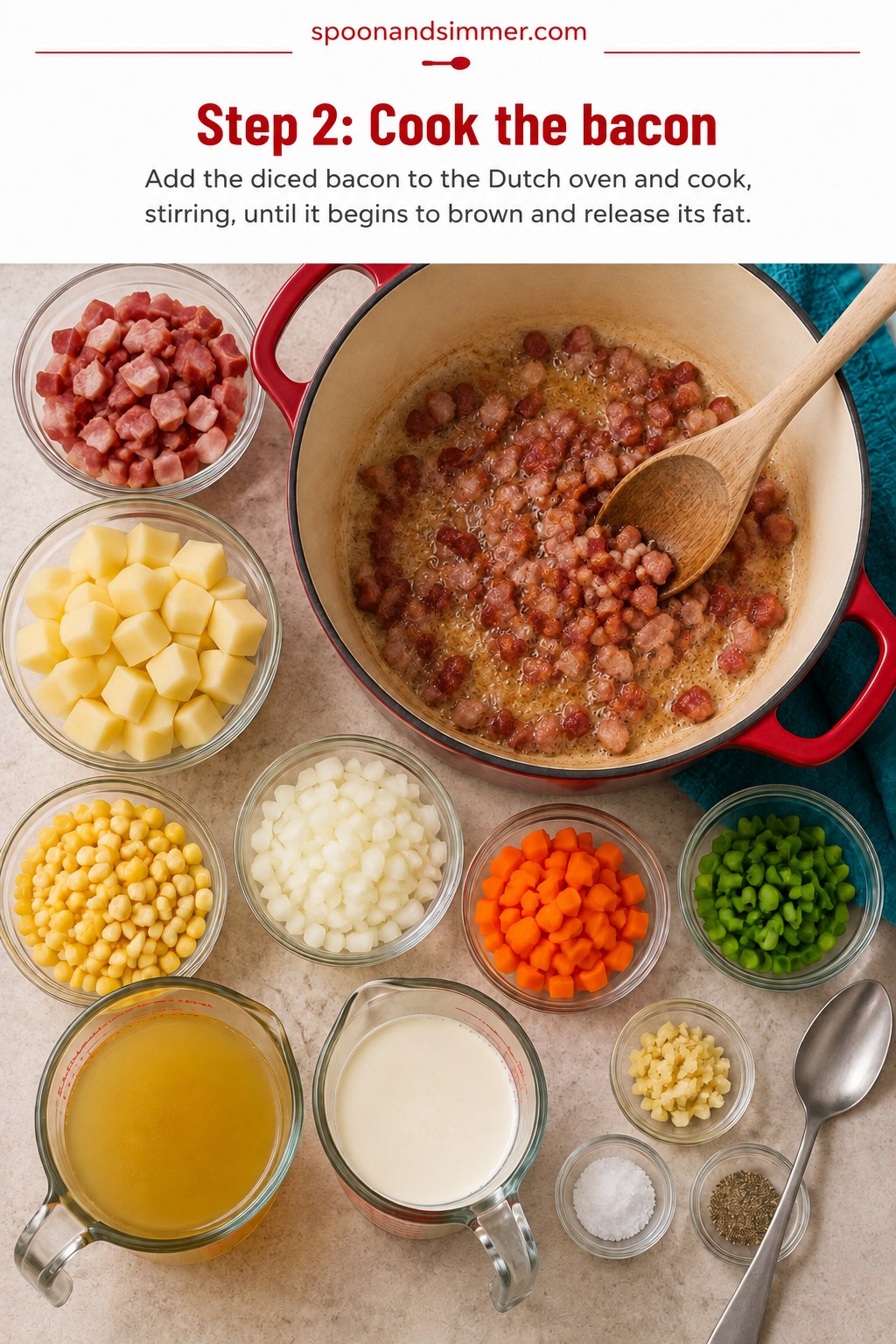
Into the Dutch oven the diced bacon goes, over medium heat, stirring occasionally. You're not looking for a fast sizzle here — you want the fat to render out gently so the bacon crisps instead of just steaming in its own grease. This takes about 6 to 8 minutes.
The fat left behind in the pot is the whole flavor base of this soup — treat it like liquid gold, not something to drain away.
You'll know it's ready when the pieces are browned at the edges, the fat in the bottom of the pot has gone from cloudy to clear gold, and the kitchen smells like bacon is happening. If a few pieces stick to the bottom, that's fond, not a mistake — it'll dissolve right back into the chowder later and add depth you can't fake.
Sauté the Vegetables in Bacon Fat
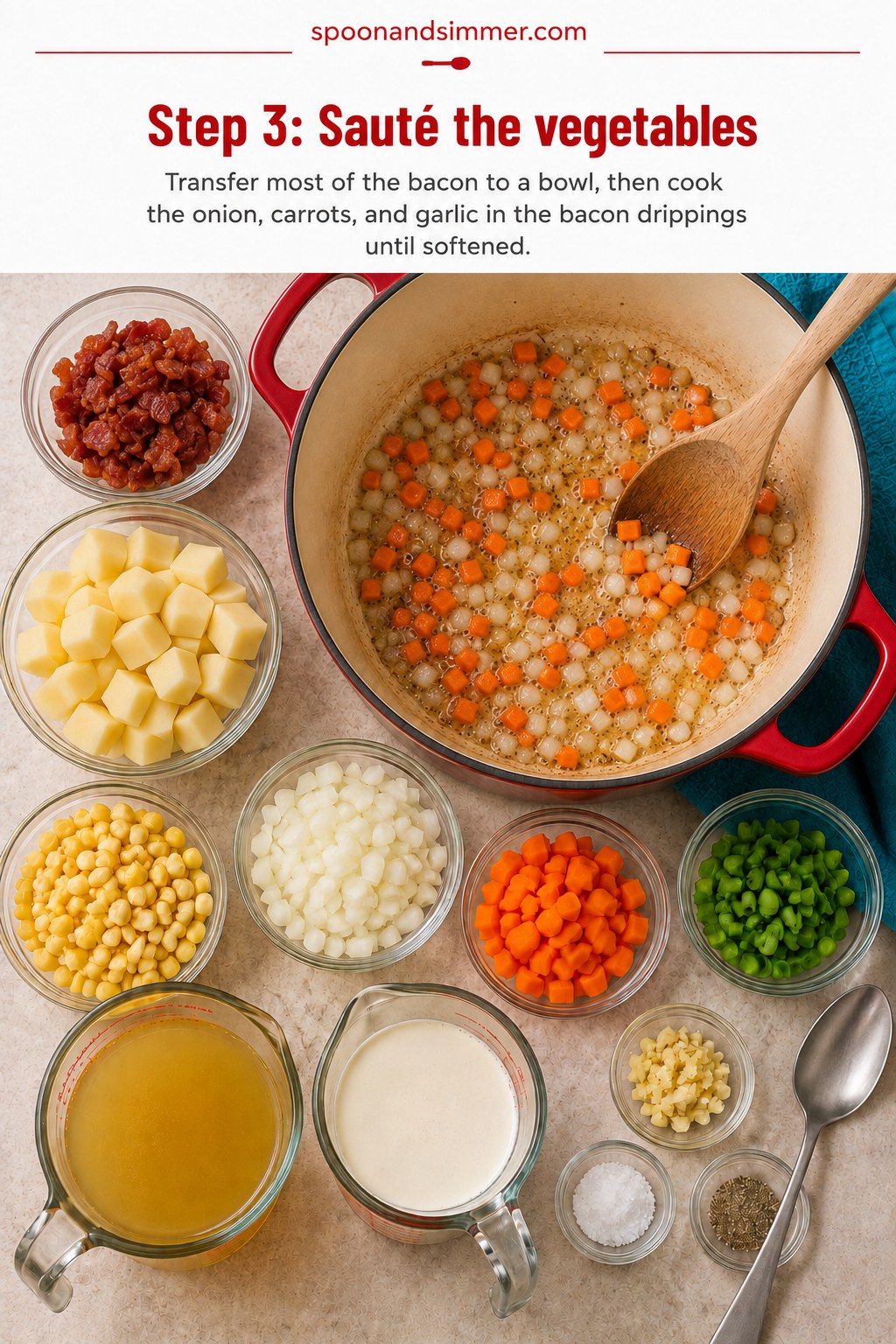
Scoop most of the bacon out into a bowl, leaving just a bit behind along with all that rendered fat — this is the move that keeps your bacon crispy for garnish later instead of going soft in the soup for an hour. Add the chopped onion and diced carrots straight into the drippings.
Cook, stirring, for about 4 to 5 minutes, until the onion turns translucent and the carrots soften slightly at the edges. You're not browning anything hard here, just coaxing out sweetness and letting the vegetables pick up all that smoky bacon flavor. The pot should smell noticeably different by this point — sweeter, rounder, less sharply smoky than the bacon step alone.
Add the Potatoes, Corn, and Broth
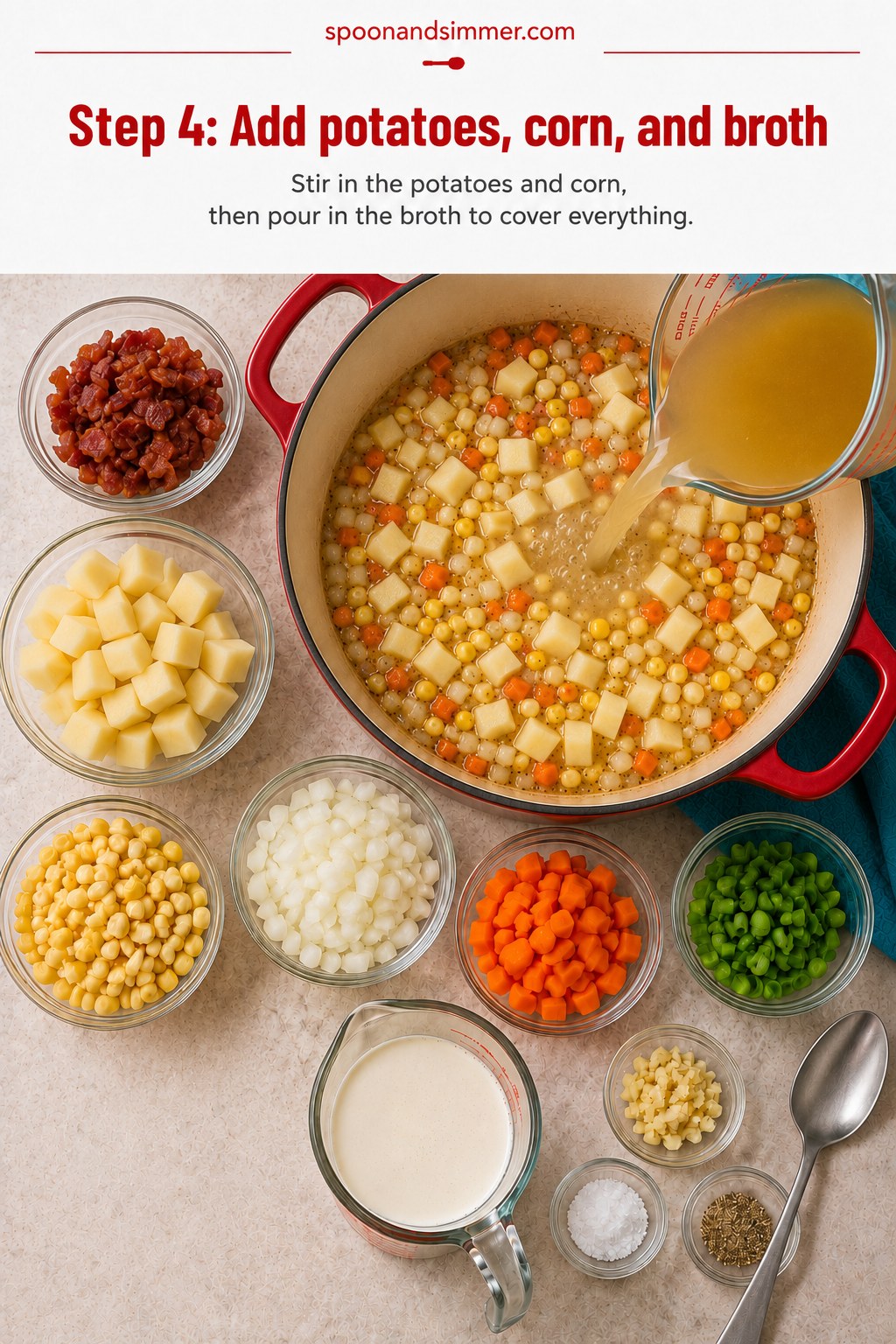
Stir the cubed potatoes and corn kernels right into the softened vegetables, then pour in the broth until everything is just covered. I like to pour it in a slow, steady stream rather than dumping it — it keeps the pot from splashing and lets you actually see when the liquid line hits the top of the vegetables.
- Stir first: potatoes and corn go in dry, coated in the bacon fat and softened vegetables
- Pour second: broth added slowly, just to cover — not drown
- Scrape the bottom: loosen any browned bits stuck to the pot as you stir
At this stage the pot looks almost like a bright vegetable soup — pale gold broth, flecks of orange and yellow. Don't worry, this is the least glamorous the chowder will ever look.
Simmer Until Fork-Tender
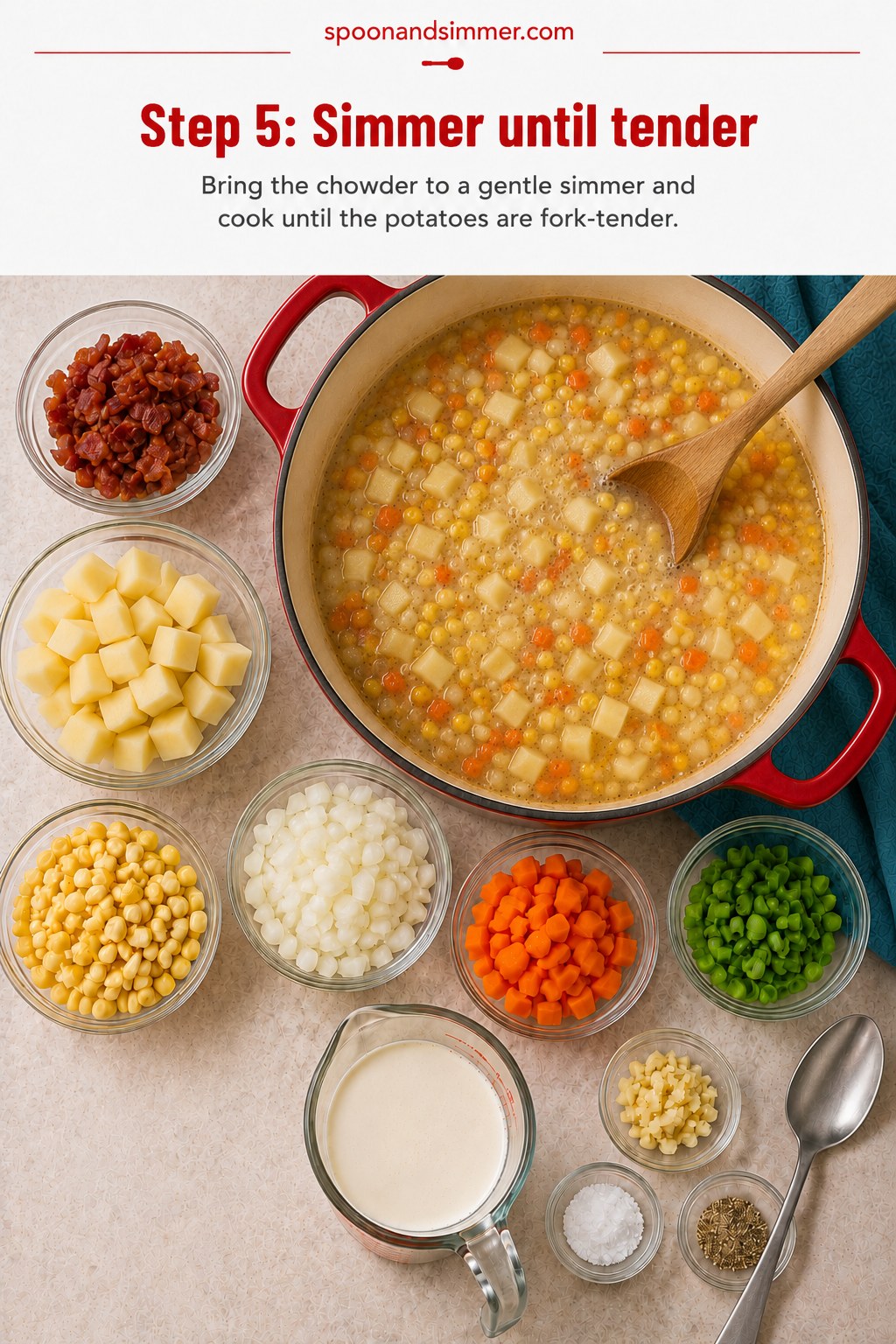
Bring the pot up to a gentle simmer — small, lazy bubbles breaking the surface, not a hard rolling boil, which can turn your potatoes mushy and mealy before the middles are even done. Let it cook for 12 to 15 minutes.
Check for doneness the way I check every potato soup I've ever made: pierce a cube with a fork. If it slides in with almost no resistance, you're there. If it still feels chalky in the center, give it another few minutes rather than cranking the heat — low and steady beats fast and uneven every time with potatoes. The broth should smell rich and vegetal by now, with the corn's sweetness starting to come through clearly.
Stir in the Cream for a Silky Finish
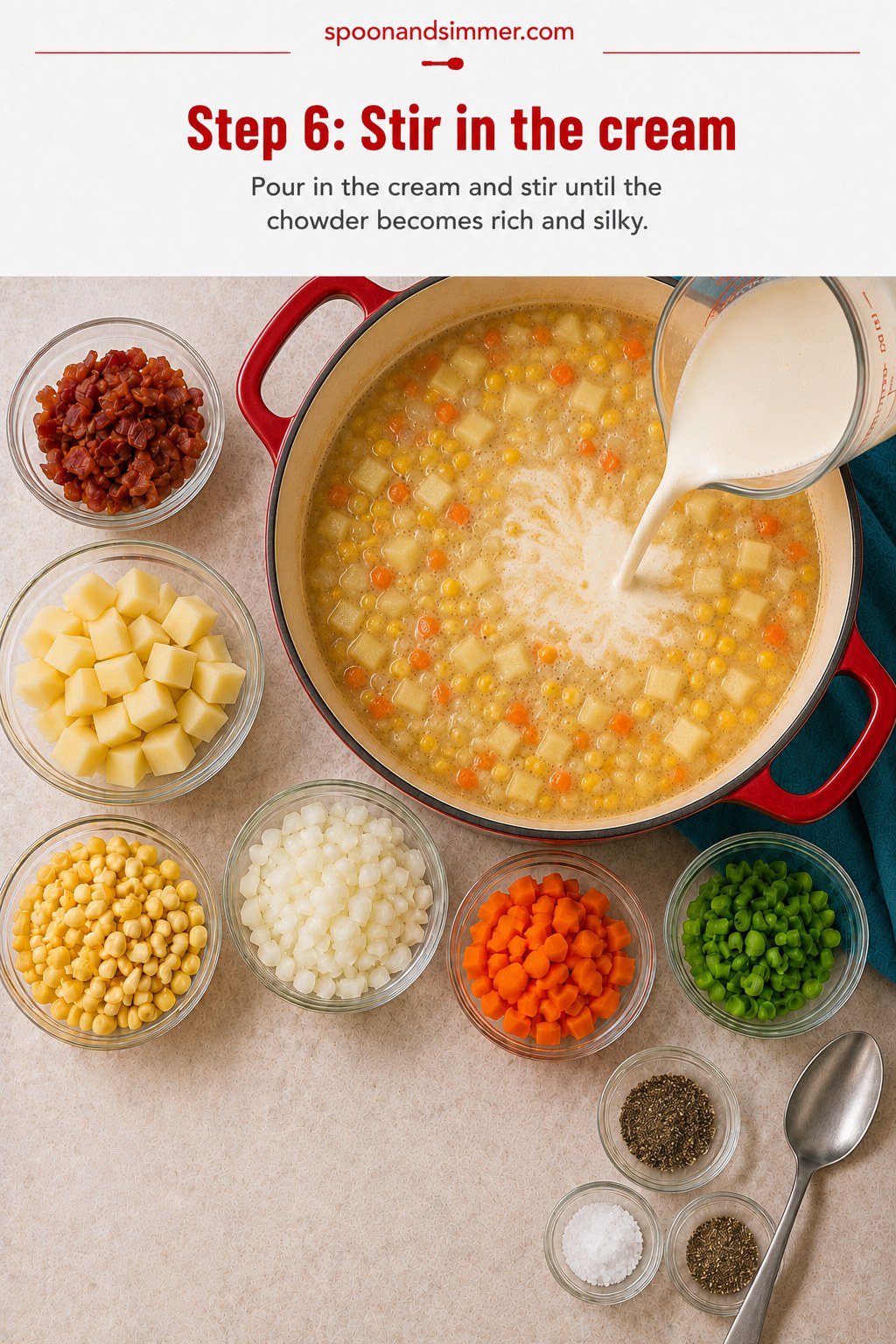
Once the potatoes are tender, pour in the heavy cream in a slow stream while stirring. This is the moment the chowder transforms — the broth goes from thin and golden to thick, pale, and glossy almost instantly.
Keep the heat low here. Cream can split or take on a slightly grainy texture if the pot is boiling hard when it hits the liquid, so I pull the pot down to the lowest simmer, or even off the heat entirely, before pouring. Stir gently until everything looks uniformly creamy — no streaks of white left floating on top. If you're adding peas, this is a good moment to stir those in too, letting the residual heat warm them through without turning them dull and army-green.
Bring Back the Bacon and Season
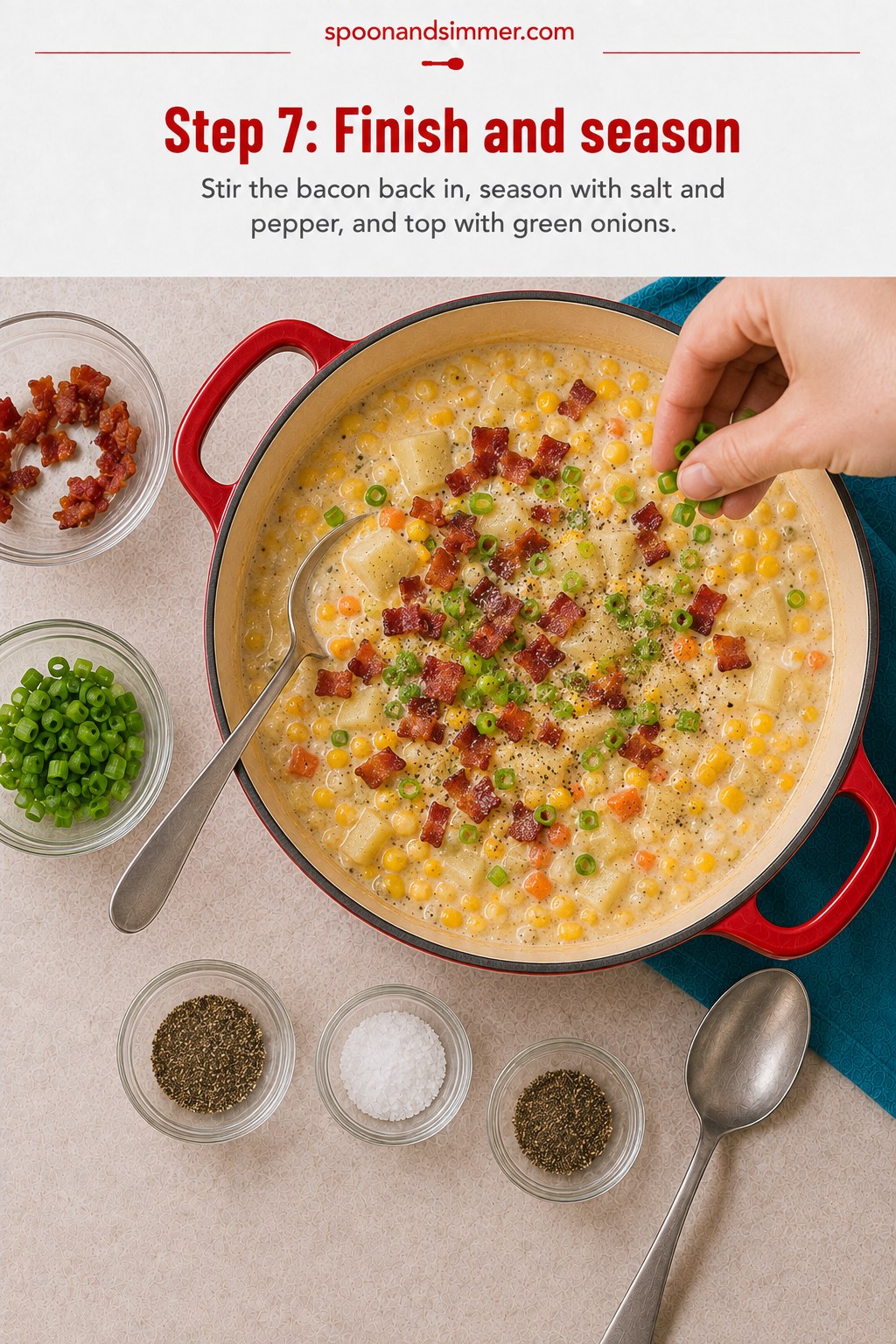
Stir most of the reserved crispy bacon back into the pot, saving a little for topping bowls. Taste — and I mean actually taste, not just glance at it and assume — before adding salt, since bacon and broth both bring their own saltiness.
- Salt: add gradually, tasting between additions
- Pepper: freshly ground, a generous amount
- Green onions: scattered on top just before serving for a fresh, sharp contrast to all that cream
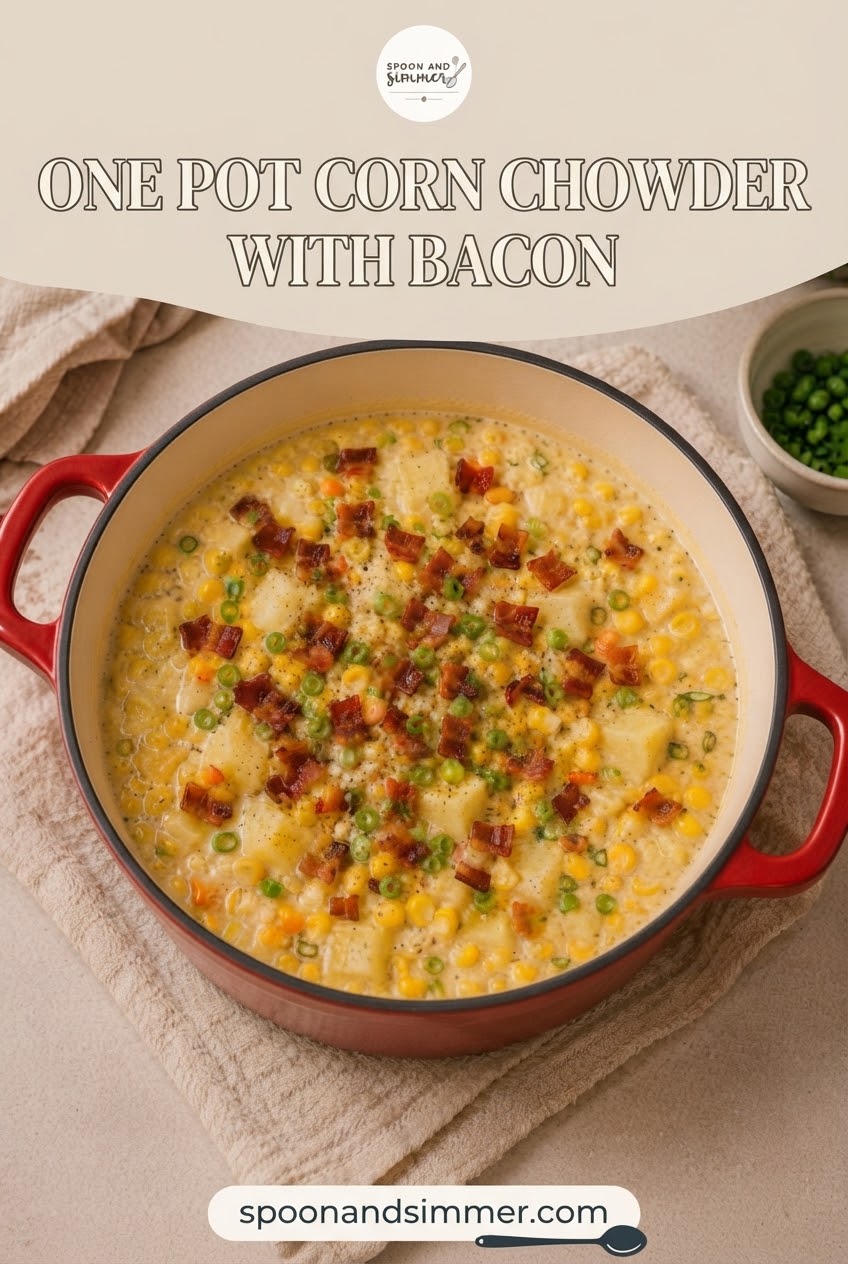
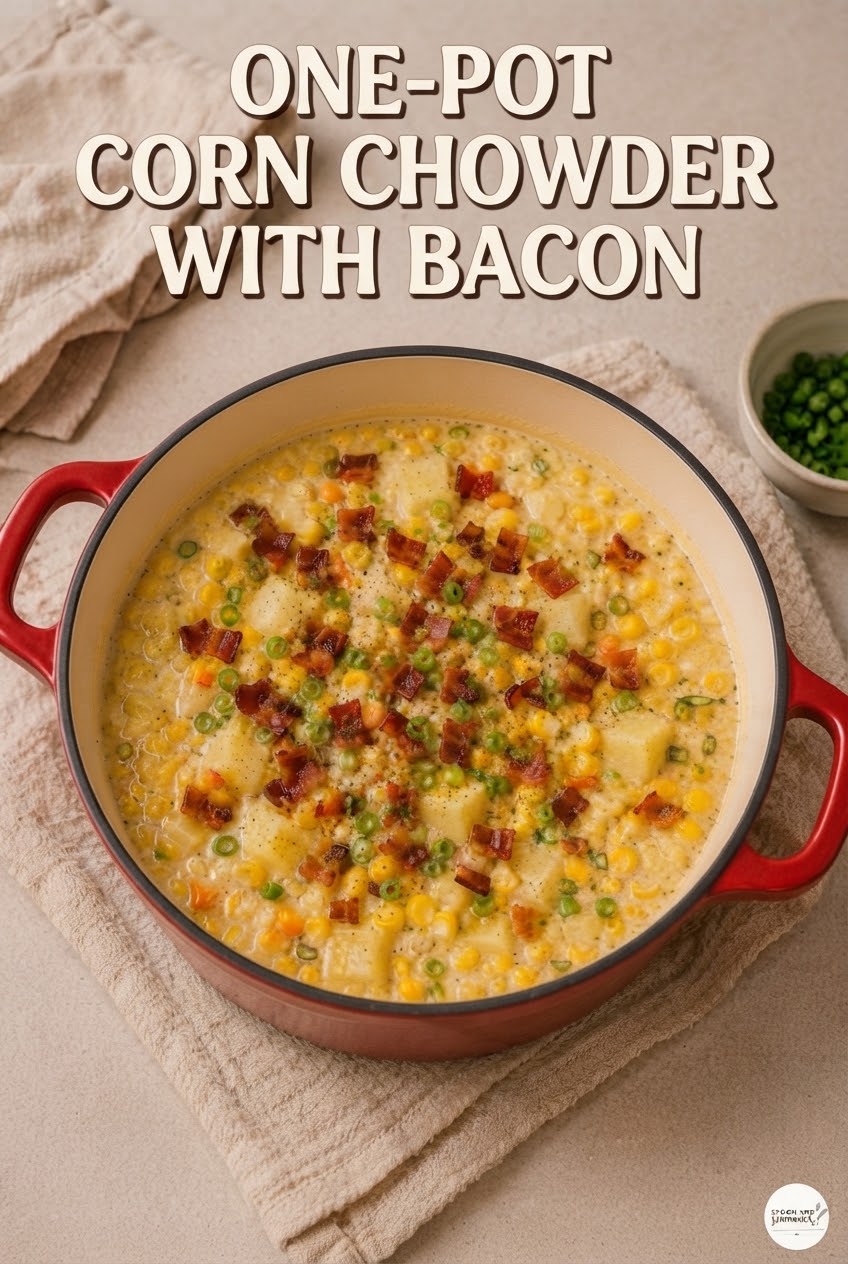
The finished chowder should look like the pot in front of you: pale golden, studded with corn and peas, with dark ruby flecks of bacon scattered across the top. That contrast in color is doing a lot of the appetite-appeal work here.
What a Proper Bowl of Corn Chowder Should Look Like
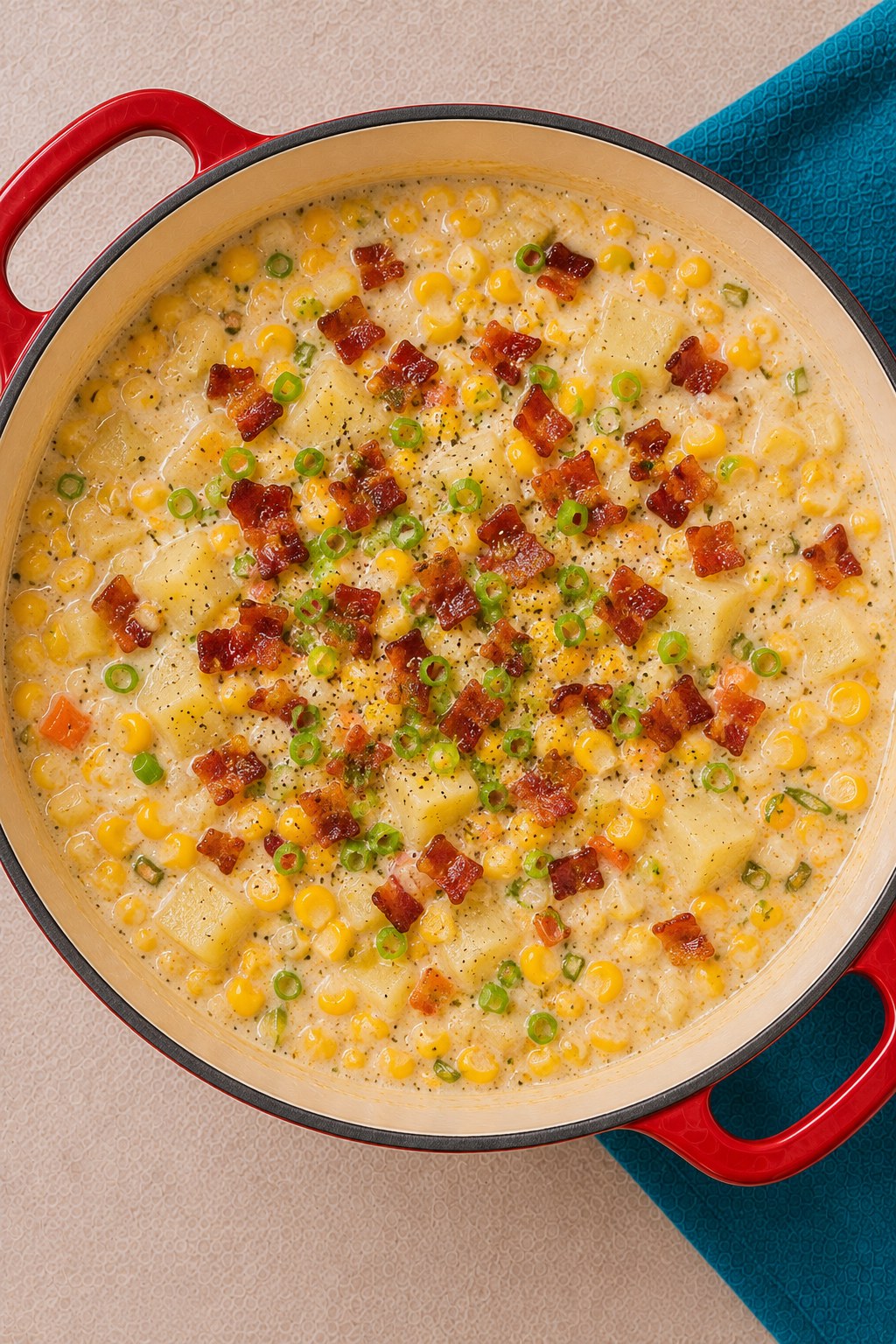
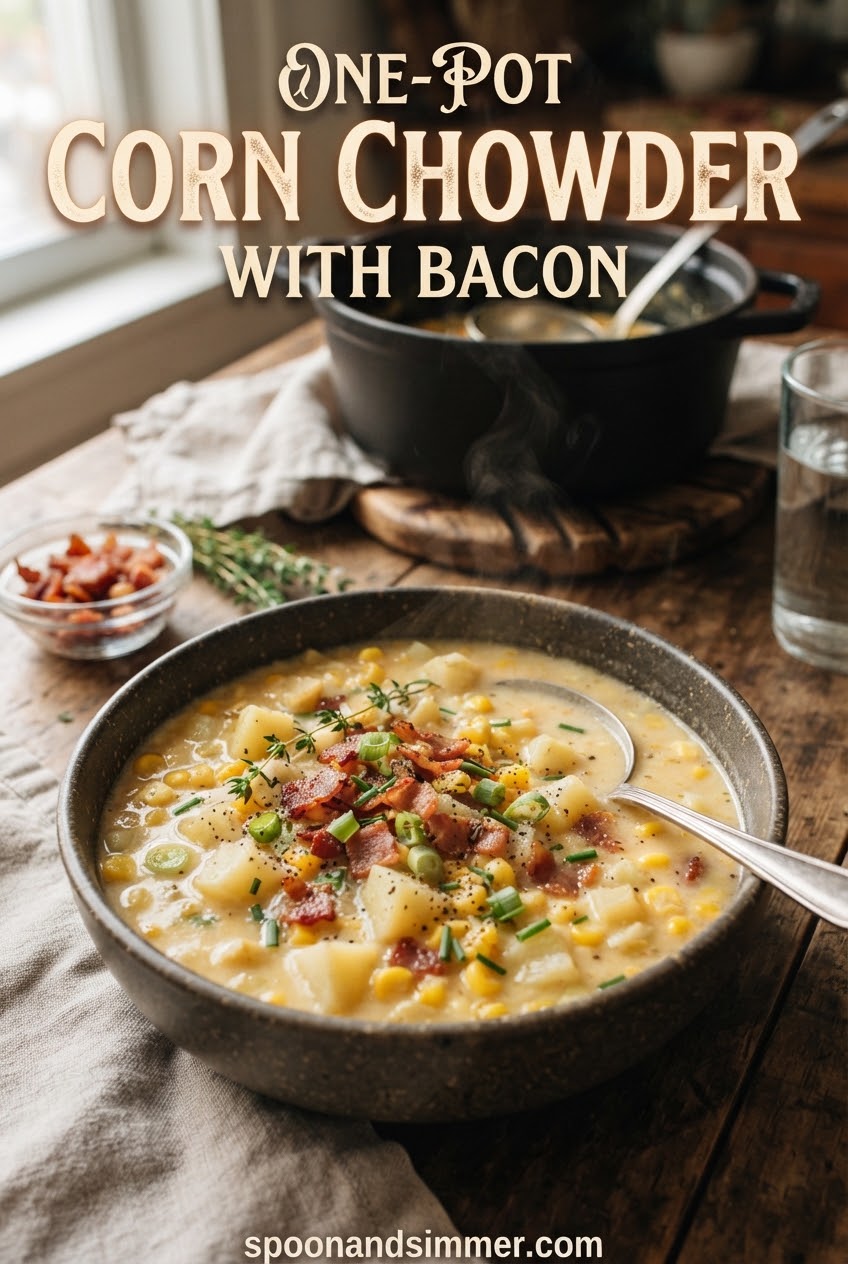
This is the payoff shot, and it's the one I actually check against when I'm testing a new batch of this soup: thick enough that the spoon leaves a trail, corn kernels visible in every scoop, potatoes just breaking down at the edges but still holding their shape.
My husband Dave, who has eaten more test batches of this chowder than any reasonable person should have to, says the tell is in the steam — if it's rising slow and lazy off the surface instead of billowing, the temperature is exactly right for serving. Ladle it into wide, shallow bowls rather than deep mugs so the bacon and green onion garnish stays visible instead of sinking. This is a soup people should be able to see before they taste.
How This Chowder Actually Comes Together in My Kitchen
Step photos are useful, but they never show the mess in between — the slightly crooked knife cuts, the dog waiting by your feet for a dropped piece of bacon. These are shots from an actual afternoon making this chowder at home, not a staged version of it, and I think that context is worth showing.
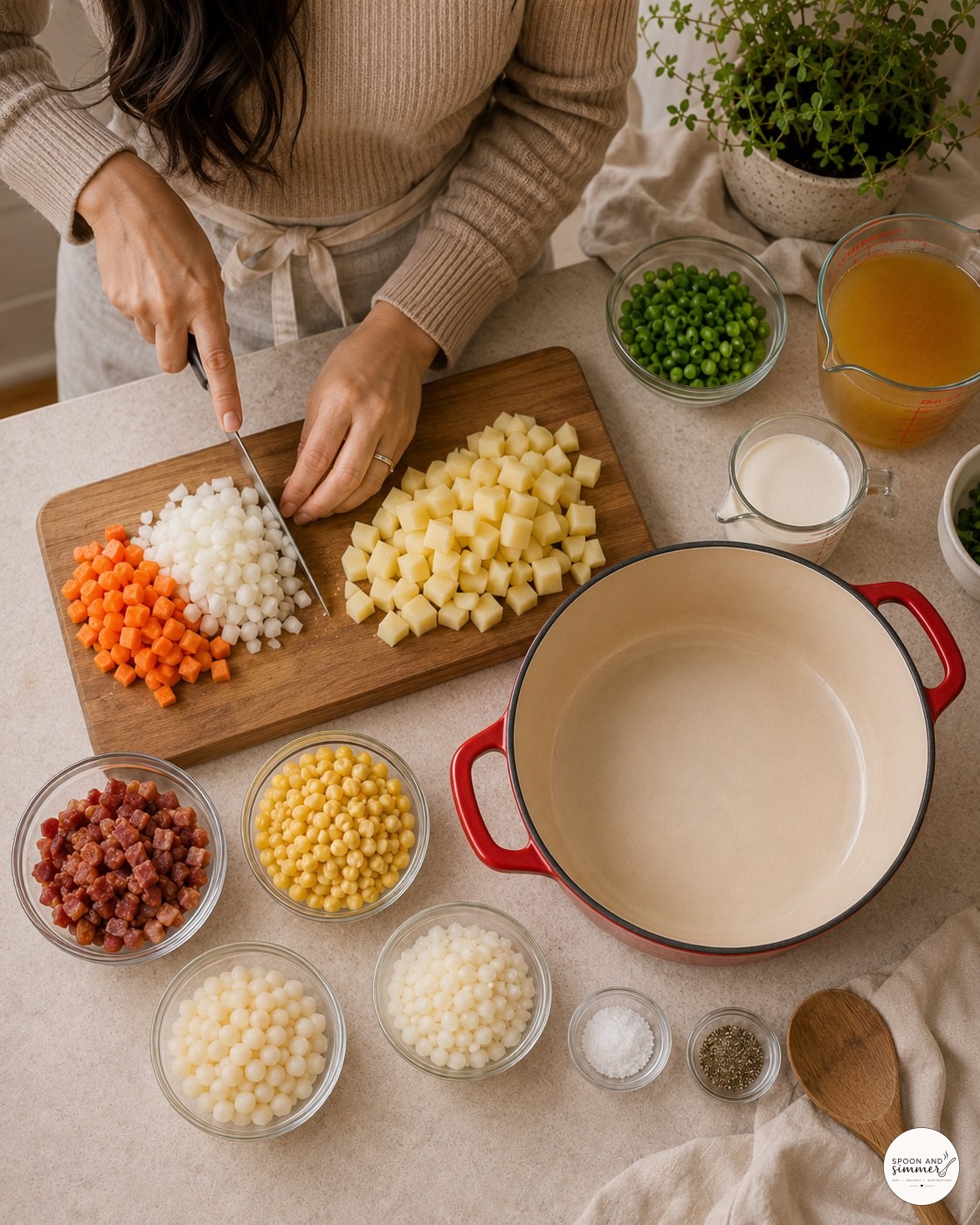
This is me dicing the potatoes and onion on my everyday cutting board, and if you look closely my cubes are not perfectly uniform — I was cooking one-handed while checking my notes. Close enough is fine here; the potatoes just need to be small enough to cook through in the simmer time.
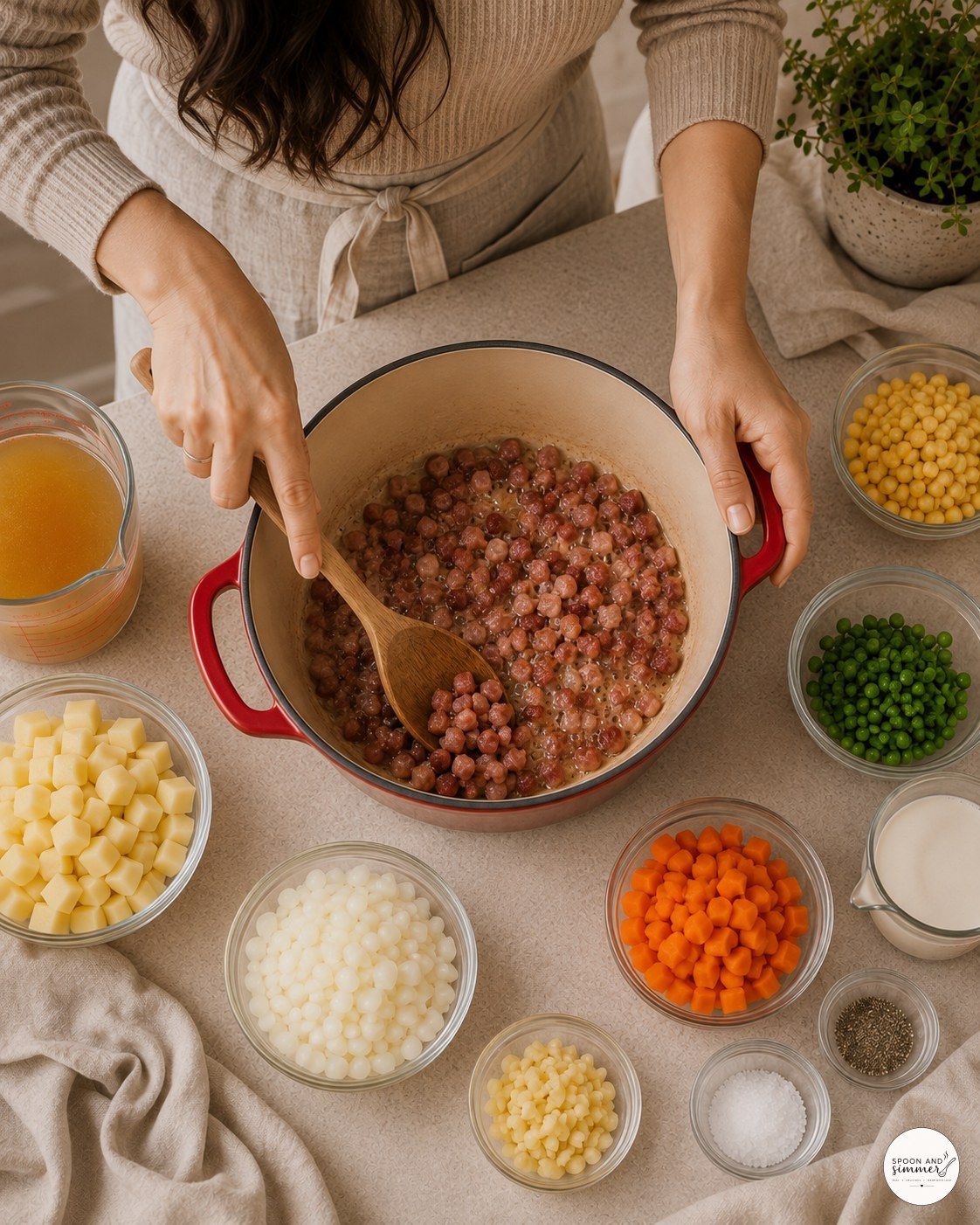
Biscuit the beagle was parked by my feet the entire time this bacon was rendering, which happens every single time bacon touches a hot pan in my house. I stirred this on the counter for the photo, but the actual cooking happens over medium heat on the stove behind me.
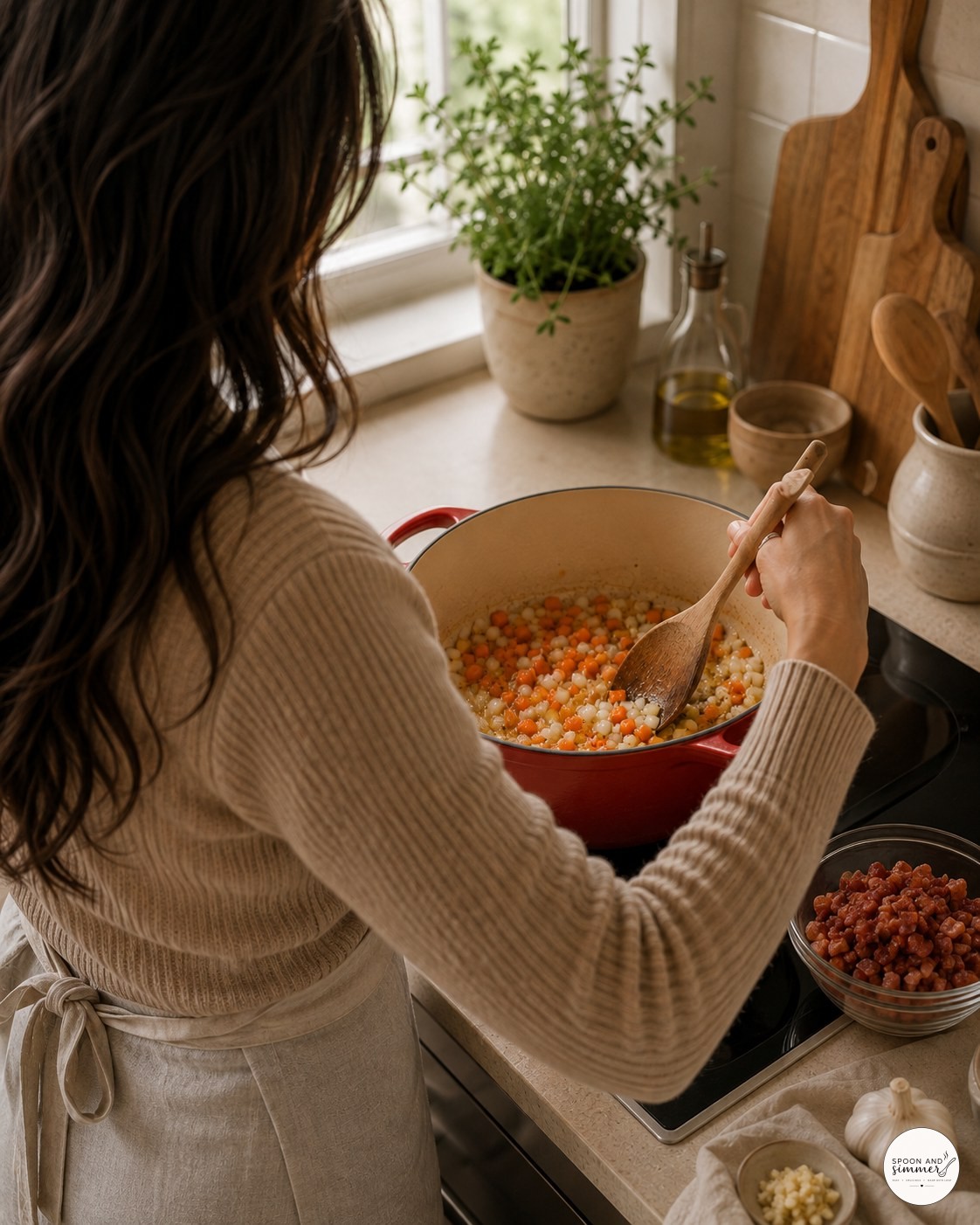
That's my kitchen window behind me, herbs and all, and this is the real angle I stand at most days — one hand stirring, one hand reaching for the next bowl. The vegetables were sautéing over a genuinely gentle flame here, lower than most people assume for this step.
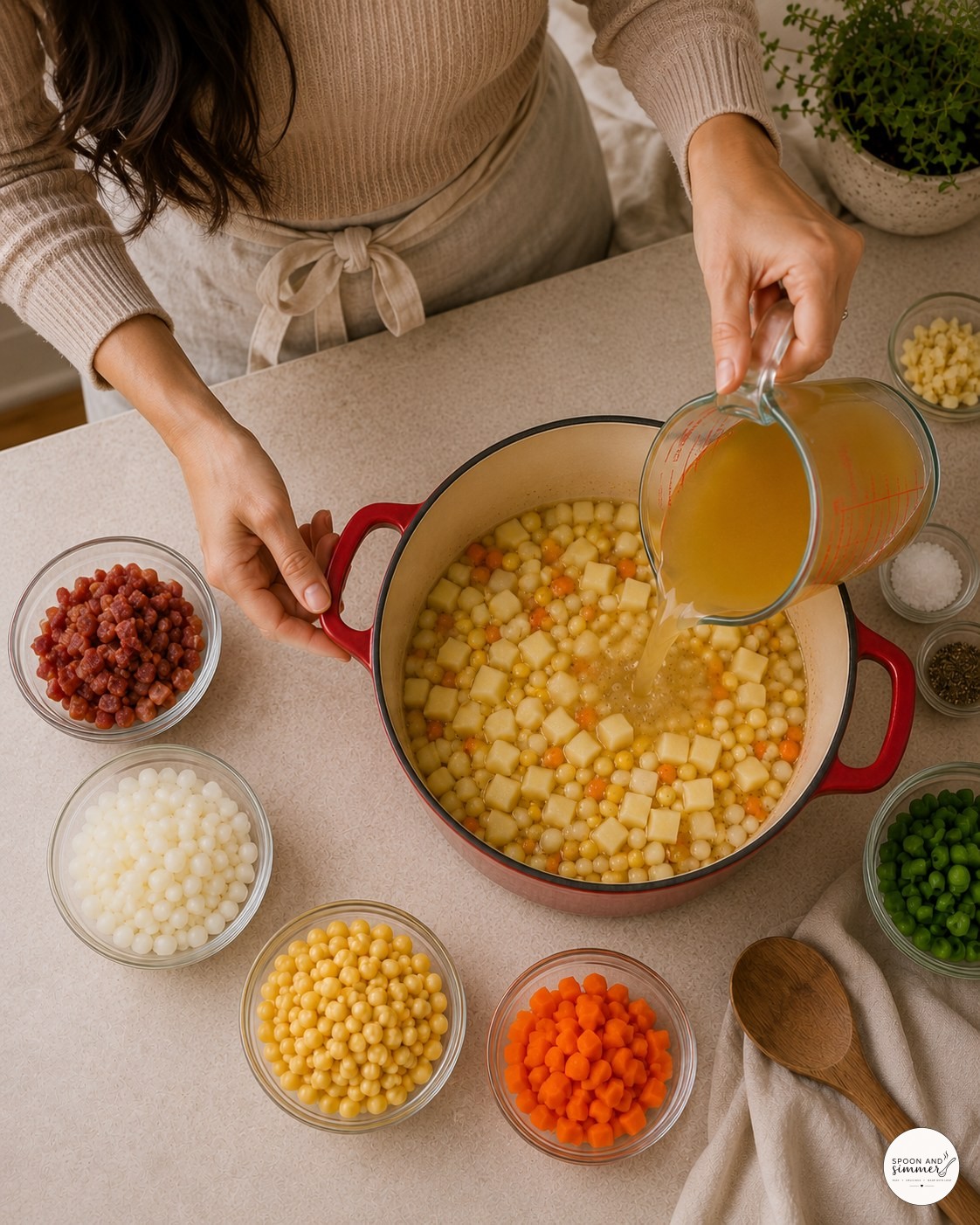
I always pour the broth in slower than feels necessary, tilting the pitcher just slightly so it doesn't splash the countertop I just wiped down. Homemade broth makes a noticeably richer chowder here, but a good low-sodium store-bought one gets you 90% of the way there.
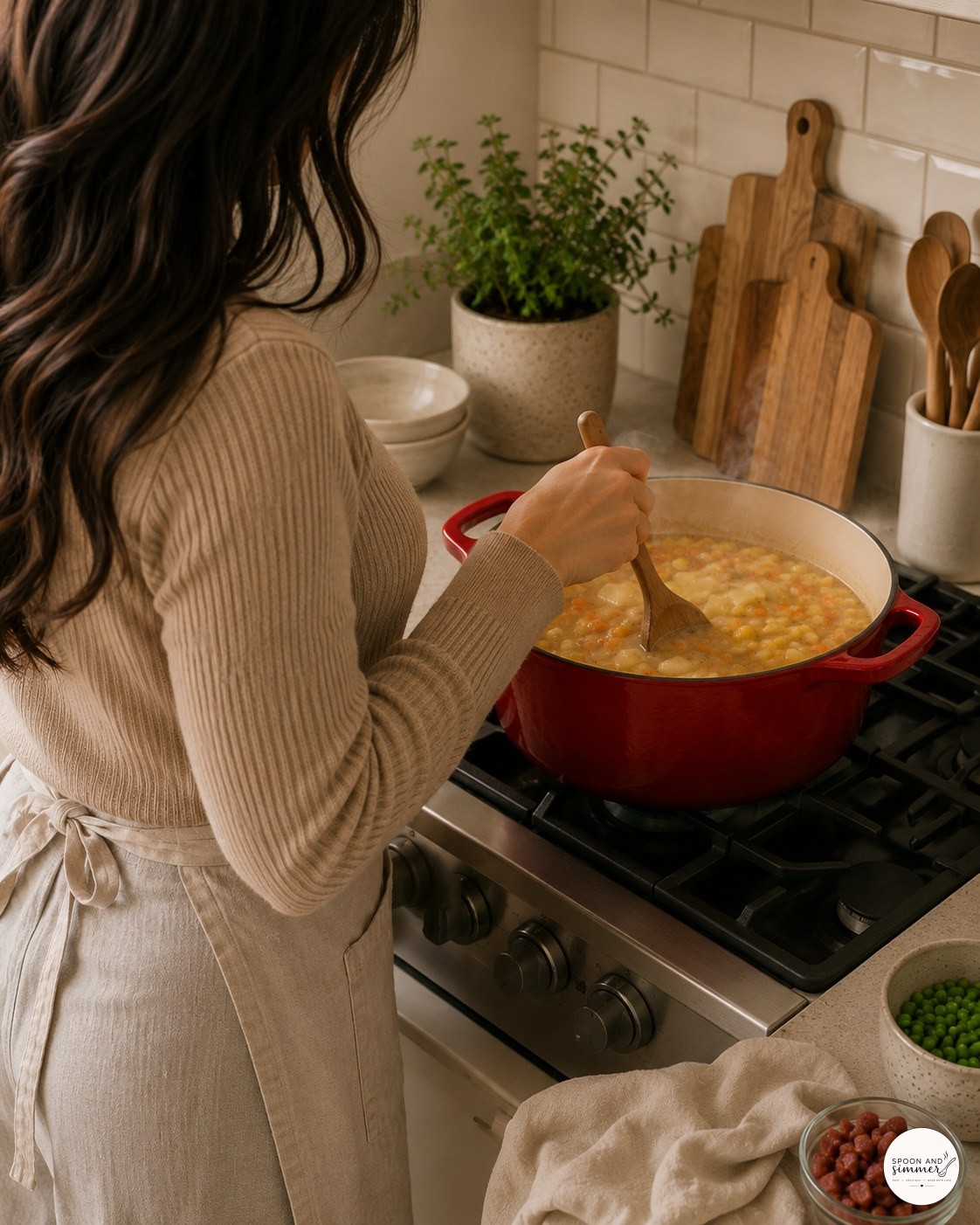
You can see the gas flame is kept low under the pot in this shot — a hard boil at this stage is the single most common reason people end up with mushy, falling-apart potatoes instead of tender ones that hold their shape.
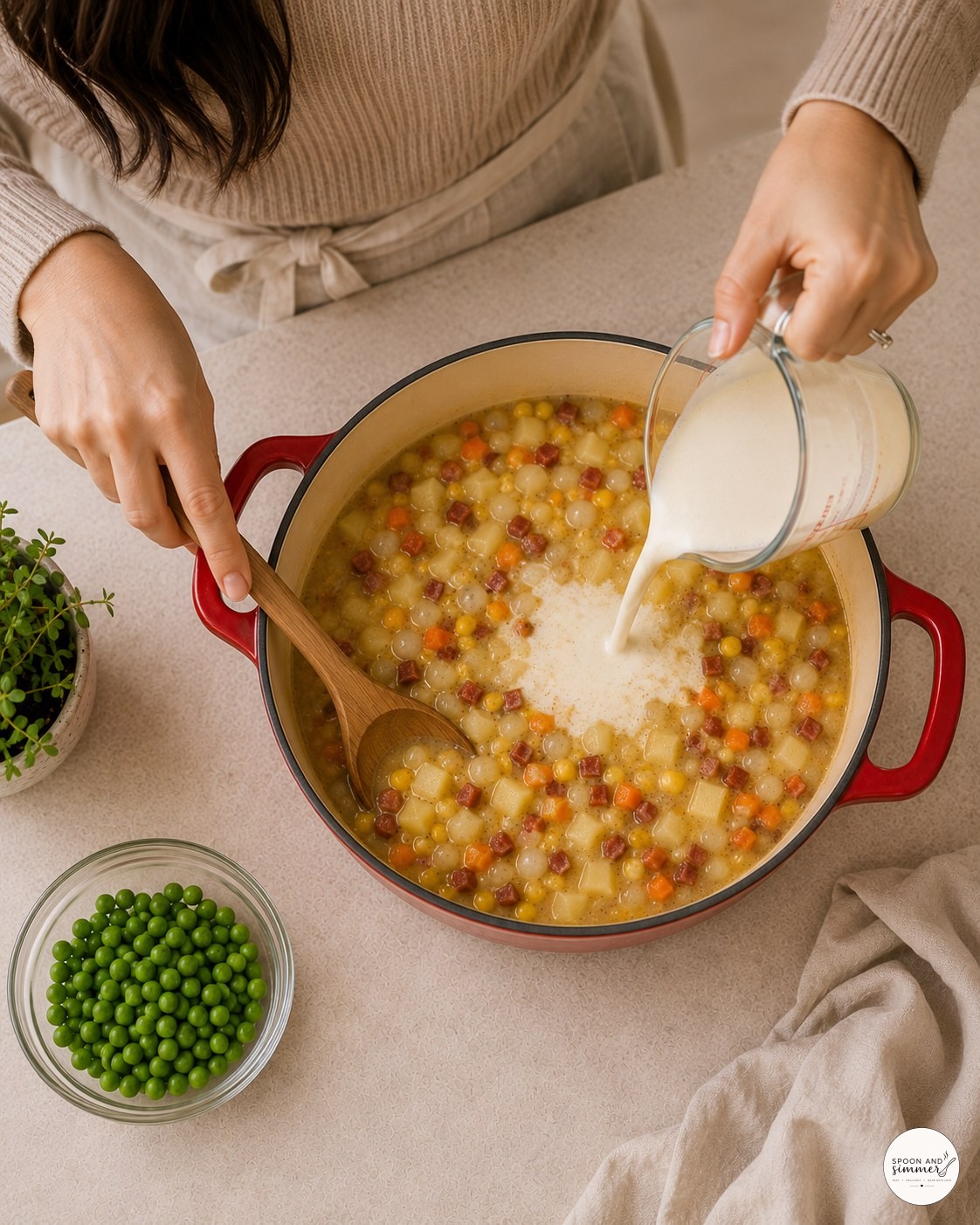
I pull the pot slightly off the heat before pouring in cream that's been sitting at room temperature for a few minutes, not straight from the fridge — cold cream hitting a hot pot is the fastest way to end up with a slightly curdled-looking surface.
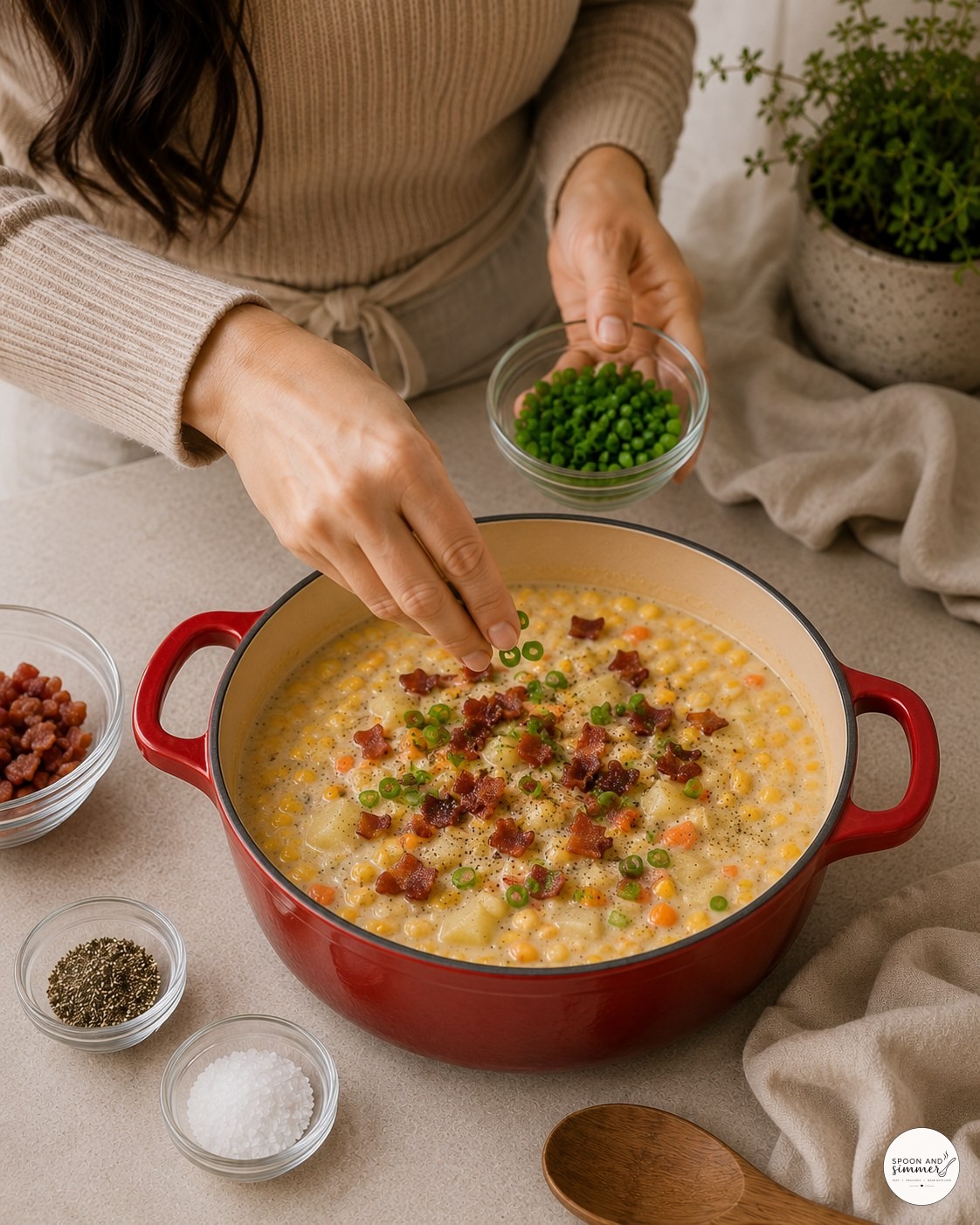
Fresh peas get scattered in by hand right at the end here, along with the reserved bacon, because I like being able to control exactly how much lands in the center where it'll actually get seen once it's plated.
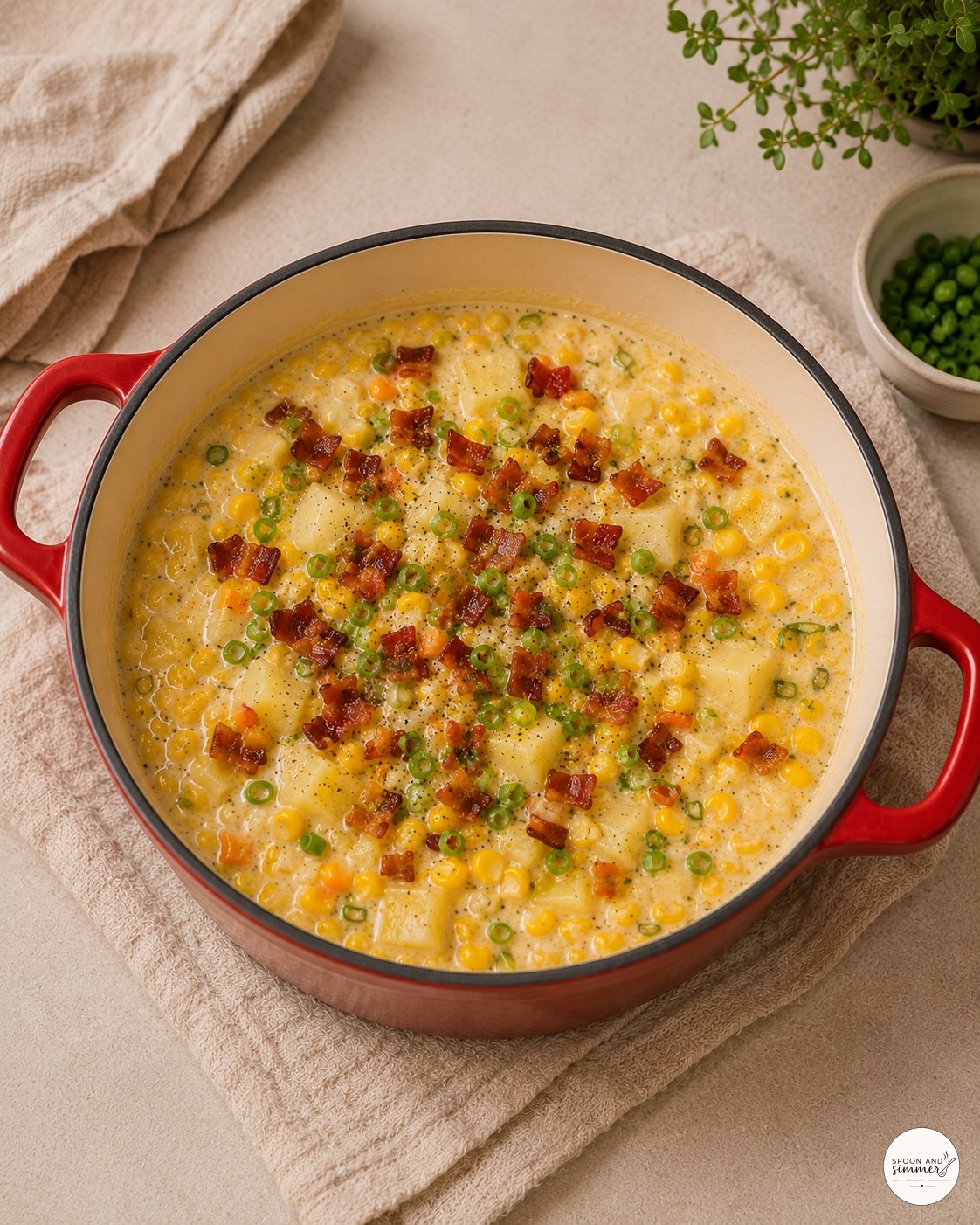
This is the pot at the exact moment I'd actually carry it to the table for big pot night — steam still rising, garnish not yet disturbed by a serving spoon. It never looks quite this tidy by the second bowl, and that's fine.
This is the soup I make when the corn at the farmers market is finally worth buying and I want dinner to feel like more effort than it was. One pot, one afternoon of learning to trust the fork-tender test over the timer, and you'll have this down for good.

- For the chowder


Your Questions, Answered
Can I use frozen corn instead of fresh?
Absolutely, and I usually do outside of peak summer. Frozen corn kernels go straight into the pot without thawing first, just add an extra minute or two to the simmer time to bring the temperature back up.
What can I substitute for the heavy cream?
Half-and-half works and keeps things a bit lighter, though the chowder will be slightly thinner. Whole milk works in a pinch too, but stir it in off the heat and expect a less rich, less silky finish.
How do I store and reheat leftovers?
Refrigerate in an airtight container for up to 4 days. Reheat gently on the stovetop over low heat, stirring occasionally — cream-based soups can separate if microwaved on high or brought back to a hard boil.
Can I make this chowder ahead for a crowd?
Yes, this is one of my go-to big pot night recipes. Make it up through stirring the bacon back in, then reheat low and slow right before serving, adding a splash of extra broth or cream if it's thickened up too much in the fridge.