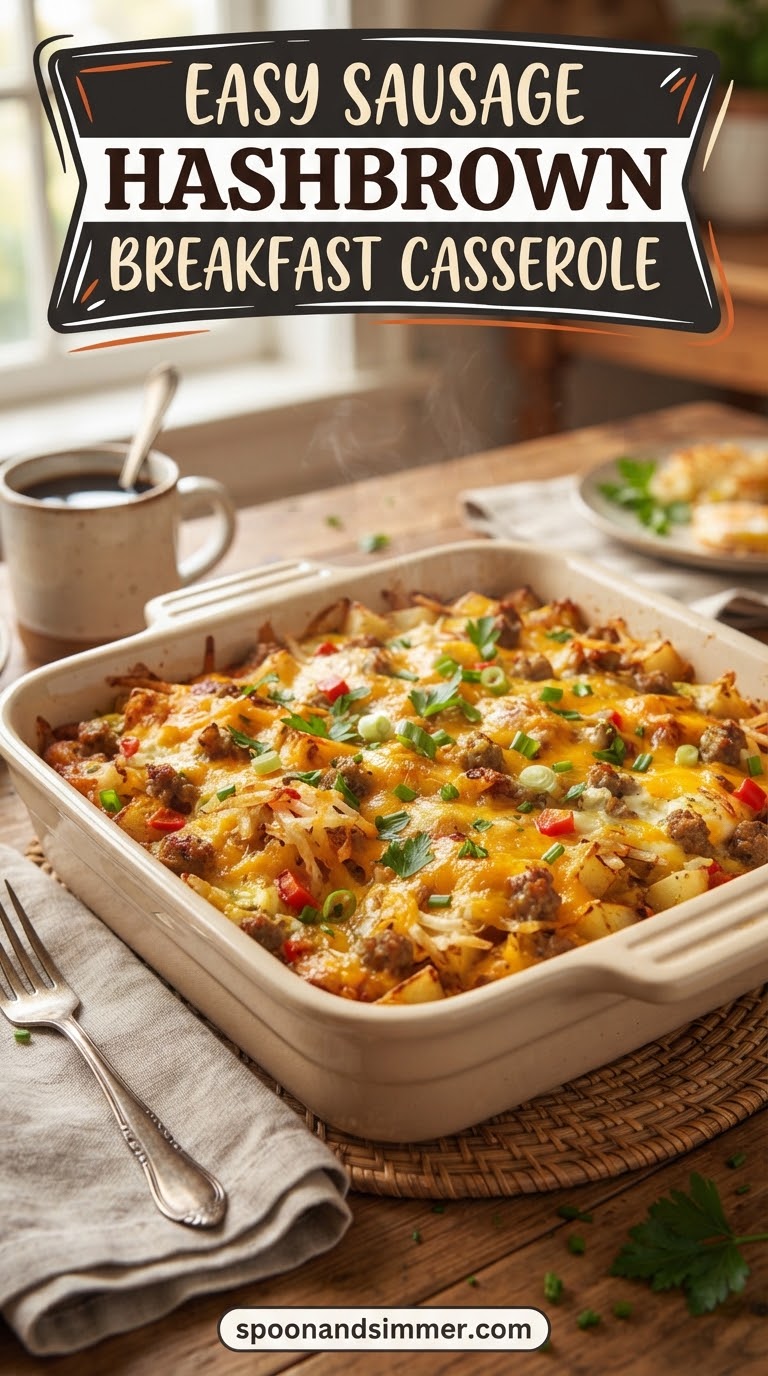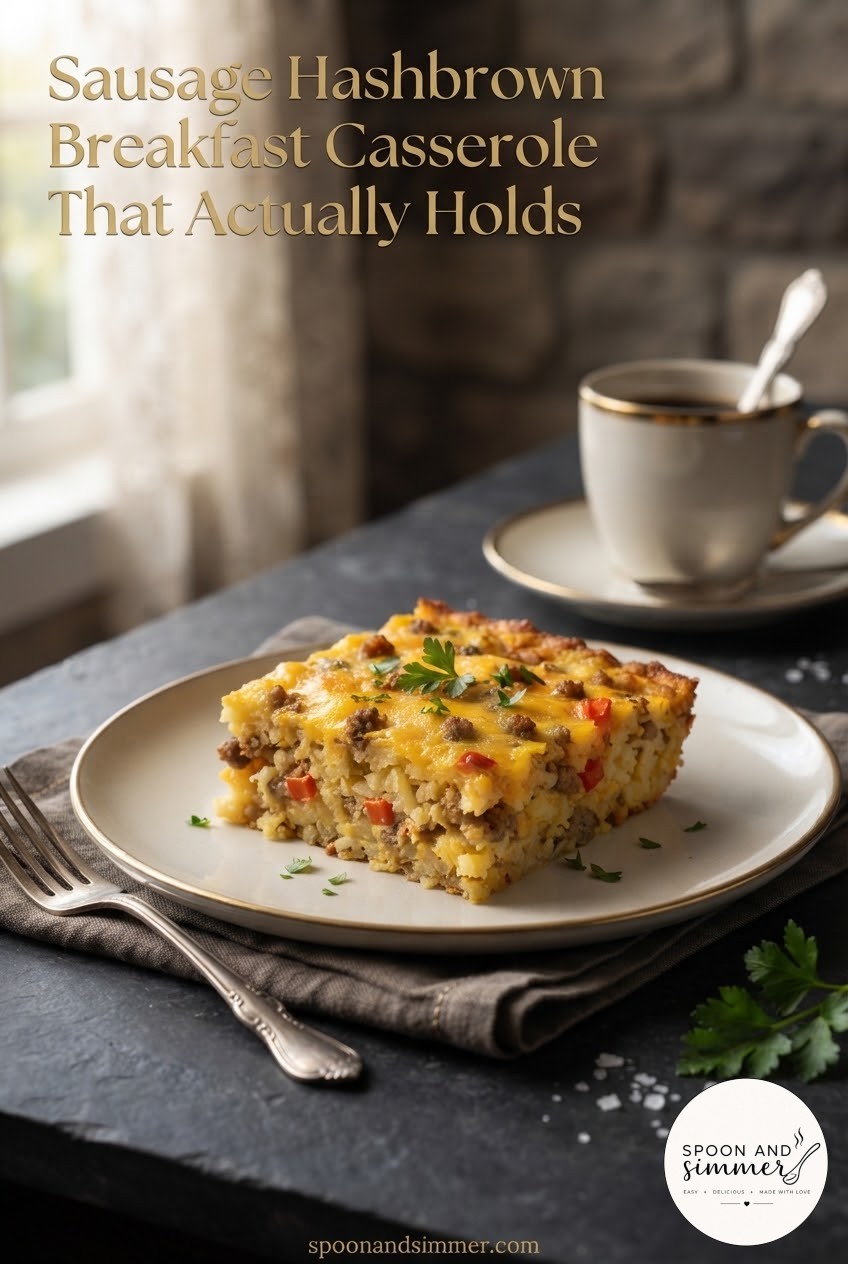
Every family I know has one breakfast dish that shows up whenever people are staying over, and this is mine. It's the kind of thing I can build the night before, slide into a 375°F oven while I'm still in pajamas, and pull out looking like I tried harder than I did. No fancy technique, just hash browns, sausage, peppers, cheddar, and an egg custard doing the heavy lifting.
Gathering Everything Before the Oven Even Preheats
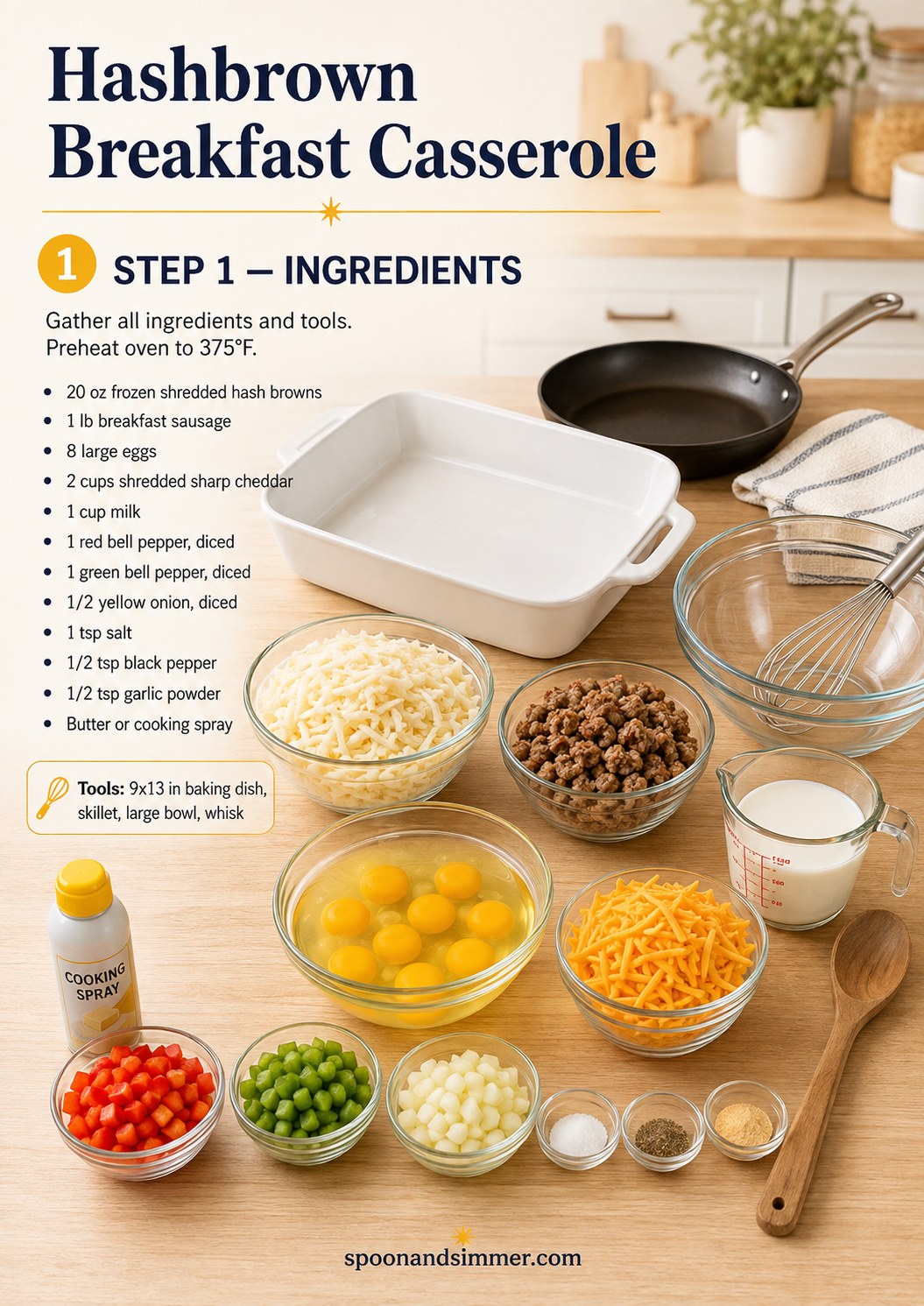
My restaurant years drilled one habit into me for good: mise en place before anything hits heat. For this casserole that means getting every bowl out — the diced red and green bell pepper, the diced onion, the shredded cheddar split into two portions, eight eggs cracked and ready — before the oven finishes preheating to 375°F.
- Hash browns: 20 oz frozen shredded, no need to cook first
- Protein: 1 lb breakfast sausage, still raw
- Dairy: 2 cups shredded sharp cheddar, 1 cup milk
- Eggs: 8 large, plus salt, black pepper, garlic powder
Having everything measured before you start is what keeps a weeknight casserole from turning into a scavenger hunt mid-recipe.
Greasing the Dish and Laying the Hash Brown Base
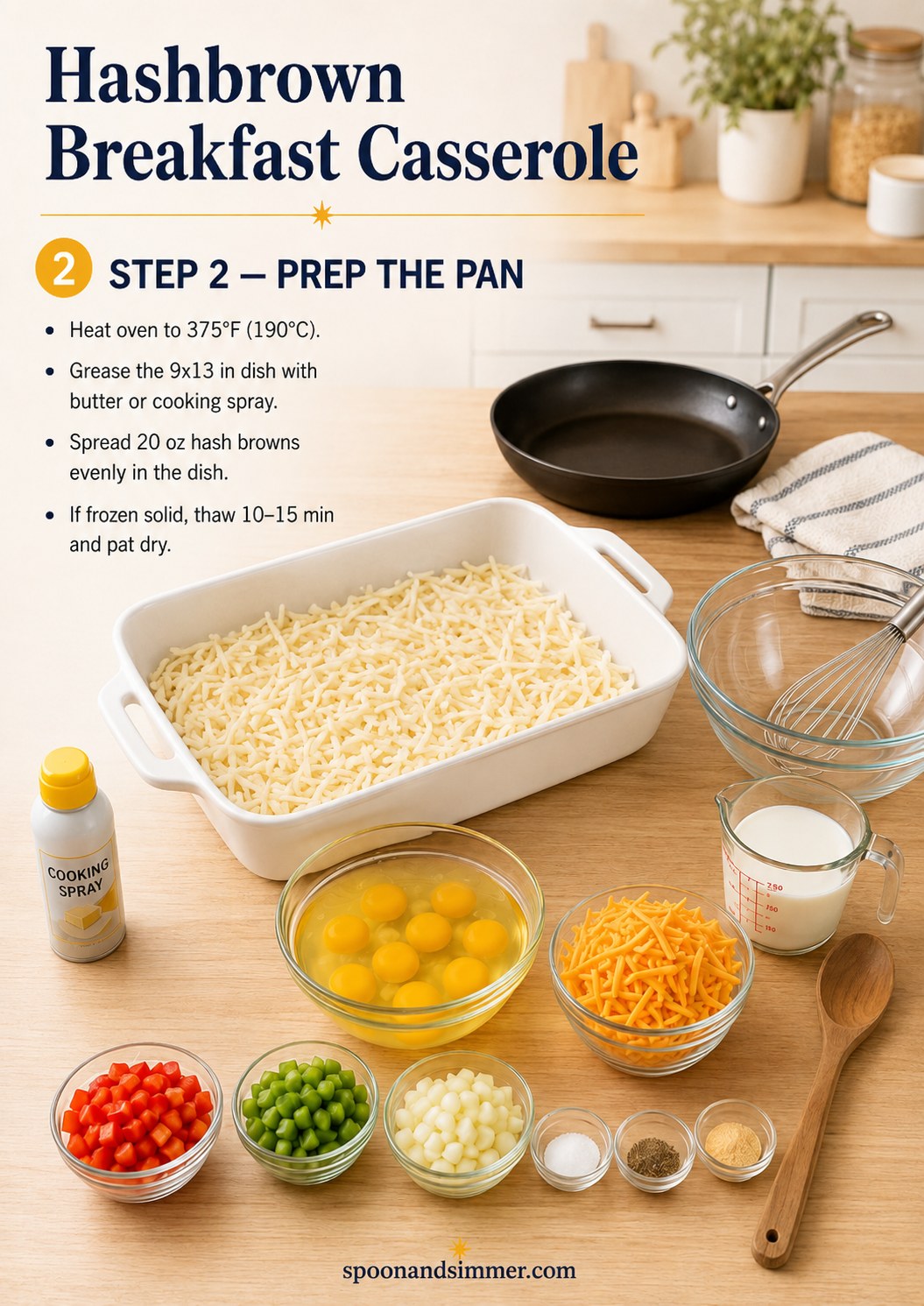
Grease your 9x13-inch baking dish generously with butter or cooking spray — this is not the moment to skimp, because hash browns love to stick to bare ceramic or glass. Spread the full 20 oz of frozen shredded hash browns in an even layer across the bottom.
If your hash browns are frozen solid in a clump, let them thaw 10–15 minutes on the counter and pat them dry before spreading. Excess ice crystals mean excess water in your casserole, and a watery casserole is a soggy casserole. I learned this the annoying way with a bag I forgot to thaw — the bottom layer never fully set.
A dry hash brown layer is the difference between a casserole that slices clean and one that slumps on the plate.
Browning the Sausage and Softening the Peppers
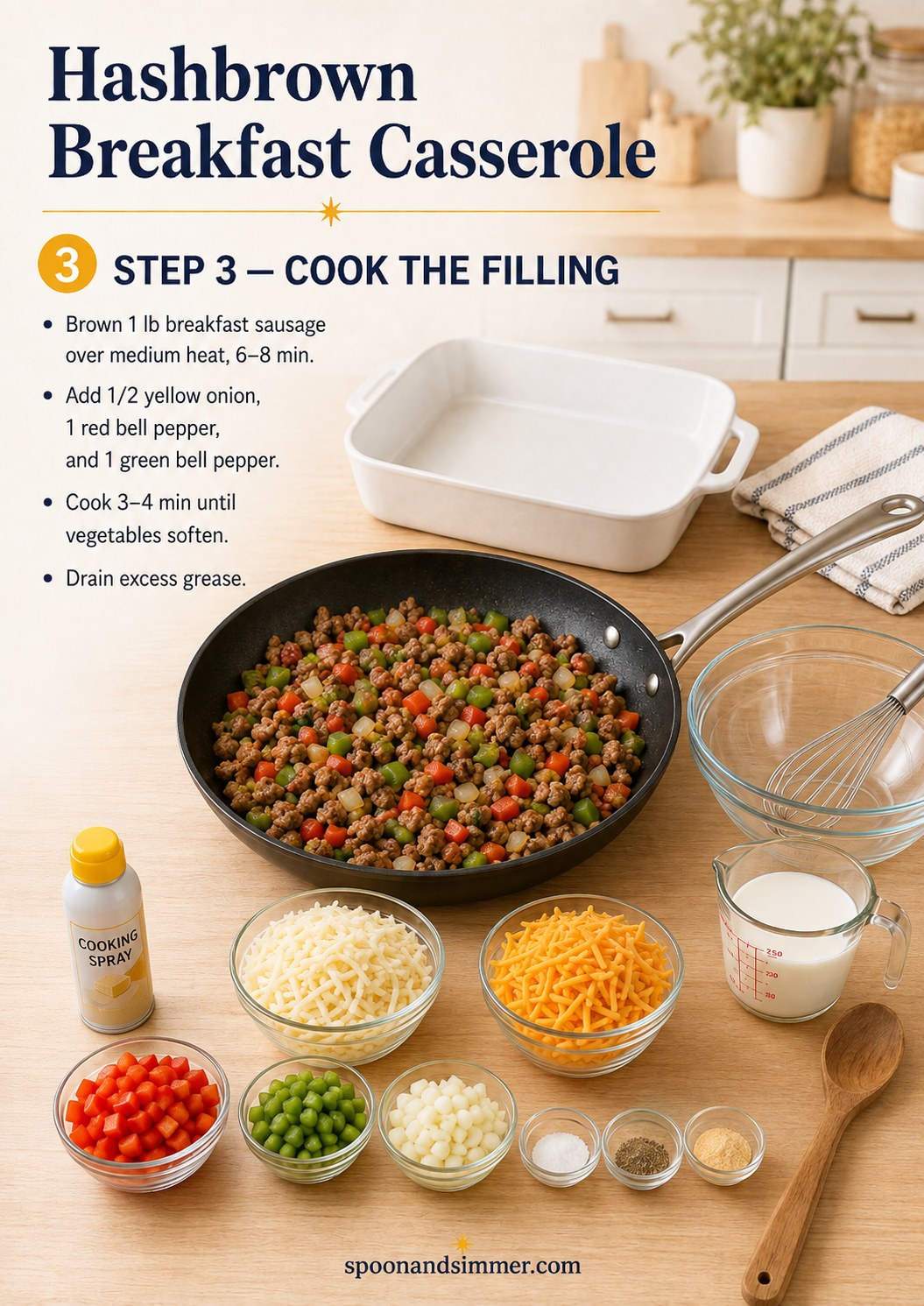
In the same skillet, brown 1 lb breakfast sausage over medium heat for 6–8 minutes, breaking it up as it goes until no pink remains. Add the diced onion, red bell pepper, and green bell pepper right into the pan and cook another 3–4 minutes, just until the vegetables soften and lose their raw crunch.
- Look for: sausage browned at the edges, not just gray
- Smell for: peppers turning slightly sweet, onion going translucent
- Then: drain the excess grease before it goes anywhere near your hash browns
Draining matters here — I pour mine into an old can, never down the sink, a habit my mom drilled into me long before I ever worked a restaurant line.
Whisking the Egg Custard Smooth
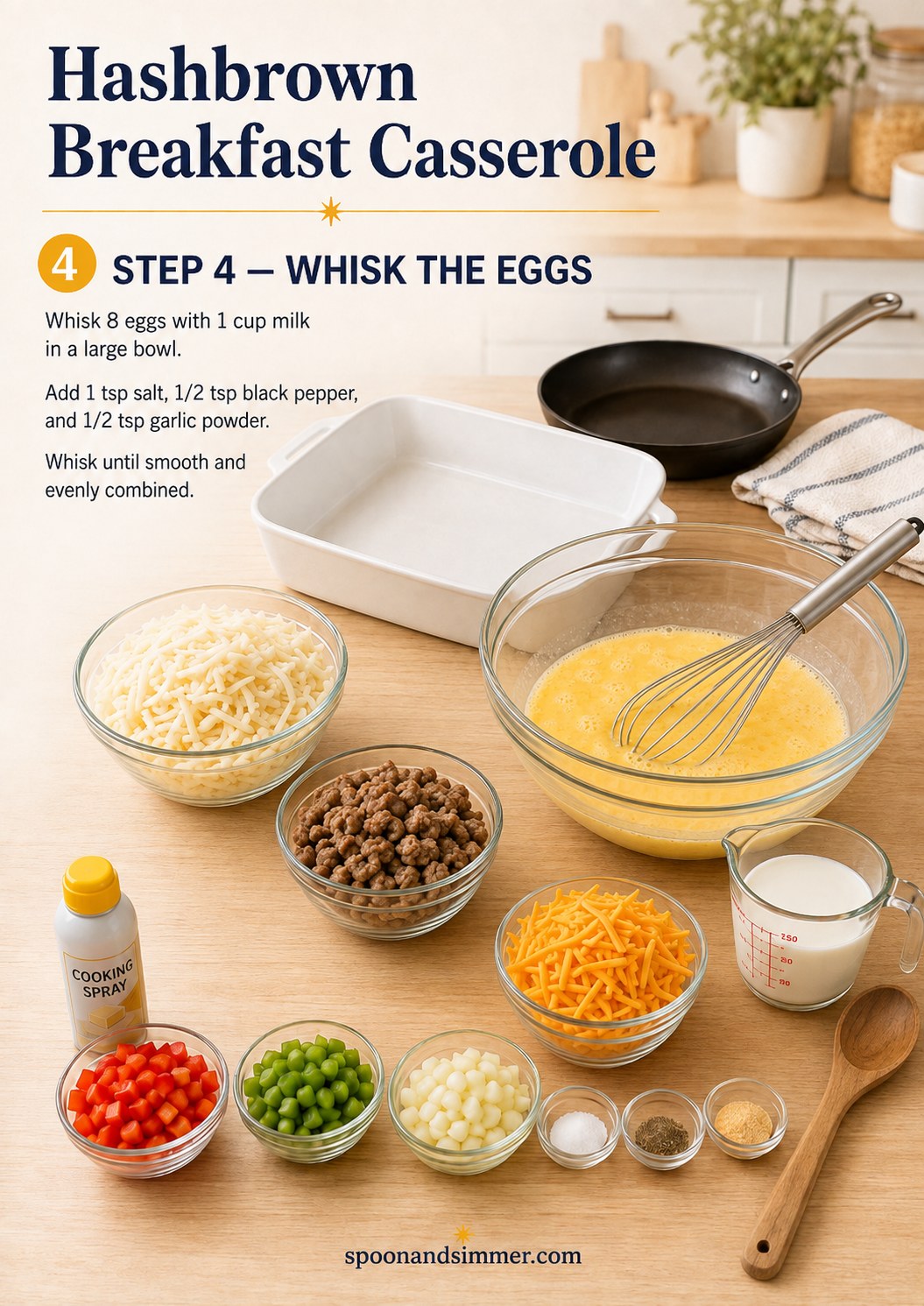
While the sausage cools slightly, whisk 8 large eggs with 1 cup milk in a large bowl until fully combined. Add 1 teaspoon salt, 1/2 teaspoon black pepper, and 1/2 teaspoon garlic powder, then keep whisking until the mixture is smooth, evenly yellow, and free of any streaky egg white.
This custard is what turns a pile of hash browns and meat into an actual casserole — it seeps down through every layer as it bakes and binds the whole dish together. A few extra seconds of whisking now saves you from finding unblended egg white pockets later.
Layering the Casserole
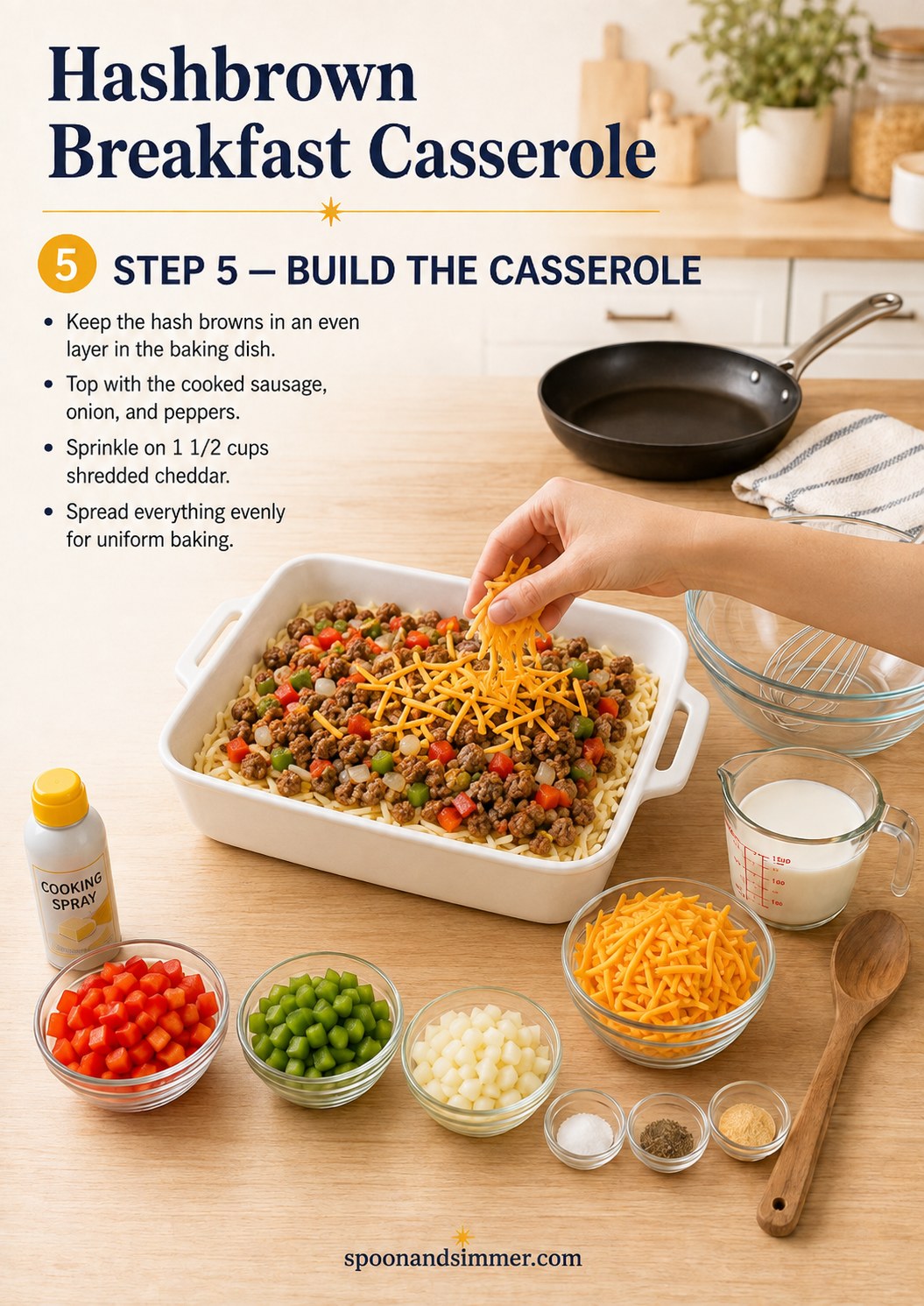
With the hash browns still in their even layer, top them with the cooked sausage, onion, and pepper mixture, spreading it corner to corner. Sprinkle on 1 1/2 cups of the shredded cheddar, saving the remaining 1/2 cup for later.
- Hash browns on the bottom, pressed flat
- Sausage and vegetables spread evenly over the top
- Cheddar scattered so no bare patches remain
I do this part with my hands, not a spoon — you get better, more even coverage, and it's genuinely satisfying to watch the layers build.
Pouring the Custard Over Everything
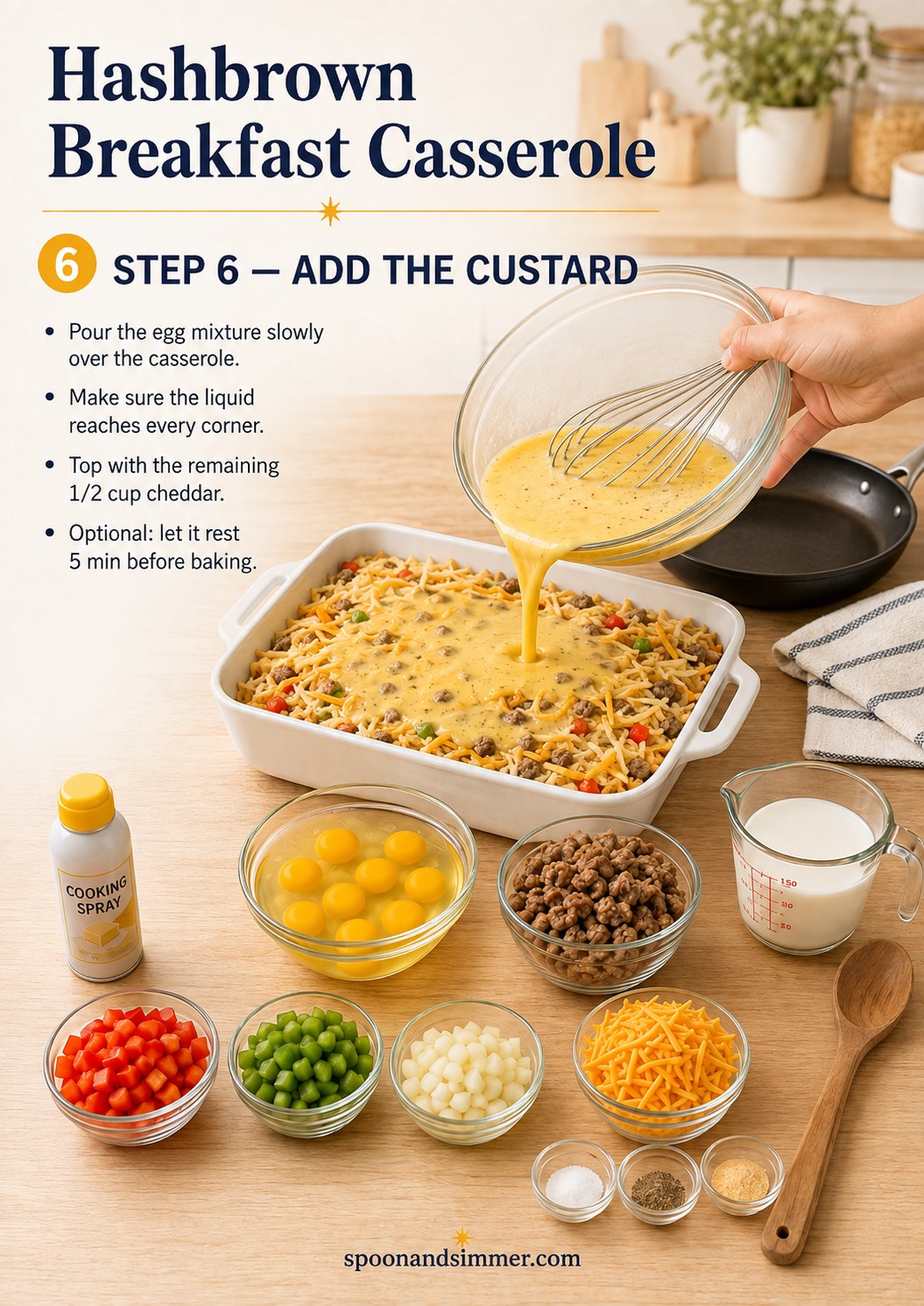
Pour the whisked egg mixture slowly over the casserole, working in a steady stream so it has time to reach every corner rather than pooling in the middle. Tilt the dish gently if you need to coax it toward the edges.
Top with the reserved 1/2 cup cheddar. If you have five minutes to spare, let the whole dish rest before baking — the custard settles into the hash browns and you get a more even set. It's optional, but I do it most Sundays because I'm usually still hunting for coffee anyway.
Into the Oven
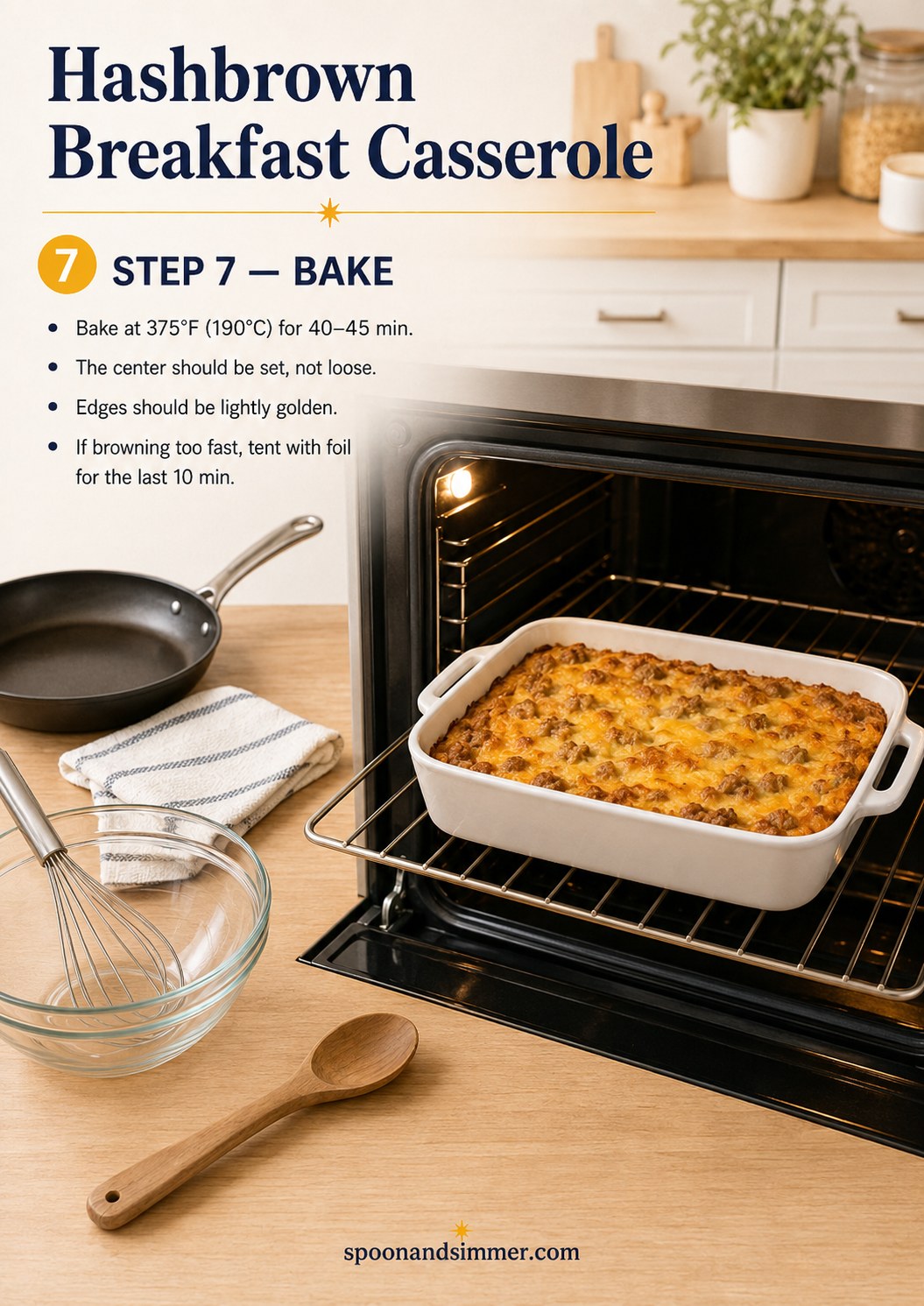
Bake at 375°F for 40–45 minutes. You're looking for a center that's set, not loose or jiggly, and edges that have gone lightly golden. Every oven runs a little differently, so start checking around the 35-minute mark rather than trusting the timer blindly.
- Browning too fast? Tent loosely with foil for the last 10 minutes
- Still jiggly at 40? Give it another 5 minutes and check again
- Edges pulling from the sides? Good sign, you're close
This is the point where the kitchen starts to smell like Sunday mornings, no matter what day it actually is.
Resting, Slicing, and Serving
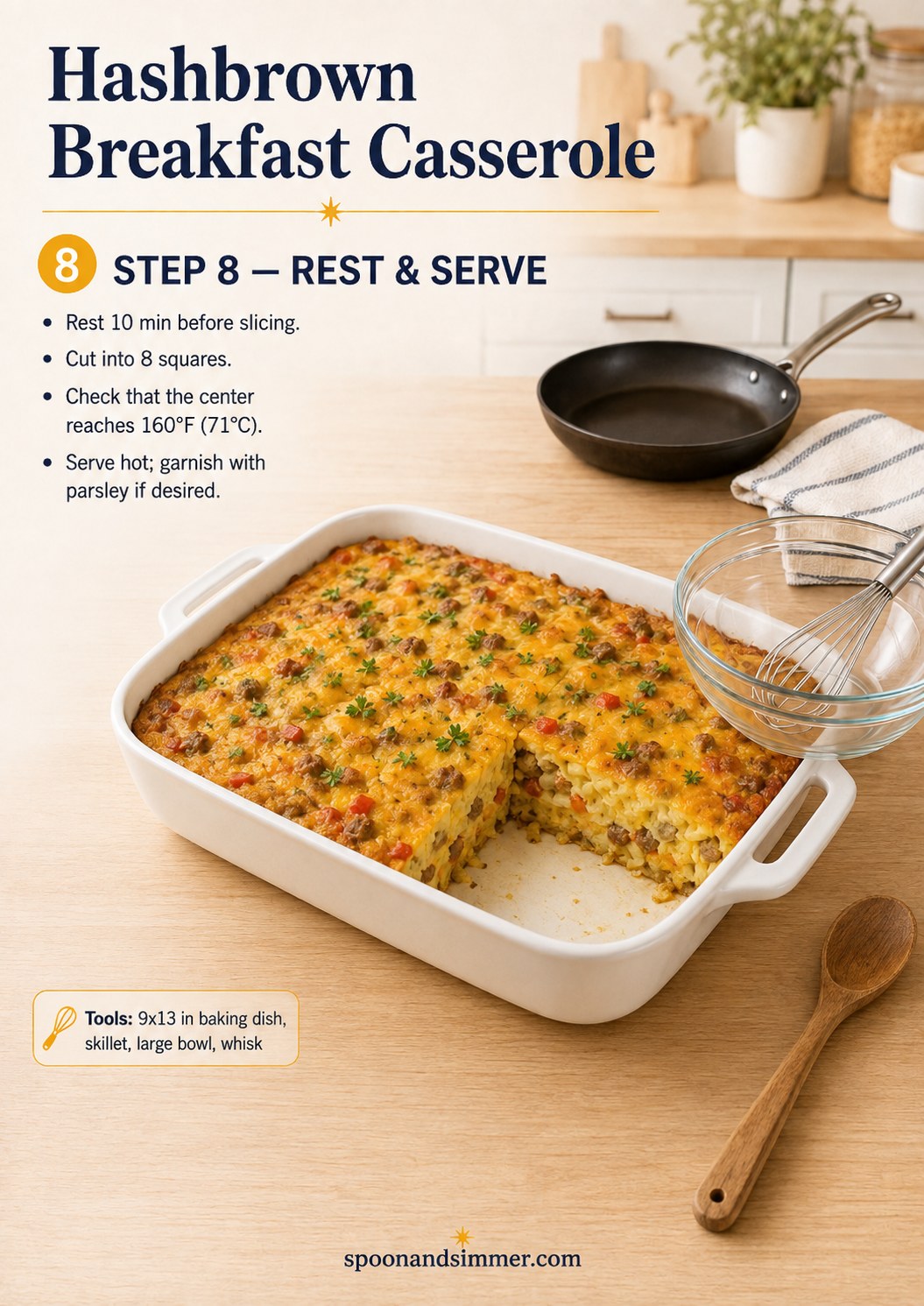
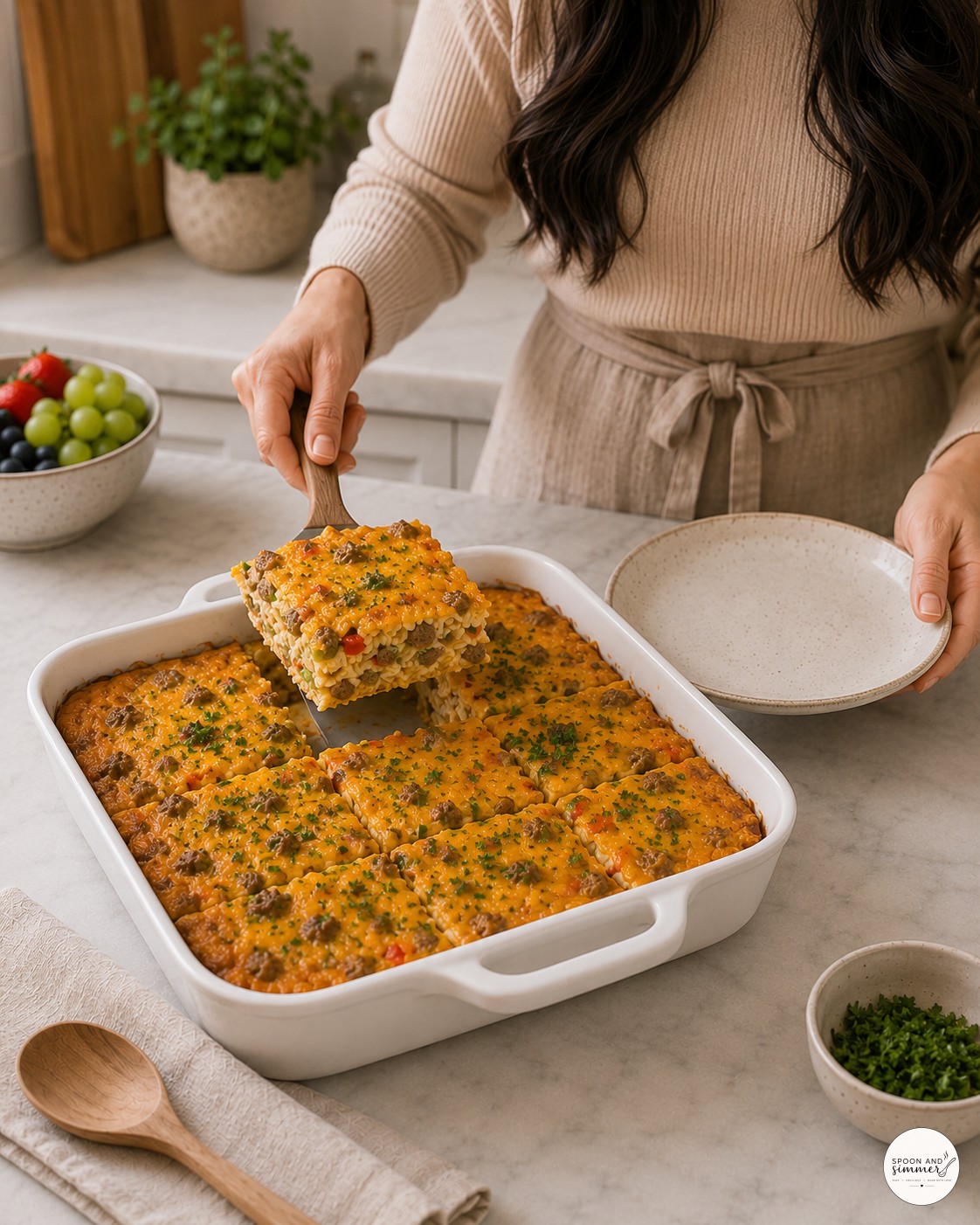
Let the casserole rest 10 minutes before you touch a knife to it — this isn't optional patience, it's what lets the custard finish setting so your slices hold their shape instead of collapsing. Cut into 8 squares.
If you're checking for food safety with an instant-read thermometer, the center should read 160°F (71°C). Serve hot, with a scatter of parsley if you want it to look a little dressed up for company.
The rest is what separates a clean square from a puddle on the plate — don't skip it just because you're hungry.
How This Casserole Actually Plays Out on a Real Sunday
The staged photos show the method, but this is what it looks like when I'm actually making it at my own counter, apron on, coffee going cold nearby. I wanted you to see the real hands-in-the-bowls version, not just the tidy version, because that's the part that tells you whether a recipe survives real life. Nothing here is different from the steps above, but a few extra details show up when you're doing it for real instead of for a camera.
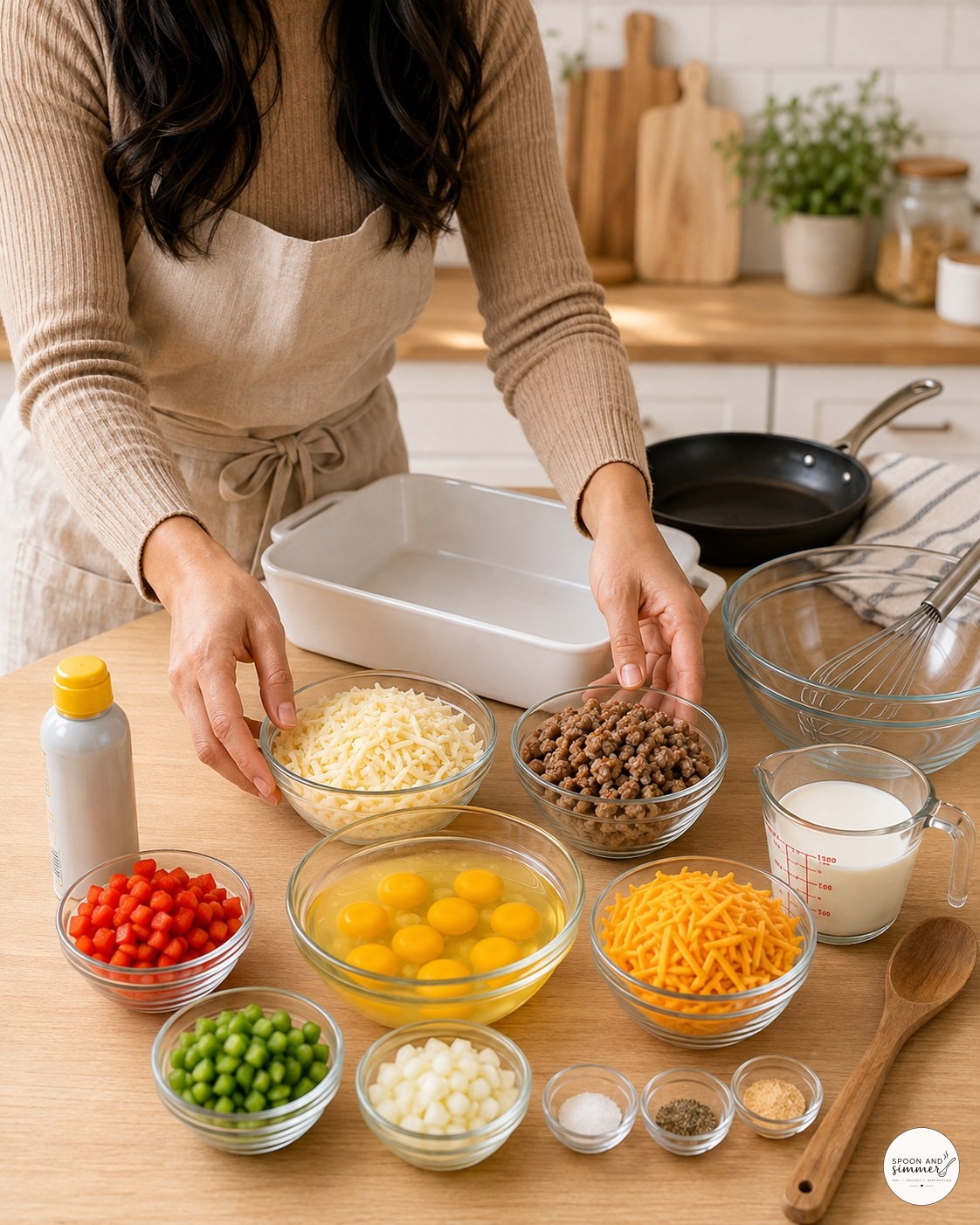
This is me reaching for the cheddar and sausage bowls at the same time, which is how most of my prep actually goes — not one bowl at a time in order, but grabbing whatever's closest. Biscuit is usually somewhere just out of frame at this exact moment, hoping for a dropped pepper.
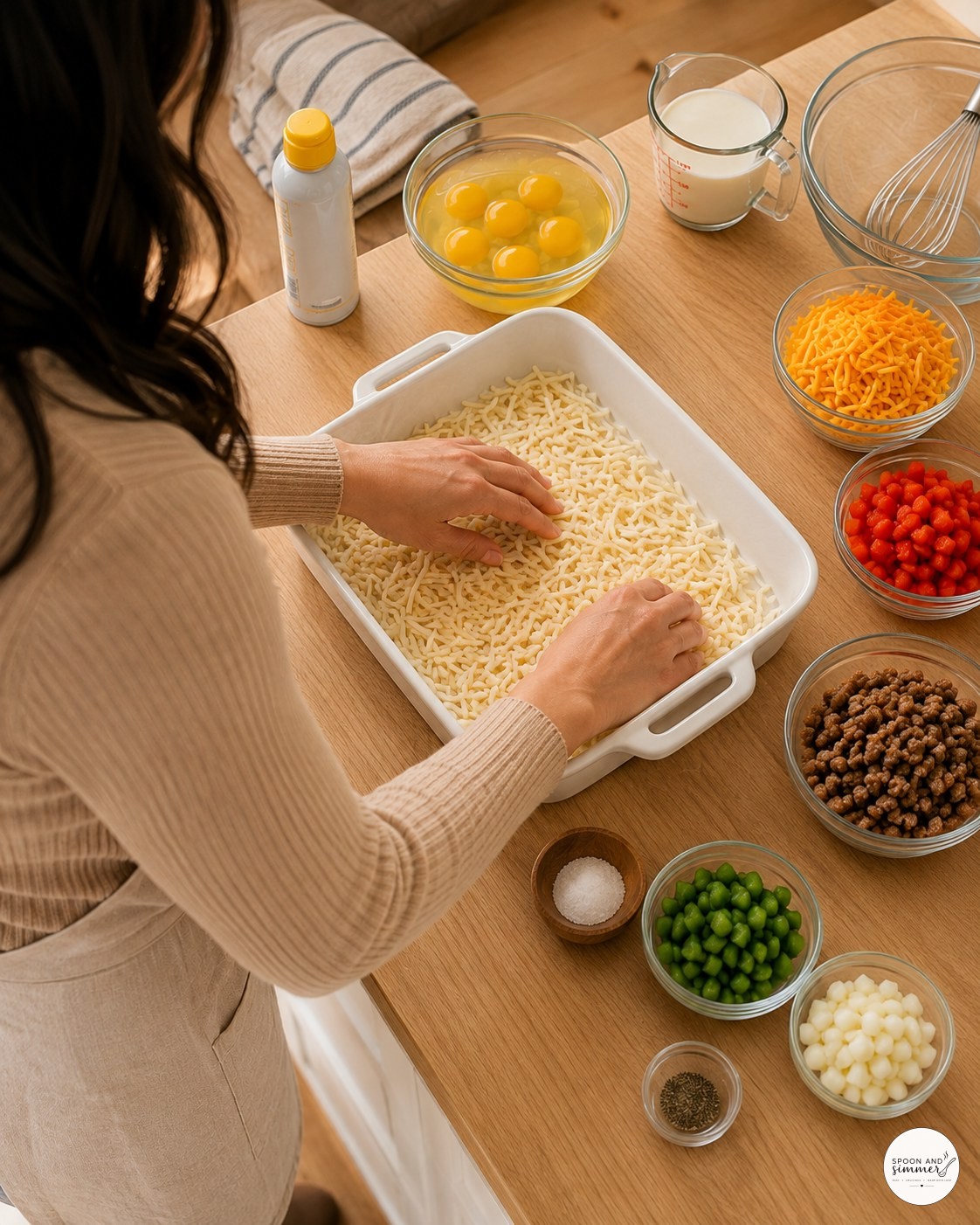
Pressing the hash browns down with my hands instead of a spatula gets a flatter, more even base than spreading with a utensil ever does. I buy the pre-diced peppers and onion from the produce section when I'm short on time, and honestly it shaves a good five minutes off this step.
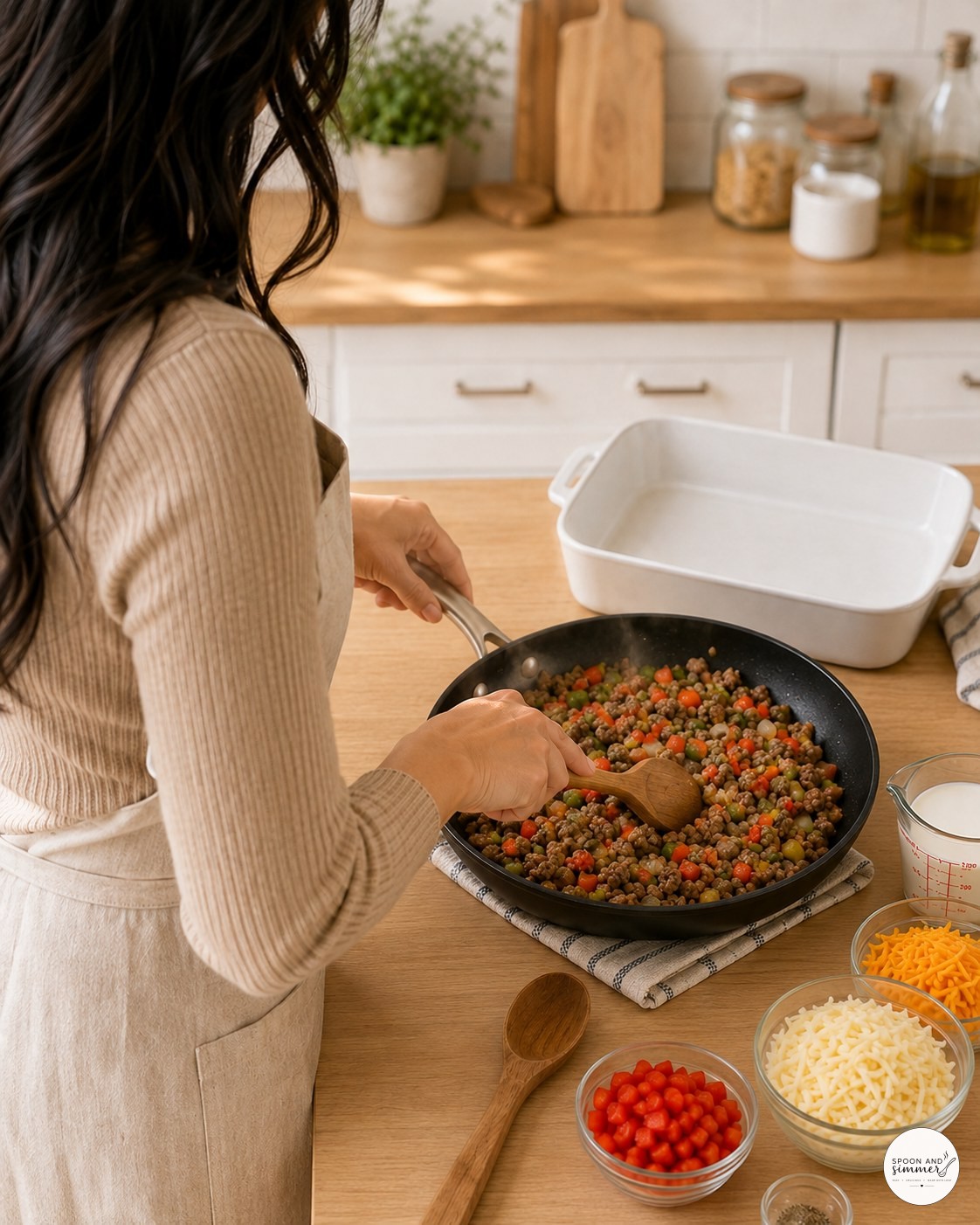
I still cook the sausage filling in the same battered nonstick skillet I've had for years — not fancy, but it browns meat evenly and nothing sticks. This is also the point where I taste a bite straight off the spoon to check the seasoning before it ever hits the dish.
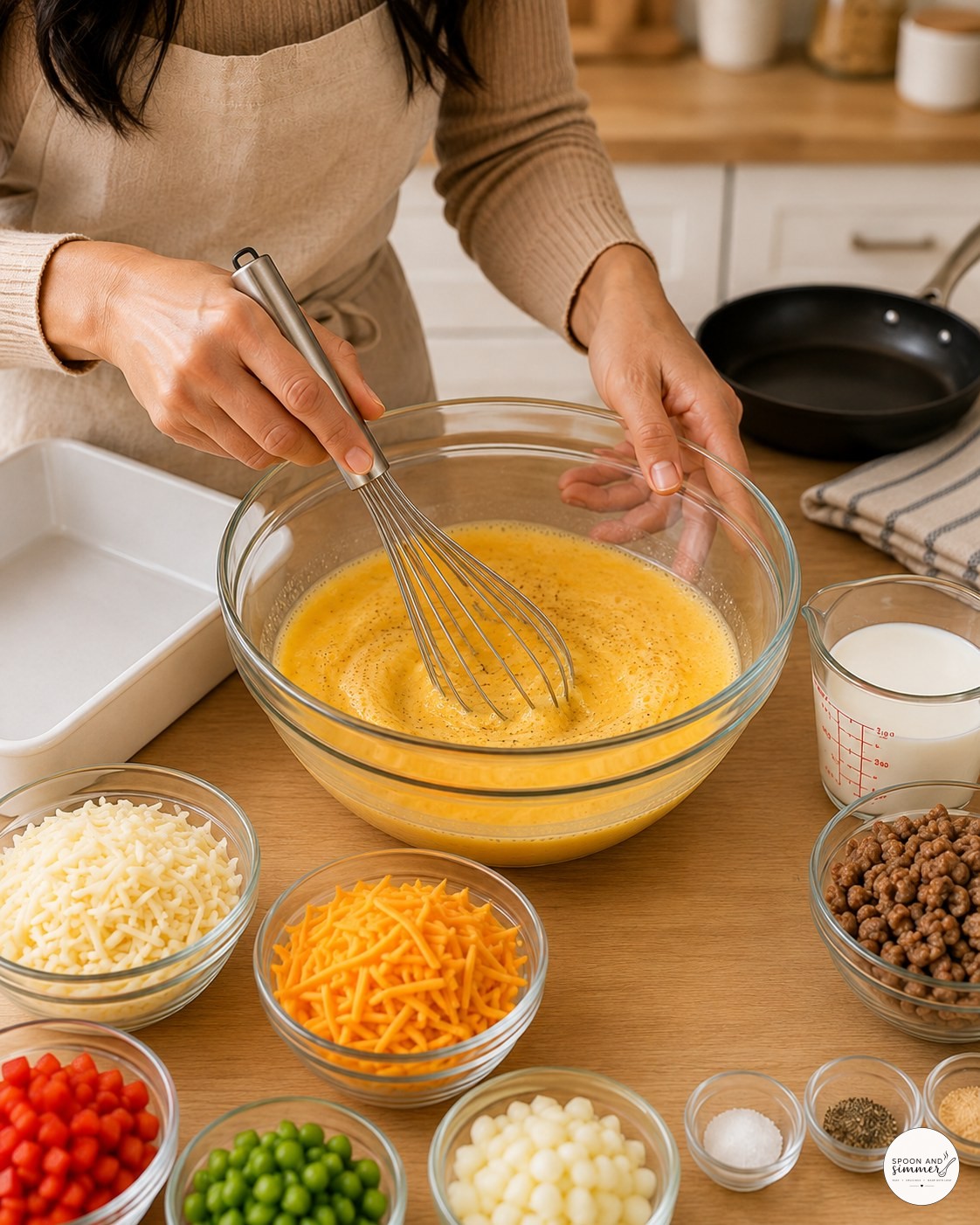
Whisking the eggs happens right after the filling comes off the heat, while the sausage cools on the counter so it doesn't scramble the custard when it's layered in. I whisk longer than feels necessary, until there's zero streaking left.
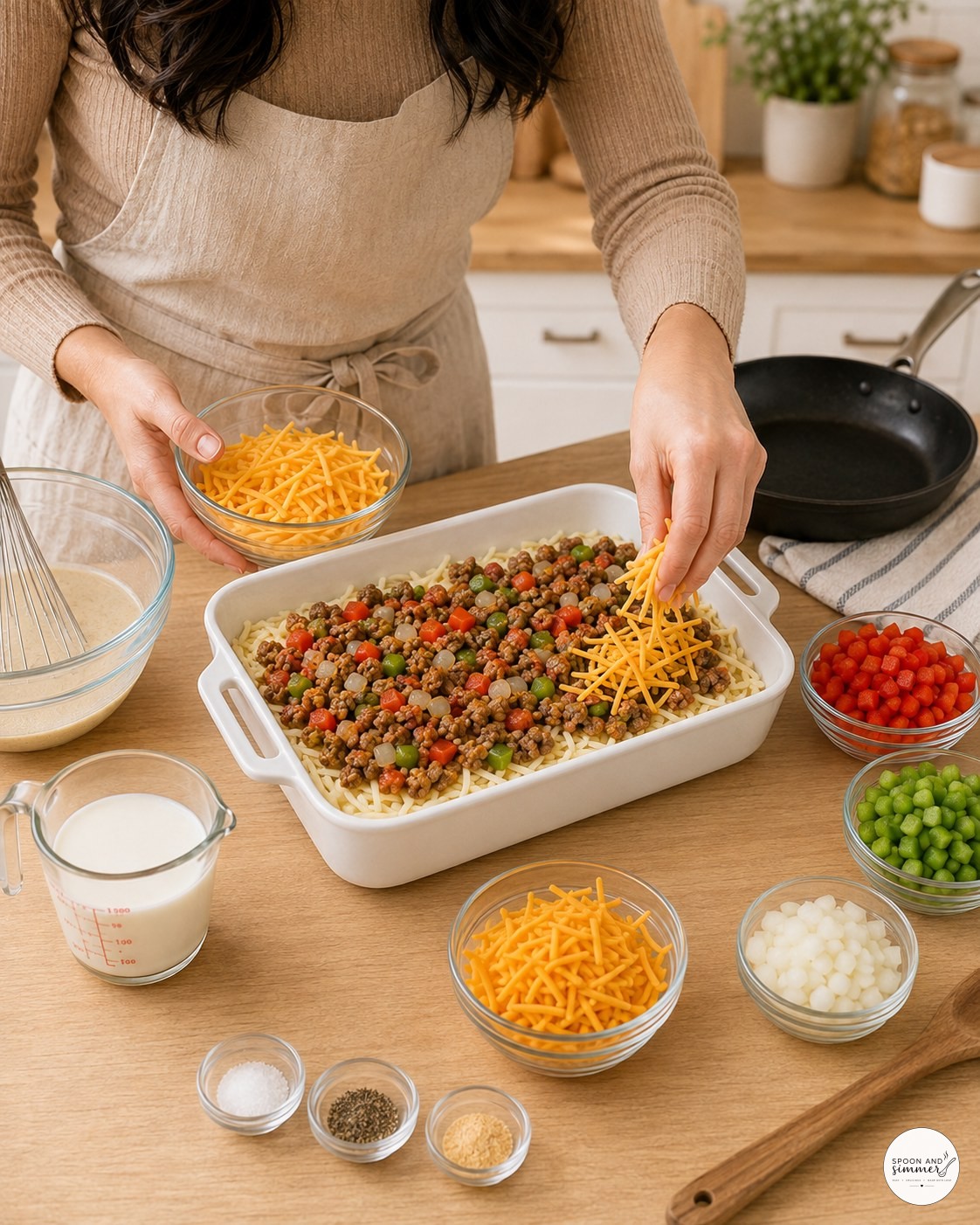
Sprinkling the cheddar by hand instead of pouring it from the bowl means I can actually see where the bare patches are and fill them in. I always seem to run a little short right at the corners, so I save a small pinch back just for that.
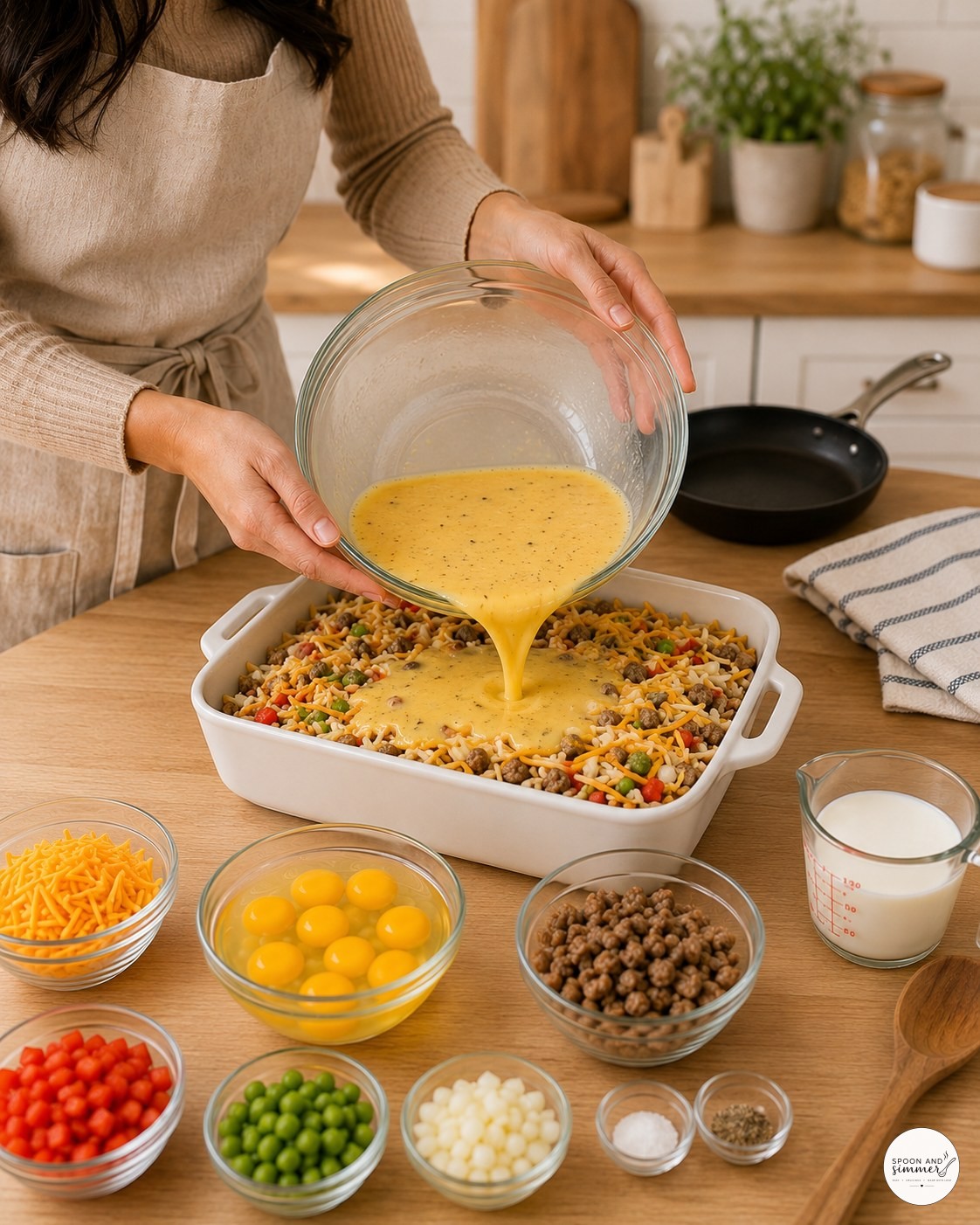
Pouring the custard slowly here matters more than it looks like it does in a photo — go too fast and it just pools in the center instead of working its way to the edges. I always start pouring near the corners first, then finish in the middle.
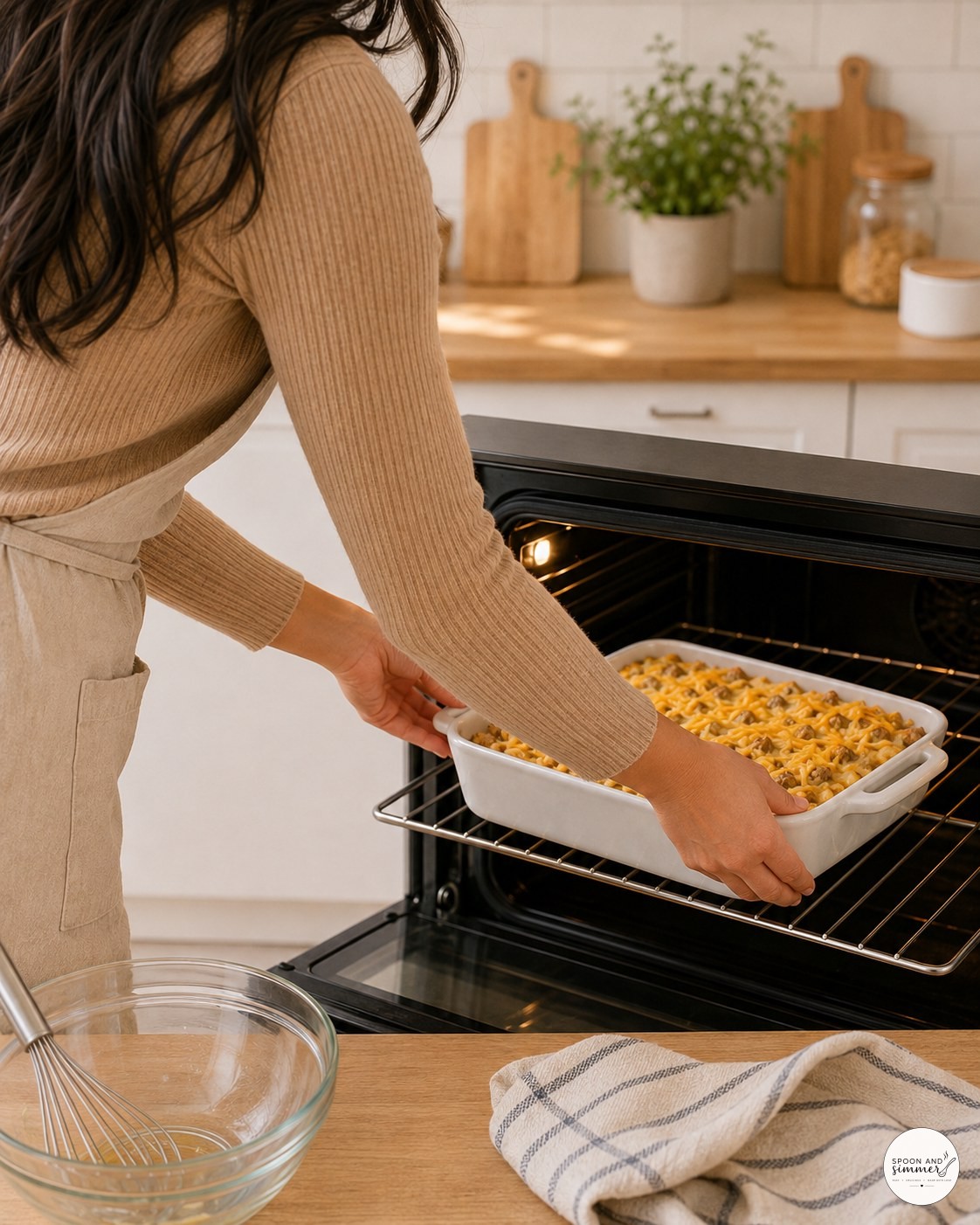
My oven runs slightly hot, so I've learned to check this casserole a few minutes before the timer goes off rather than trusting it blindly. Sliding the dish onto the middle rack, not the top one, keeps the top from browning faster than the center sets.
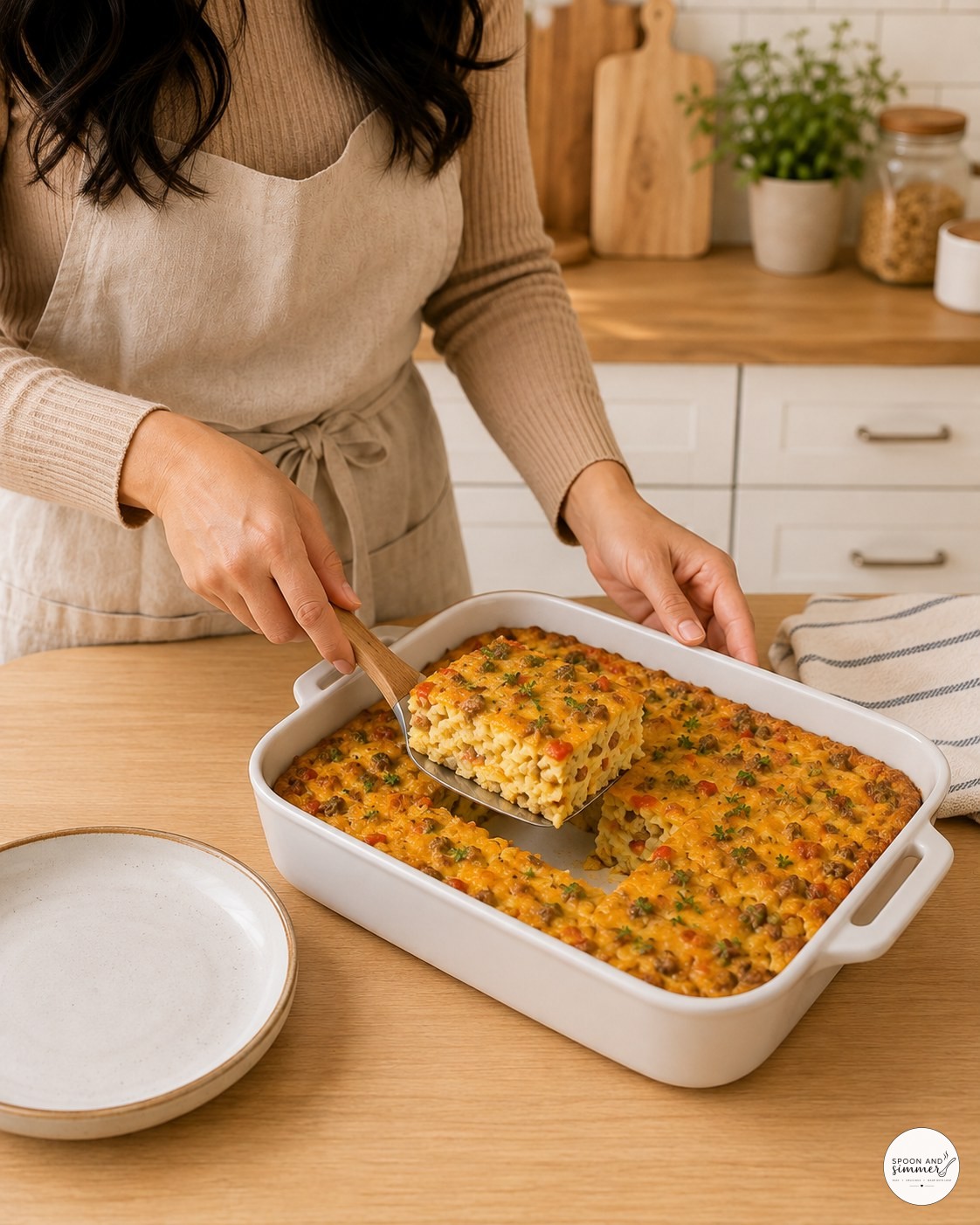
Cutting into it right after the rest period, you can see the custard held everything together instead of pooling underneath. The center square always looks the most tender, which is usually the one I hand to whoever's hovering closest.
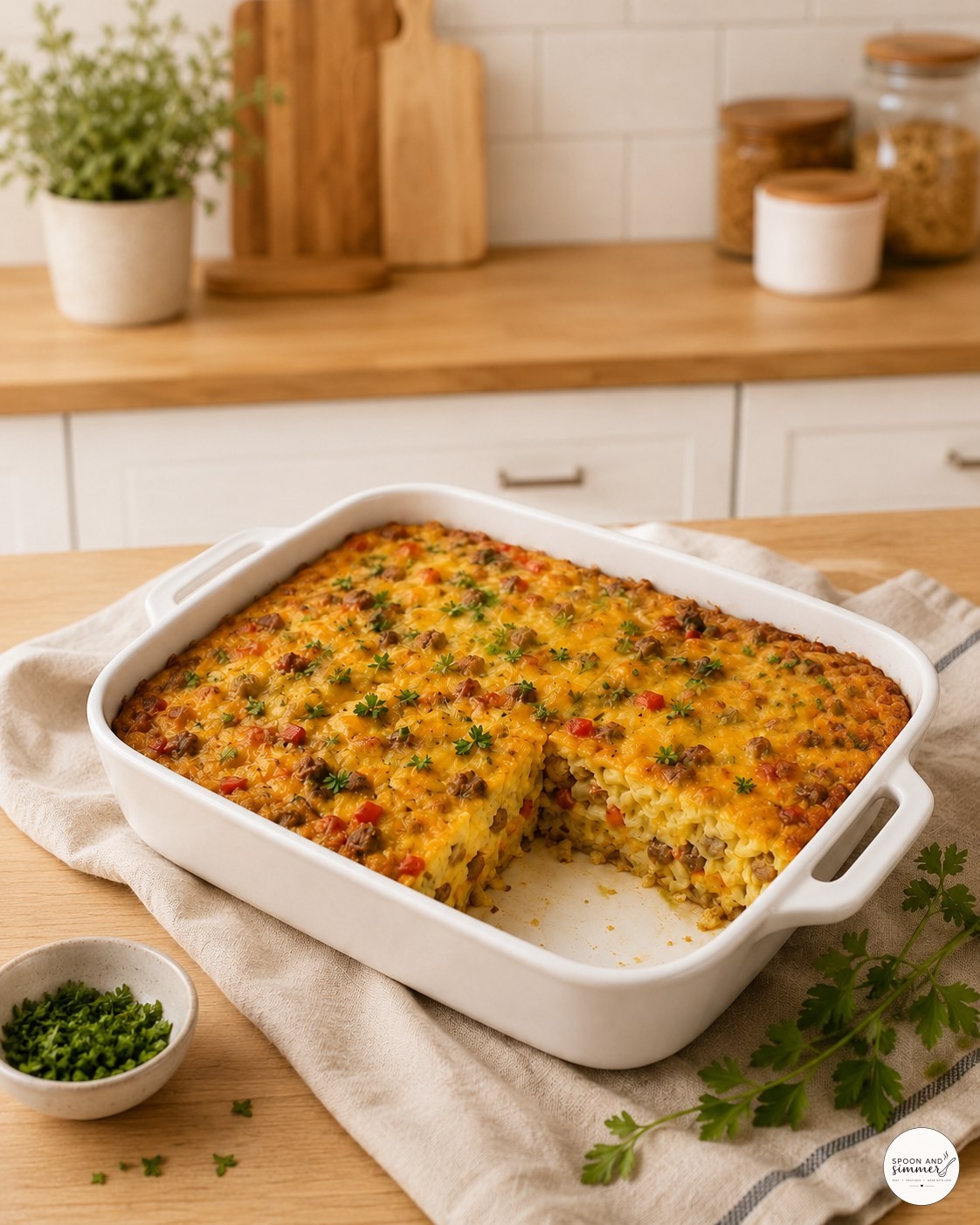
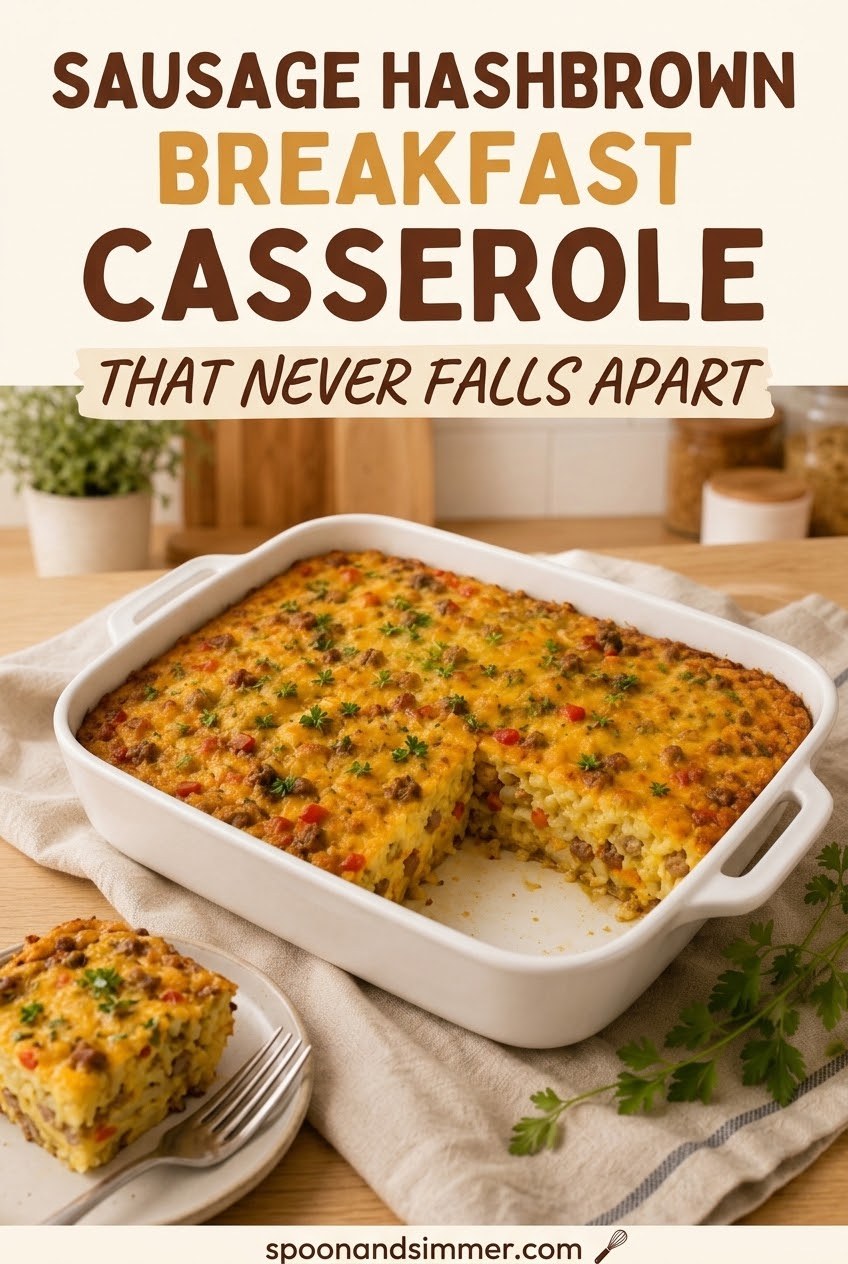
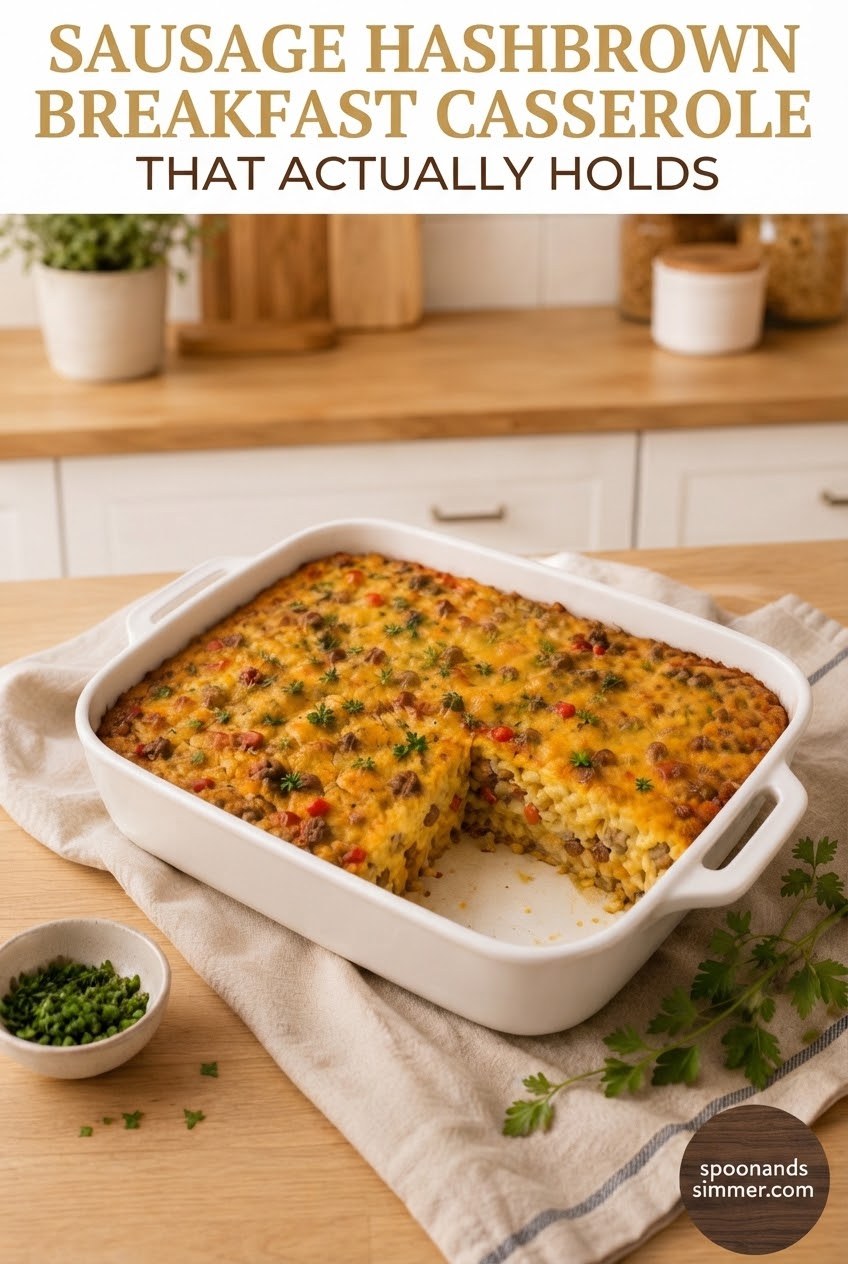
This is the dish at the end of a real Sunday, parsley scattered on top and one corner already missing before it even made it to the table. It's the version that actually gets eaten, not just photographed.
The Takeaway
This is the casserole I reach for when I want breakfast handled without thinking too hard about it — one dish, one bake, and everyone at the table fed. Make it once with the exact steps above, and you'll start improvising your own version soon enough.

- For the casserole
- For the egg custard
- Other

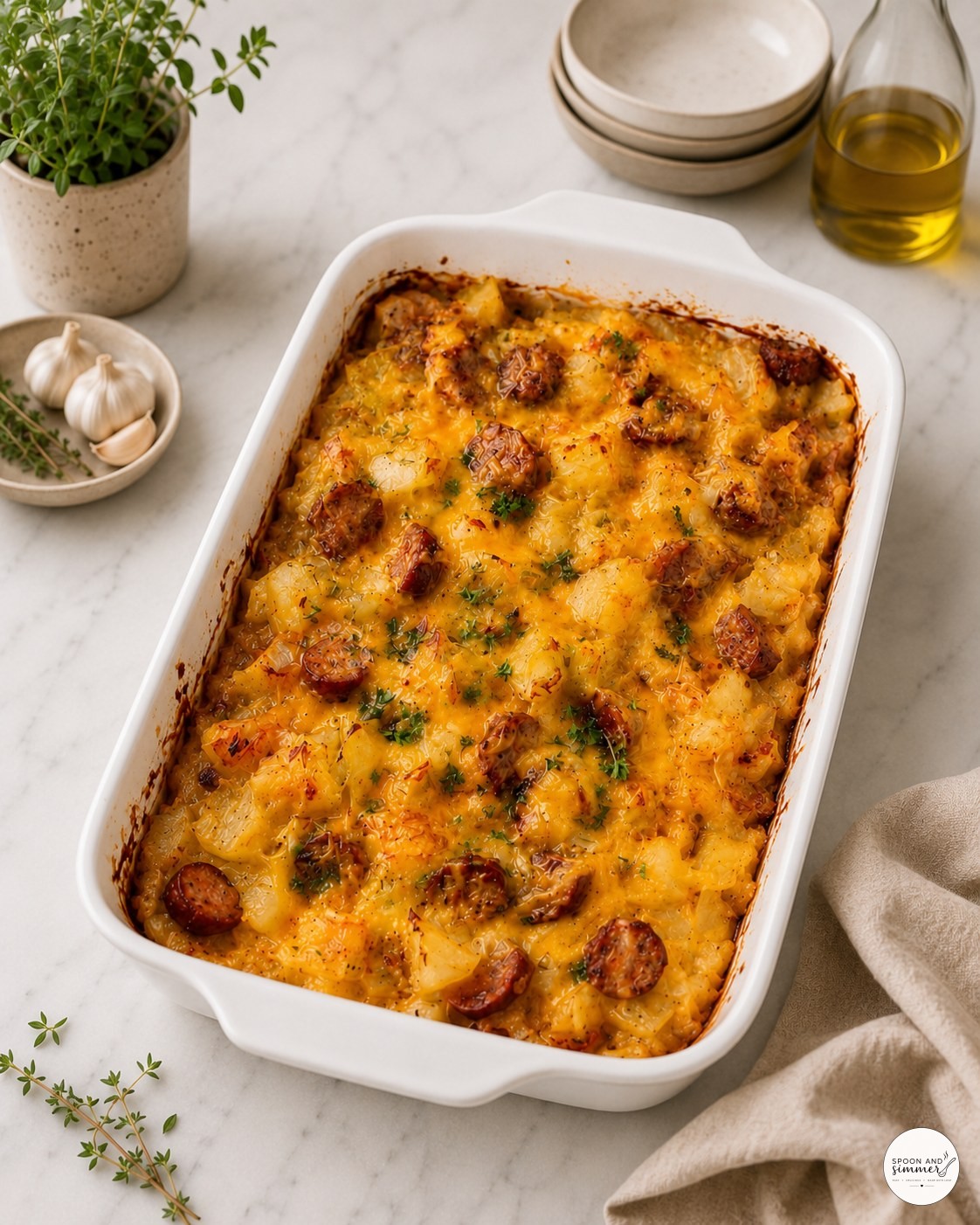
Common Questions
Can I assemble this sausage hashbrown breakfast casserole the night before?
Yes. Build everything through pouring the egg custard, cover, and refrigerate overnight. Bake straight from the fridge at 375°F, adding roughly 5–10 extra minutes since it's starting cold.
Can I use a different sausage or make it vegetarian?
Regular pork breakfast sausage works as written; turkey sausage or a plant-based crumble both work fine as swaps, though plant-based versions may release less grease so you can skip the draining step.
How do I store and reheat leftovers?
Refrigerate leftover squares in an airtight container for up to 4 days. Reheat in a 325°F oven for about 15 minutes, or in the microwave for 90 seconds, until the center is warmed through.