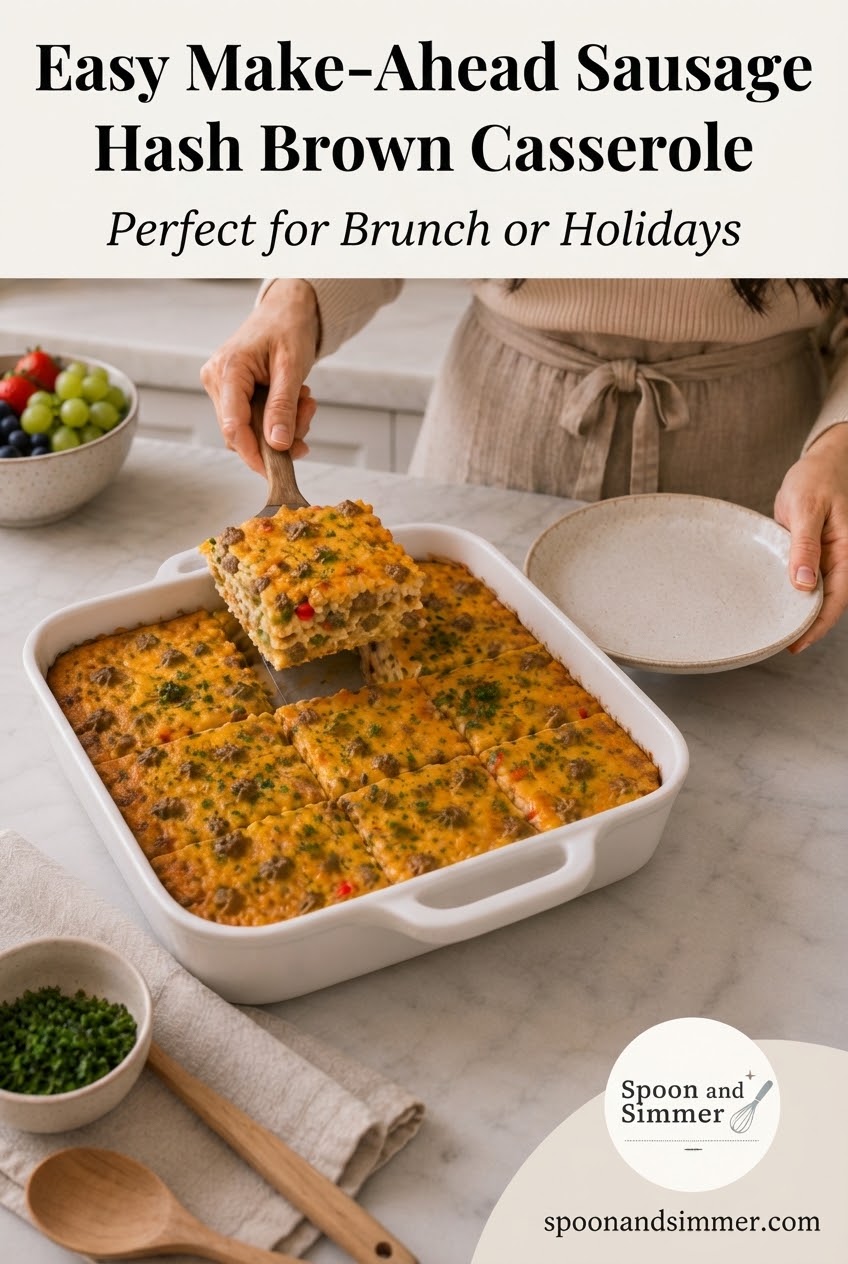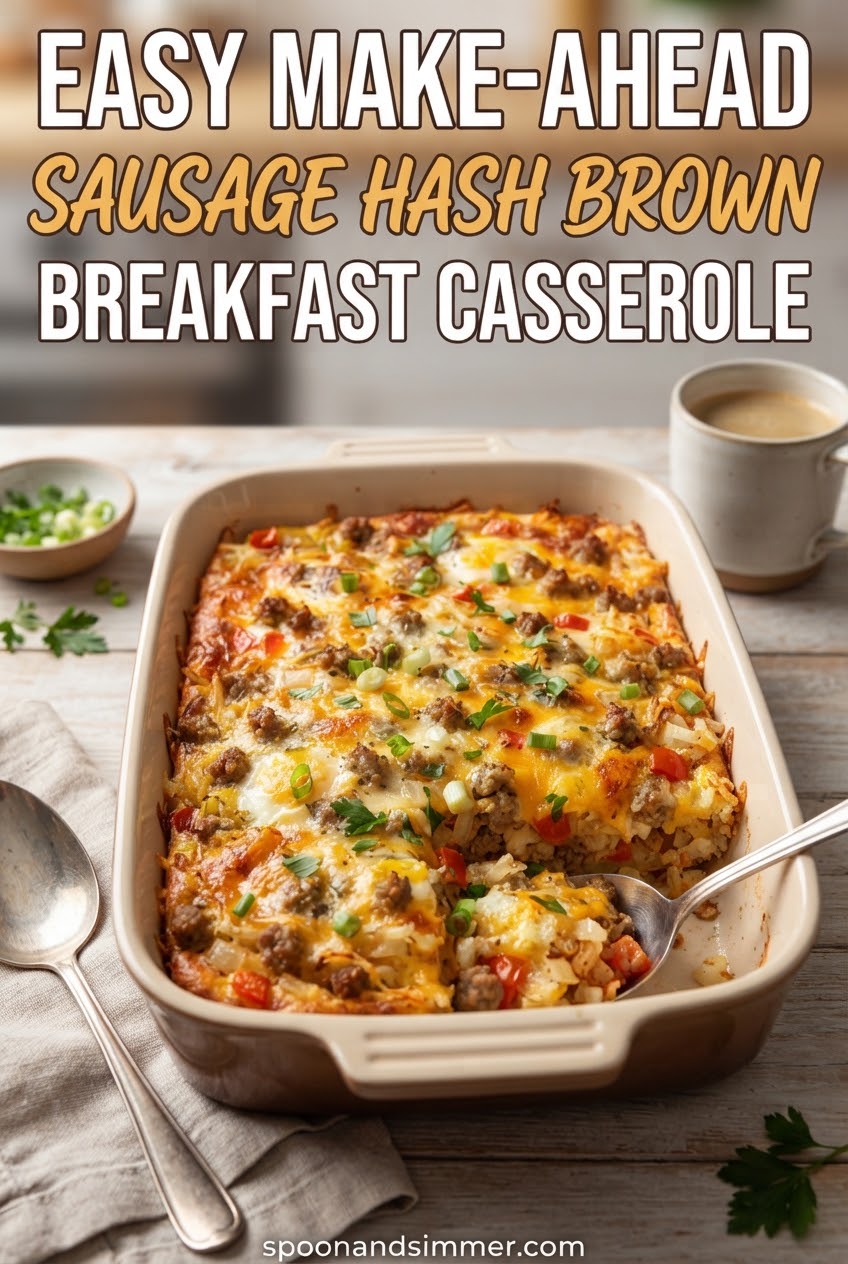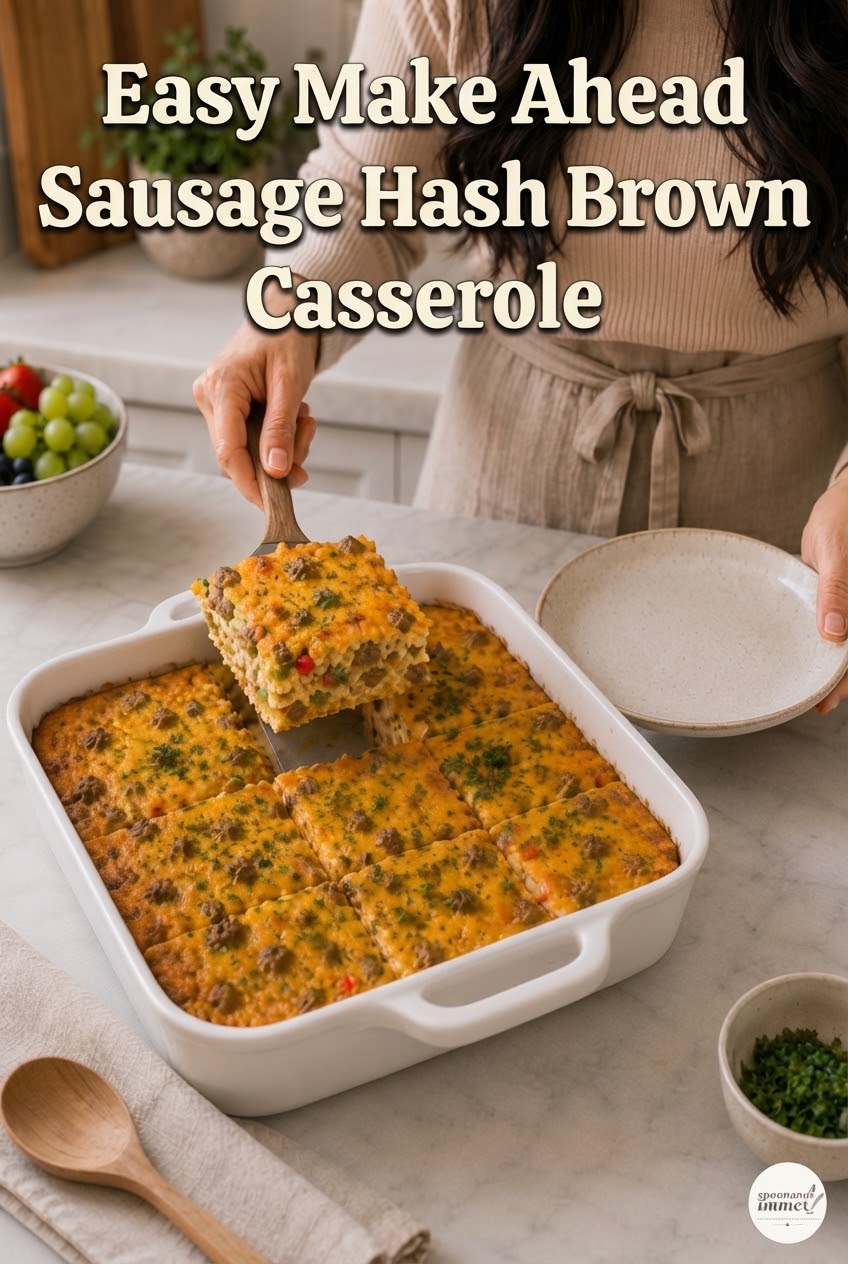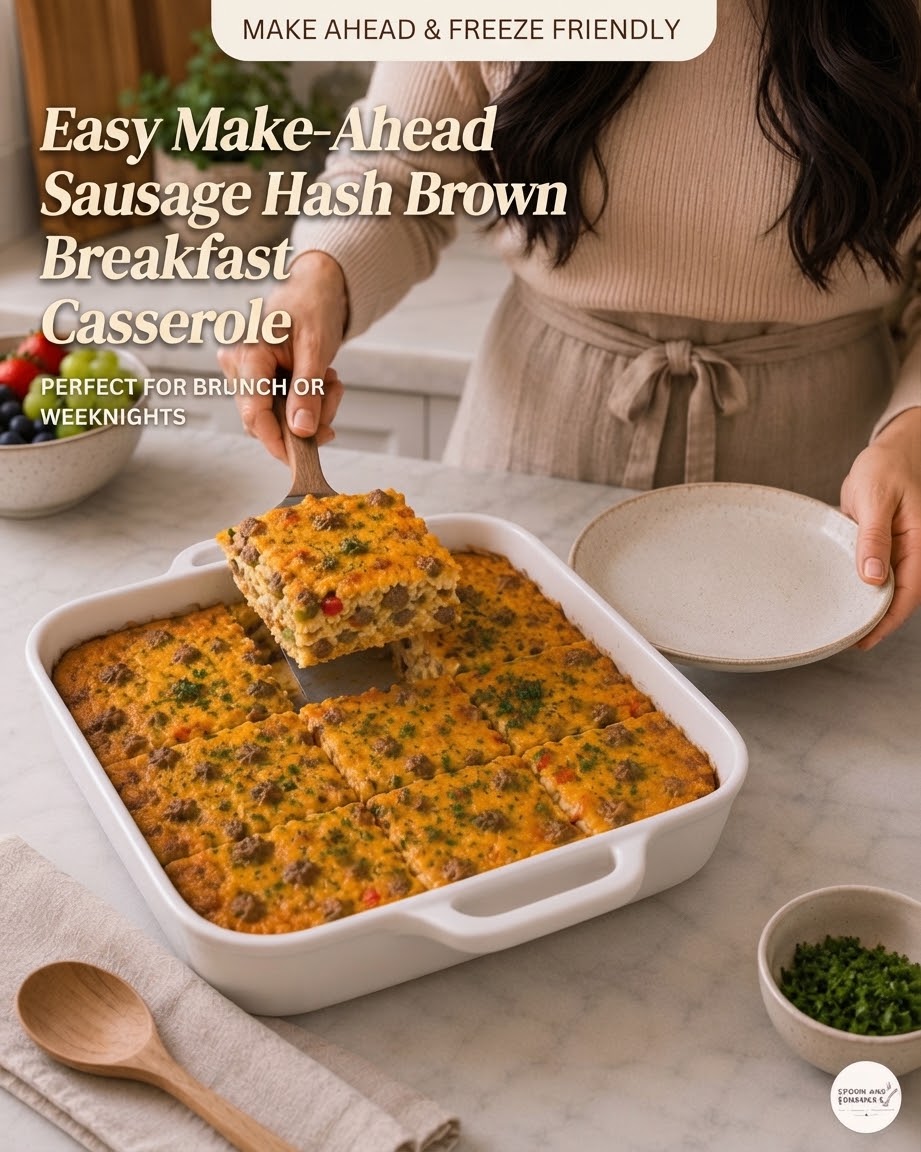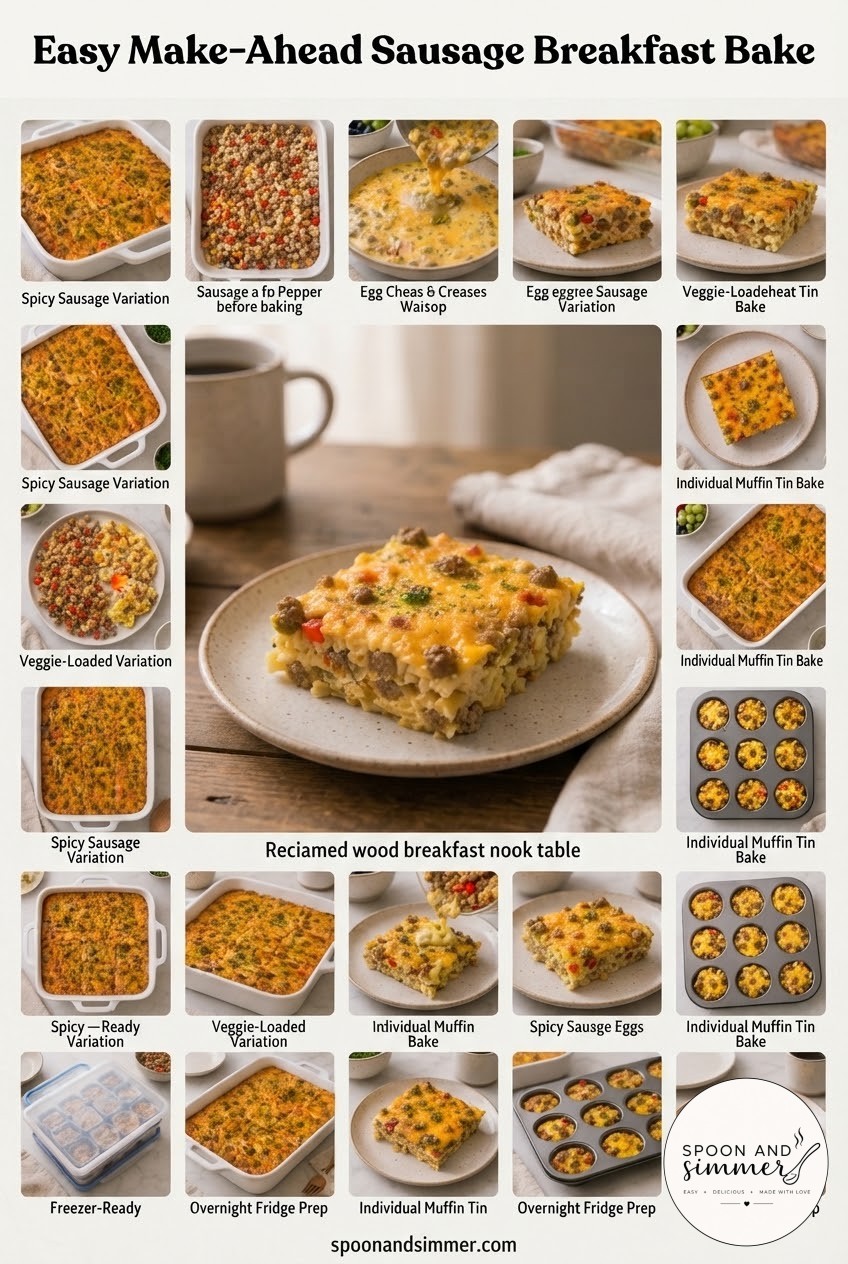
This is the casserole I pull out when Dave has a full house coming for Sunday brunch and I'd rather be drinking coffee than standing at the stove flipping eggs. It's built in layers — hash browns, sausage, peppers, cheese, custard — and it bakes into one solid, slice-able block, no fussing with individual plates. I've made it both same-day and overnight-chilled, and honestly, the overnight version wins on flavor.
Gather Everything Before You Turn On the Stove
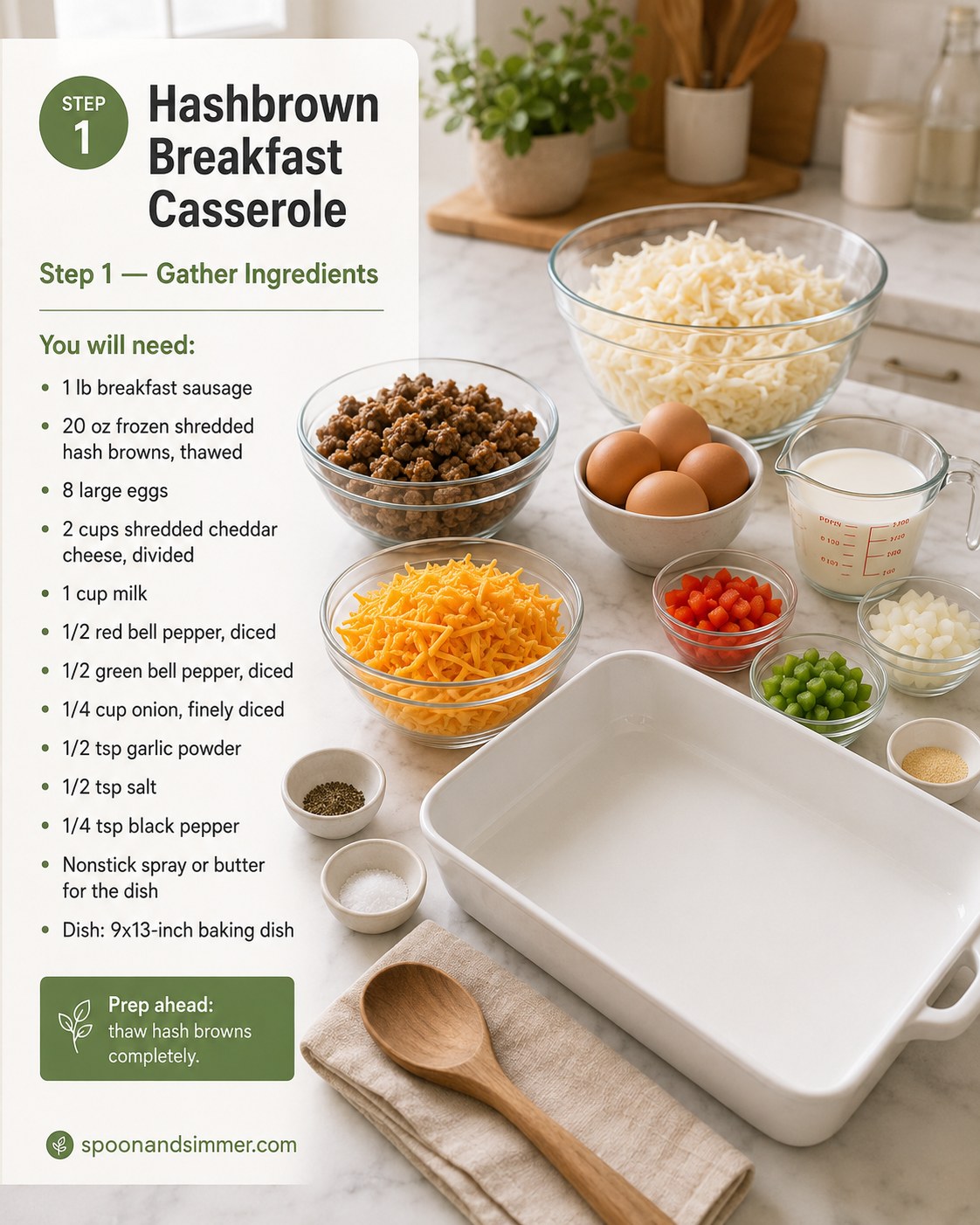
Line up your ingredients first — this one moves fast once the skillet is hot, and you don't want to be dicing peppers while sausage burns behind you. You'll need 1 lb breakfast sausage, 20 oz frozen shredded hash browns (thawed), 8 large eggs, 2 cups shredded cheddar divided, 1 cup milk, diced red and green bell pepper, finely diced onion, garlic powder, salt, and black pepper.
- Thaw the hash browns completely — spread them on a towel or leave them in the fridge overnight, because watery, half-frozen potatoes will turn your custard soupy.
- Grease your 9x13-inch dish now so it's ready the moment your layers are built.
I keep a running list on the fridge for casseroles like this — one less thing to remember at 7 a.m. when Ivy is asking why we can't just have cereal.
Brown the Sausage Until It's Deeply Crumbled
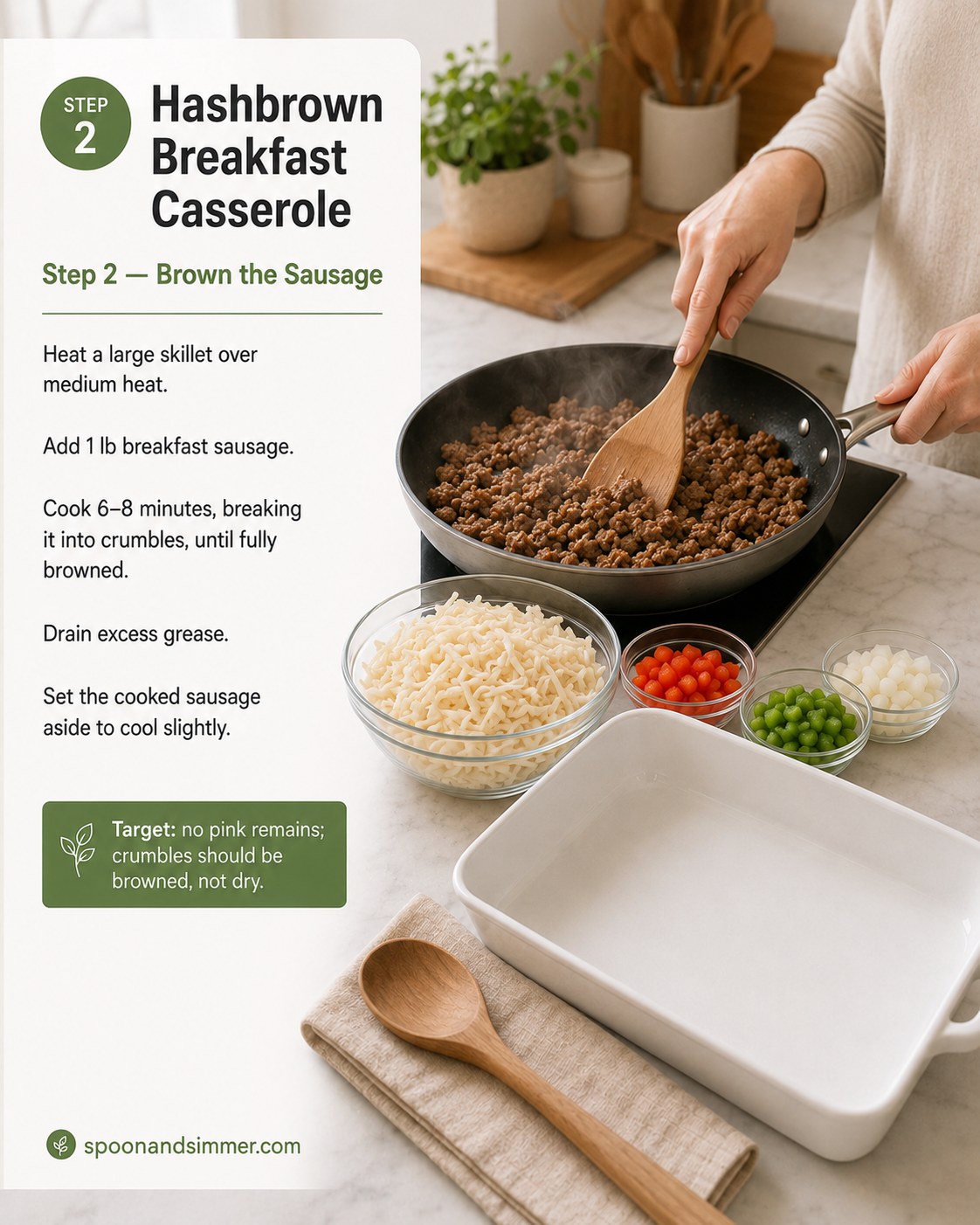
Heat a large skillet over medium heat and add the pound of breakfast sausage, breaking it into crumbles with a wooden spoon as it cooks. Give it a full 6 to 8 minutes — you're looking for no pink remaining and crumbles that are browned, not dry or gray.
From my line-cook days: don't crowd the pan and don't rush this step. A properly browned sausage is half the flavor of this whole dish.
Drain off the excess grease once it's done, then set the sausage aside to cool slightly while you move on to the vegetables. If your sausage looks watery instead of browned, your heat is probably too low — bump it up and let the moisture cook off before it starts to crumble properly.
Soften the Peppers and Onion in the Drippings
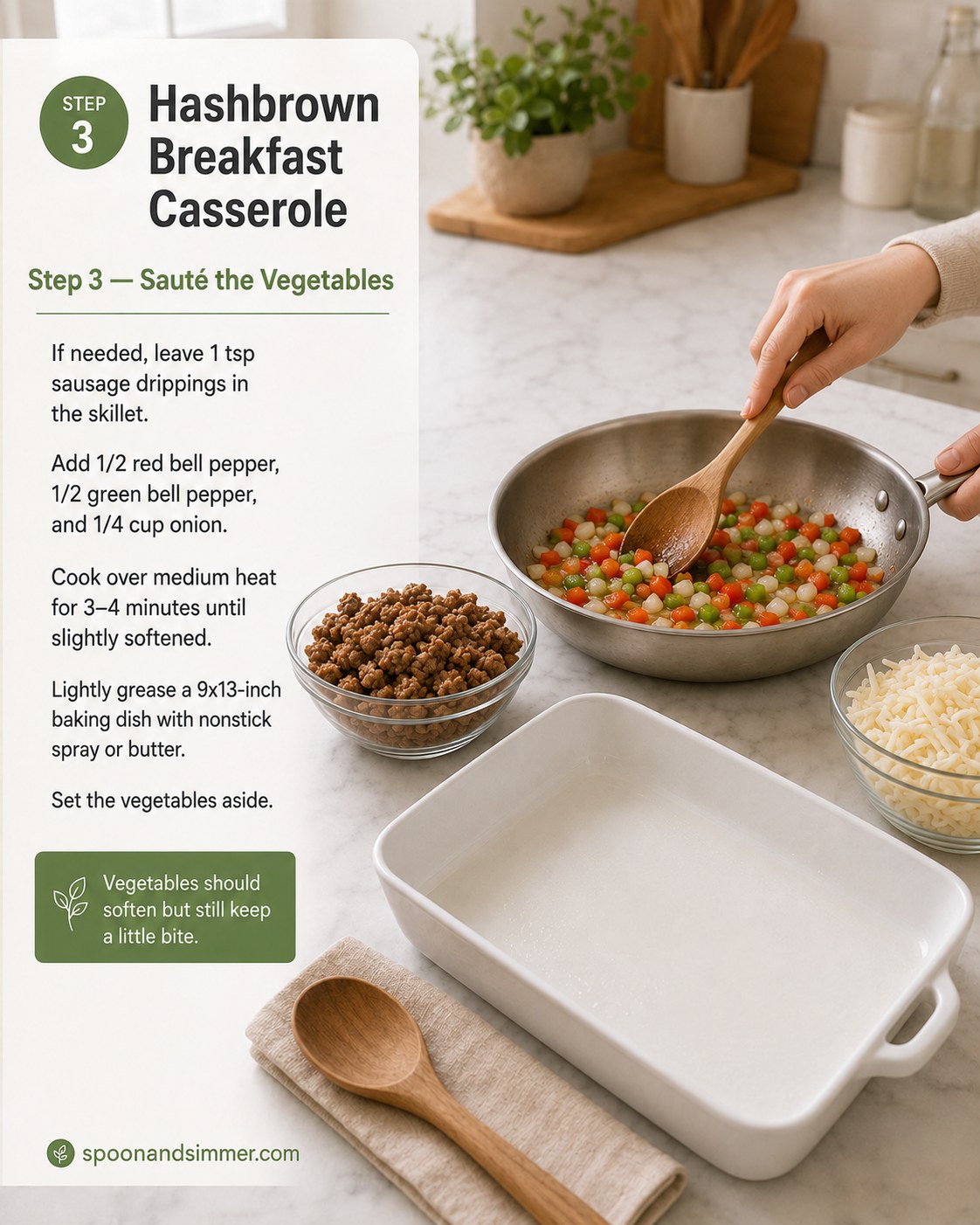
Leave about 1 teaspoon of sausage drippings in the skillet — that's your flavor base, don't wash it away. Add the diced red bell pepper, green bell pepper, and onion, and cook over medium heat for 3 to 4 minutes, just until they soften slightly but still have a little bite.
- Overcooked vegetables will turn mushy once they bake again inside the casserole, so pull them while they still have texture.
- Lightly grease your 9x13-inch dish with nonstick spray or butter while the vegetables cook — no reason to waste time standing around.
Set the vegetables aside once they're done; you'll layer everything cold-ish and let the oven do the real work.
Whisk the Custard Until It's Fully Smooth
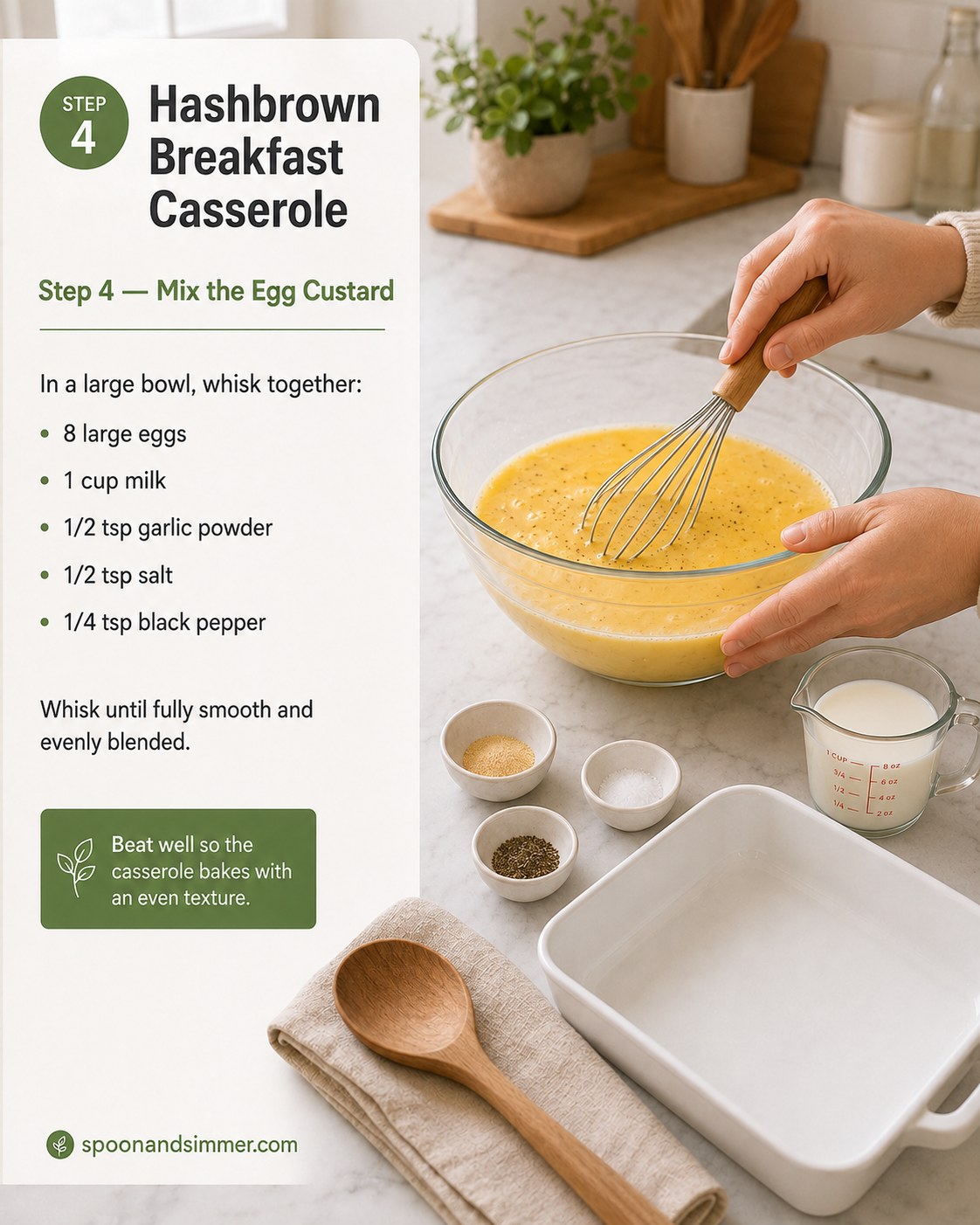
In a large bowl, whisk together 8 large eggs, 1 cup milk, 1/2 teaspoon garlic powder, 1/2 teaspoon salt, and 1/4 teaspoon black pepper. Whisk with real intention here — you want it fully smooth and evenly blended, no streaks of white and yolk left floating.
This step matters more than people expect. An unevenly whisked custard bakes unevenly too, giving you dense pockets in some corners and a rubbery texture in others. I like to whisk until the mixture is one uniform pale-yellow color and slightly frothy at the edges — that's your sign it's ready to pour later.
Layer the Base Before Any Egg Goes In
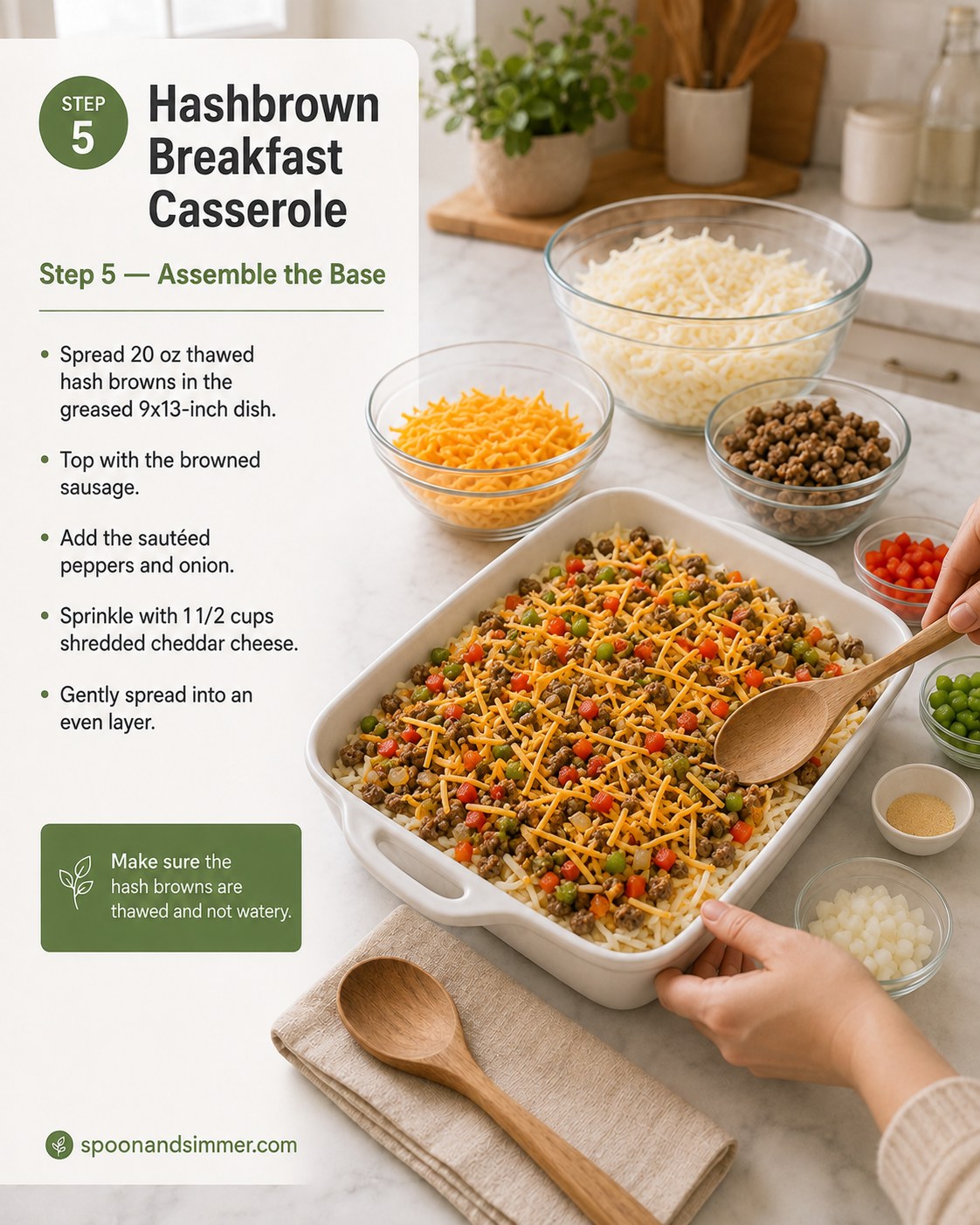
Spread the thawed hash browns evenly across the bottom of your greased 9x13-inch dish — press gently so they form a flat, even layer. Top with the browned sausage, then scatter the sautéed peppers and onion over that.
- Sprinkle 1 1/2 cups shredded cheddar over everything, saving the remaining half cup for the top later.
- Spread it into an even layer with the back of a spoon — no need to press hard, just make sure there are no bare patches.
This is the moment to double-check your hash browns aren't watery — if you see pooling liquid in the dish, blot it with a paper towel before moving forward.
Pour, Press, and Decide: Bake Now or Tomorrow
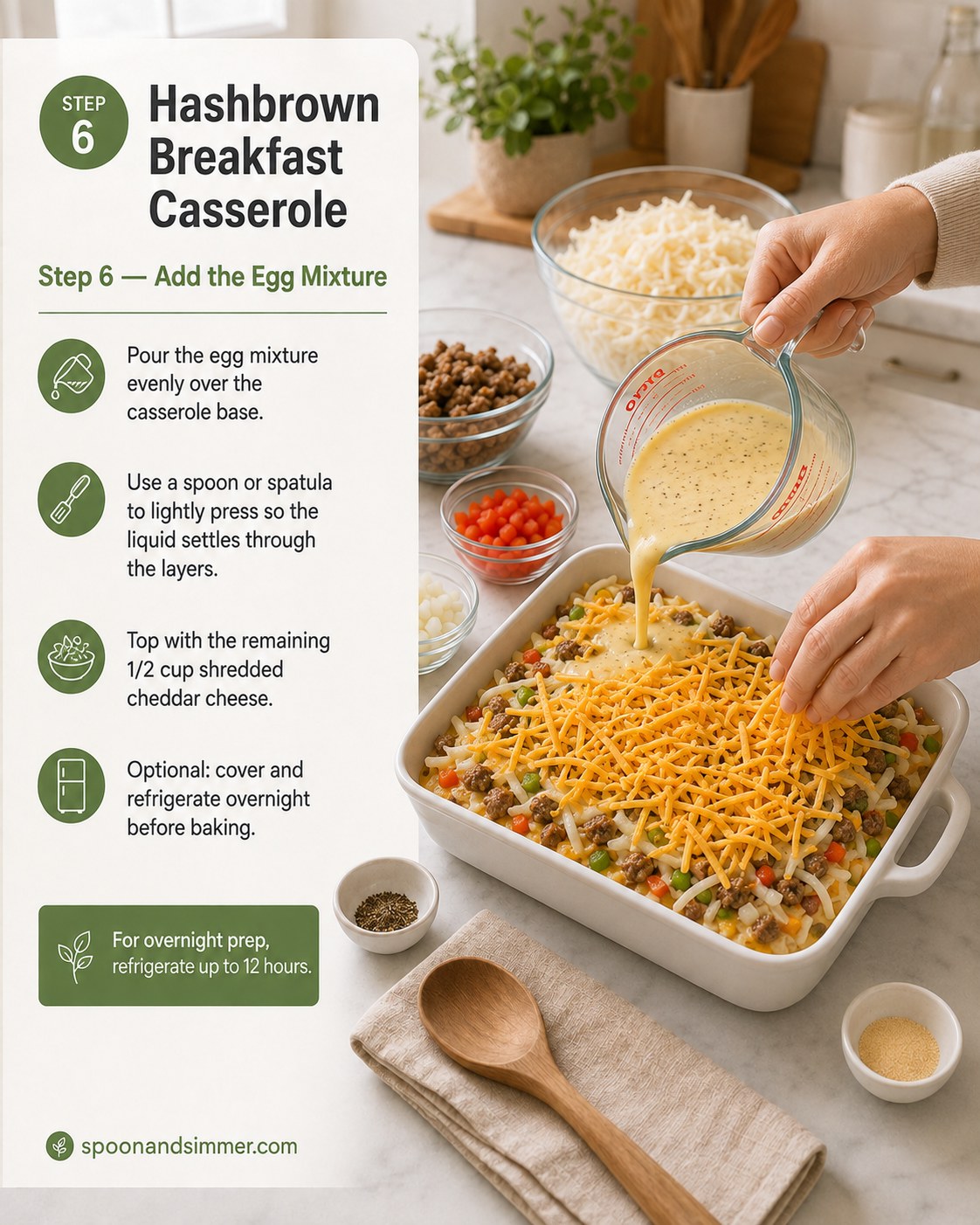
Pour the whisked egg mixture evenly over the casserole base, then use a spoon or spatula to lightly press down so the liquid settles through all the layers instead of just sitting on top. Sprinkle the remaining 1/2 cup shredded cheddar over everything.
Here's where this recipe earns its spot in my regular rotation: you can cover it and refrigerate for up to 12 hours before baking. I do this constantly for weekend guests — assemble Saturday night, bake Sunday morning, and nobody has to know I did zero cooking while wearing pajamas.
Bake at 350°F Until the Center Sets
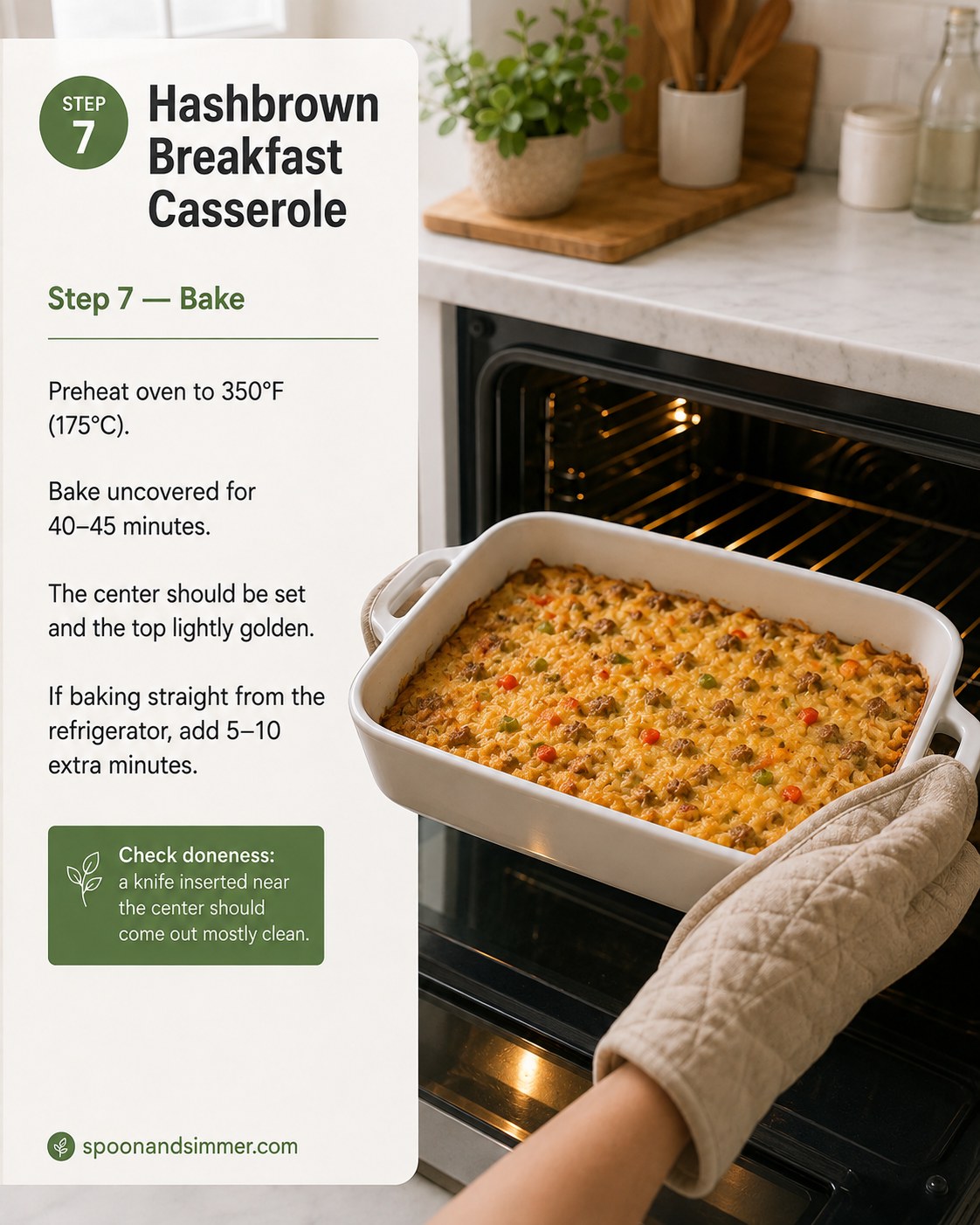
Preheat your oven to 350°F (175°C) and bake the casserole uncovered for 40 to 45 minutes. You're watching for a center that's fully set — no jiggle — and a top that's turned lightly golden across the cheese.
- Baking straight from the fridge? Add 5 to 10 extra minutes since the chilled dish needs more time to catch up in the oven.
- Check doneness by inserting a knife near the center — it should come out mostly clean, not wet with egg.
If the top is browning too fast before the center sets, loosely tent it with foil for the last 10 minutes.
Rest Ten Minutes Before You Cut a Single Square
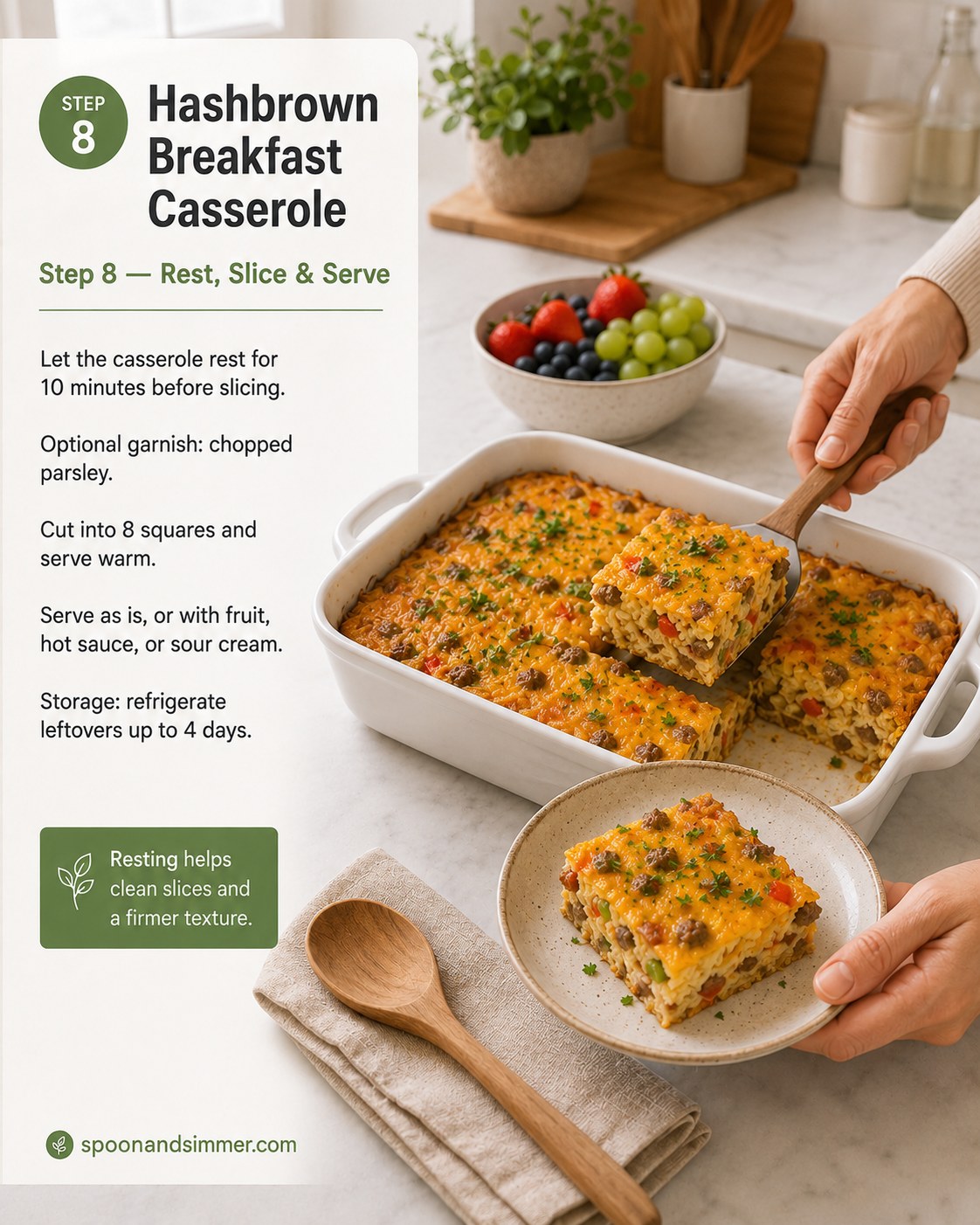
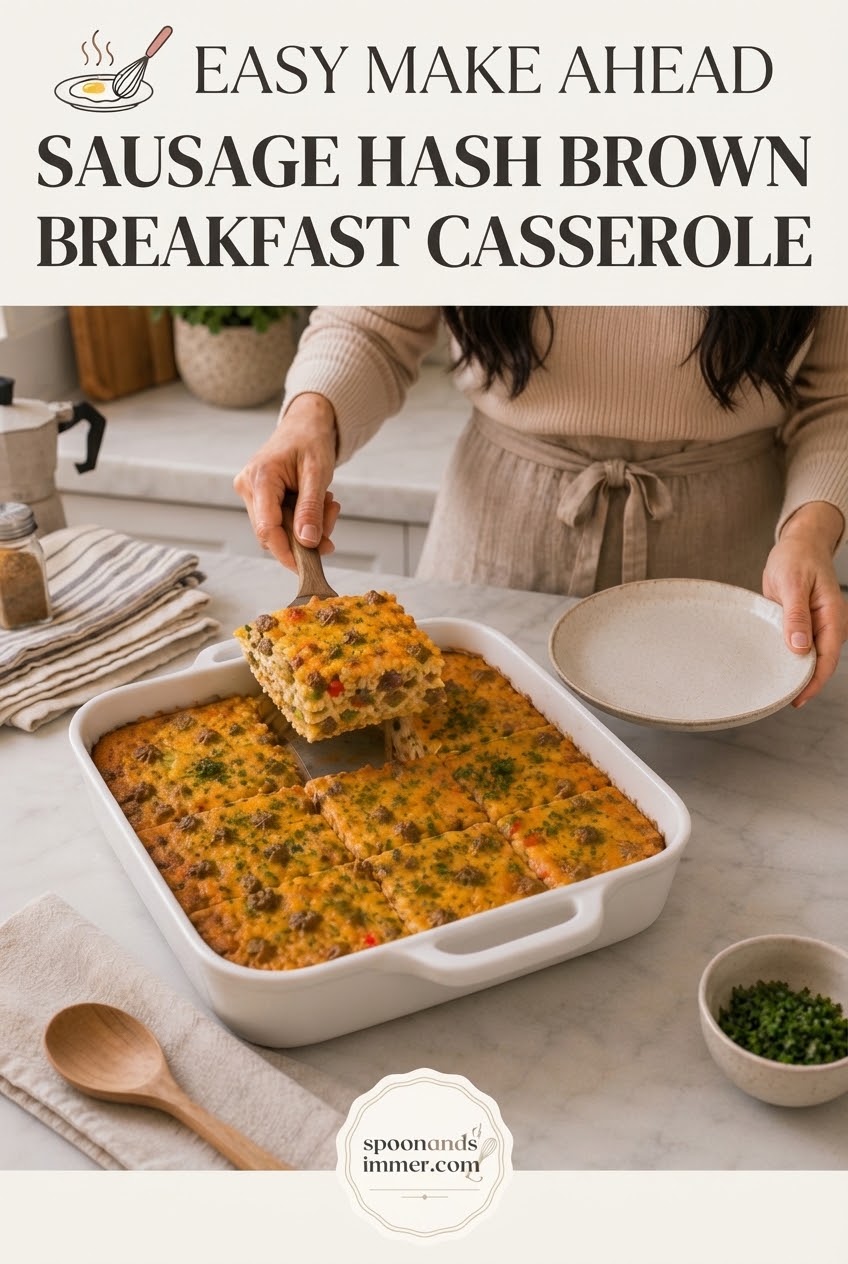
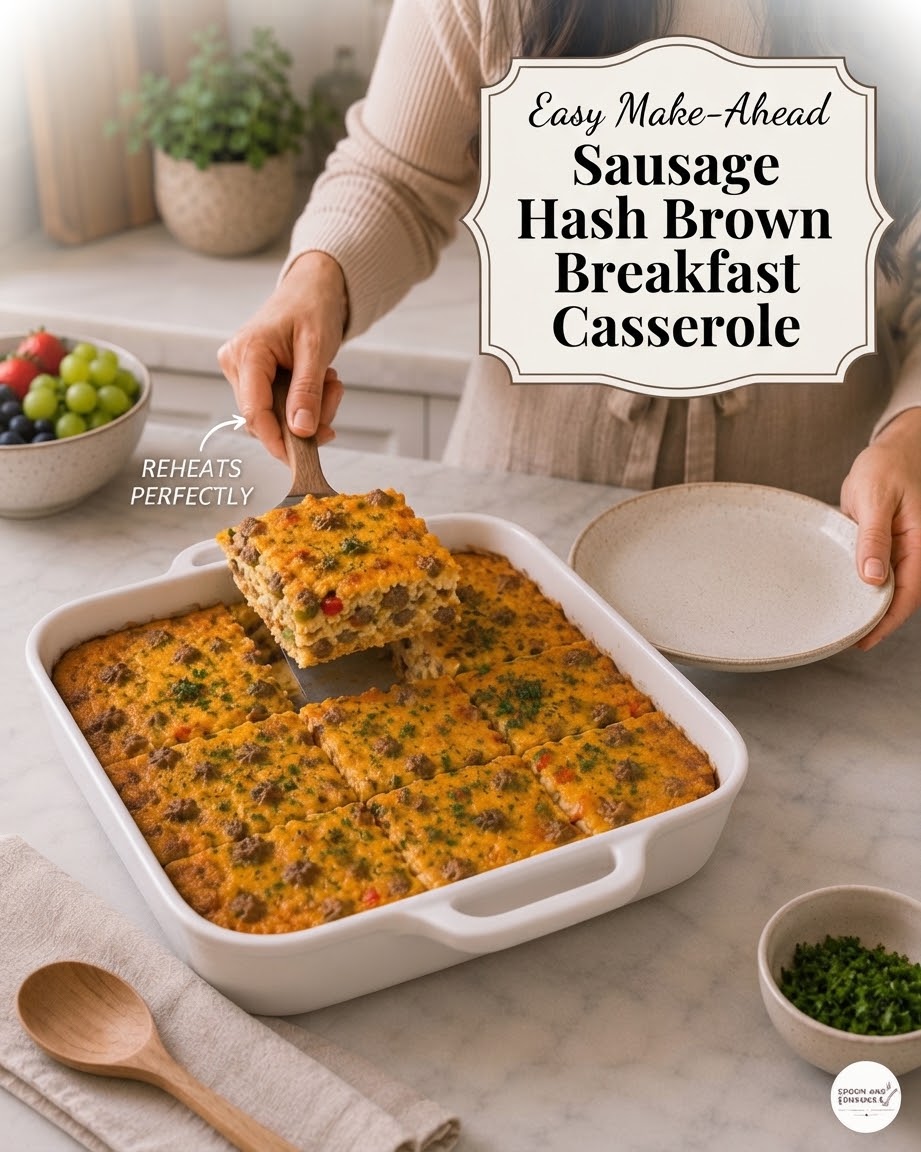
Let the casserole rest for 10 minutes before slicing — I know it smells incredible and you want to dig in immediately, but this rest is what gives you clean squares instead of a collapsed mess. Cut into 8 pieces and garnish with chopped parsley if you're feeling fancy.
Serve warm, plain or with hot sauce, sour cream, or a bowl of fresh fruit alongside. Leftovers keep well refrigerated for up to 4 days — Leo eats the cold squares straight out of the fridge before school, which I've decided to count as a win.
How This Casserole Actually Comes Together in My Kitchen
Step photos are useful, but they never quite show the real rhythm of making something — the steam, the mess, the little decisions along the way. So here's the same casserole, shot in my own kitchen while I actually made it, start to finish. I want you to see what it looks like when it's not staged perfectly, because that's the version you'll be cooking too.
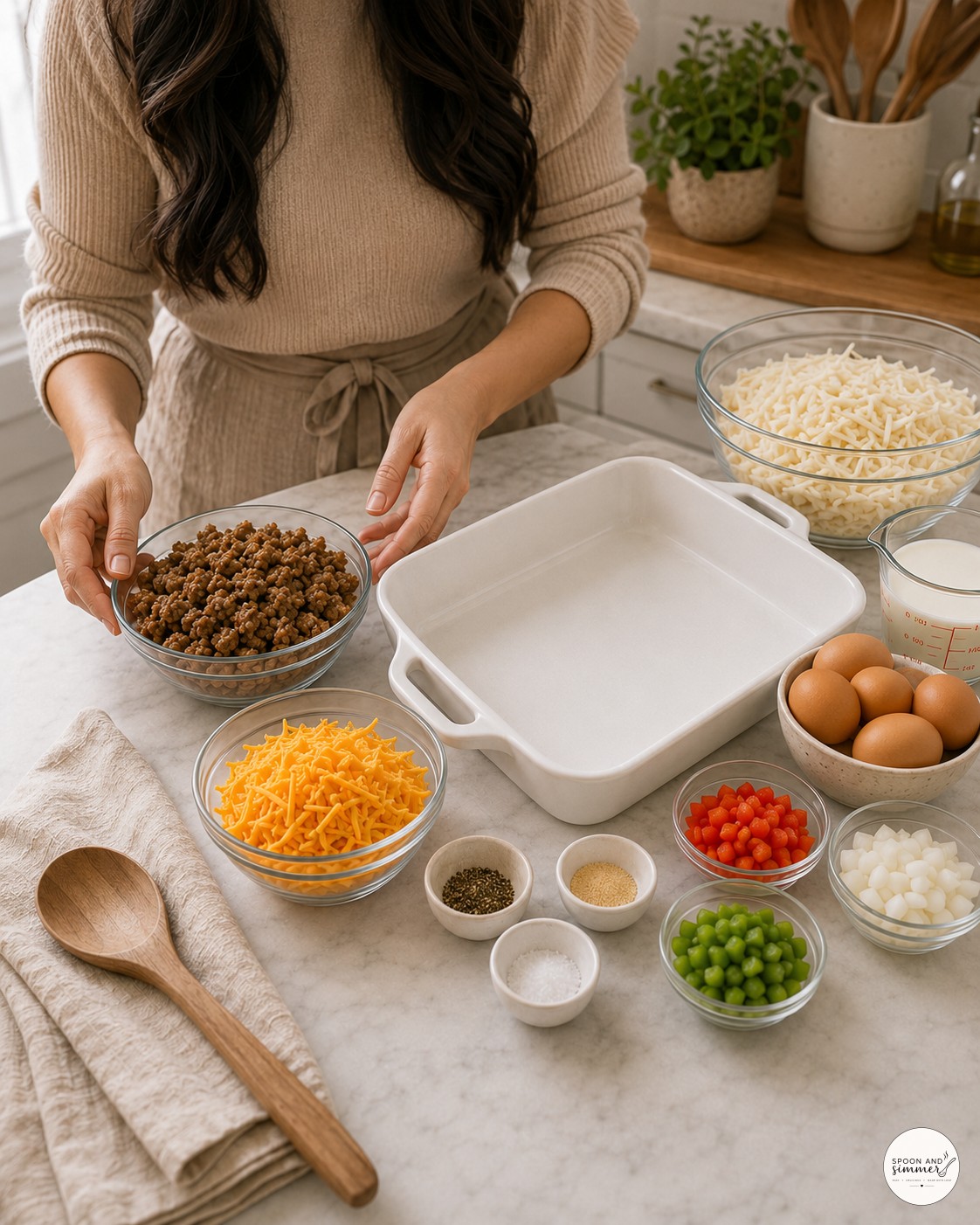
This is my usual mise en place moment — every bowl portioned out before anything hits heat, the same habit I picked up cooking on the line years ago. It looks like a lot of dishes, but it means the actual cooking takes ten minutes flat.
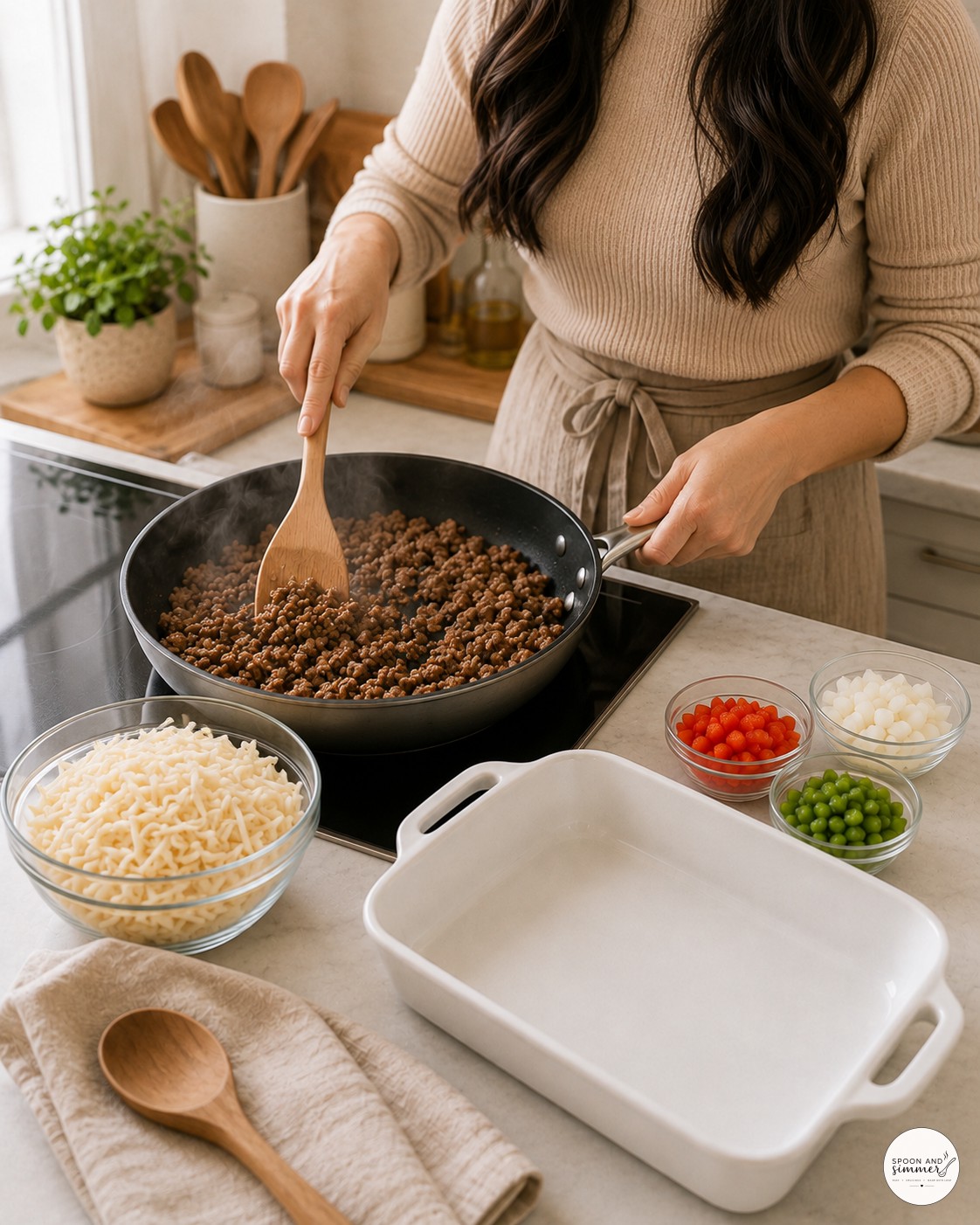
You can see the steam coming off the sausage here — that's exactly the visual cue I look for to know the pan is hot enough. If your kitchen doesn't smell like sausage yet at this point, your heat is too low.
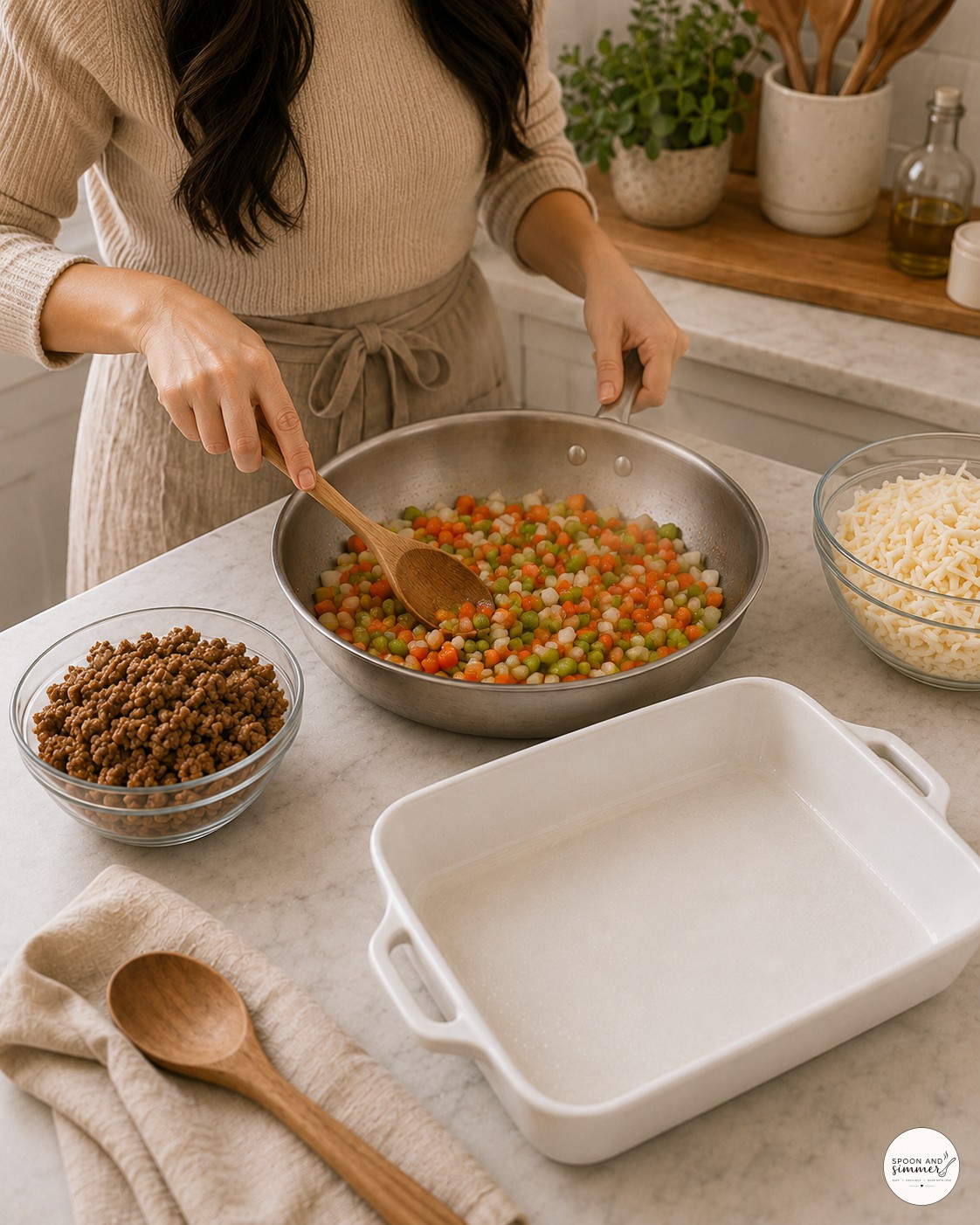
I switched to a smaller steel pan for the vegetables here just because it was already out from breakfast dishes — any skillet works as long as it holds the drippings. Notice the vegetables still hold their shape and color, not going soft and translucent.
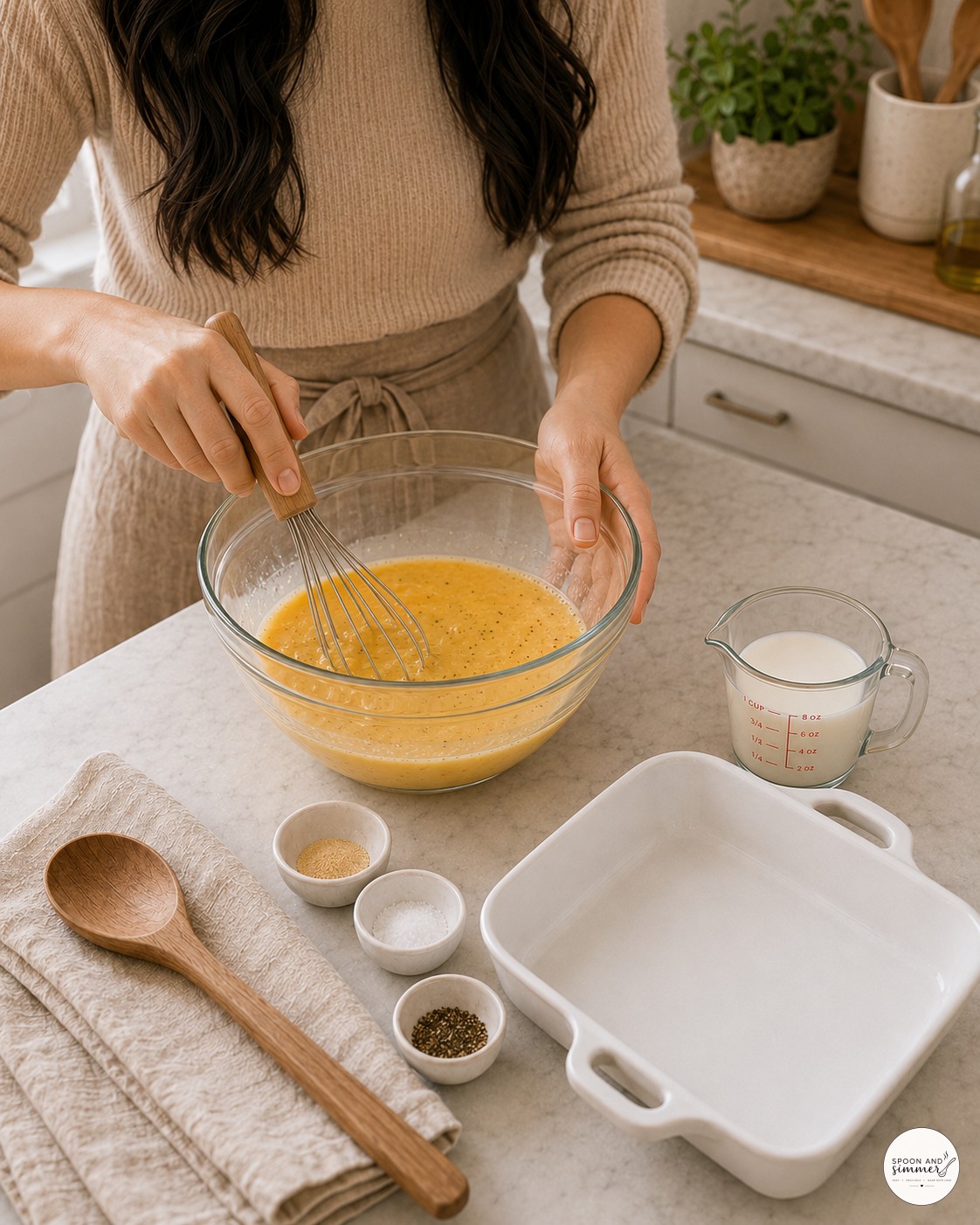
I always let my eggs sit out for a few minutes before whisking — cold eggs straight from the fridge blend less smoothly with the milk and take longer to fully combine. You'll feel the mixture loosen up as it comes together.
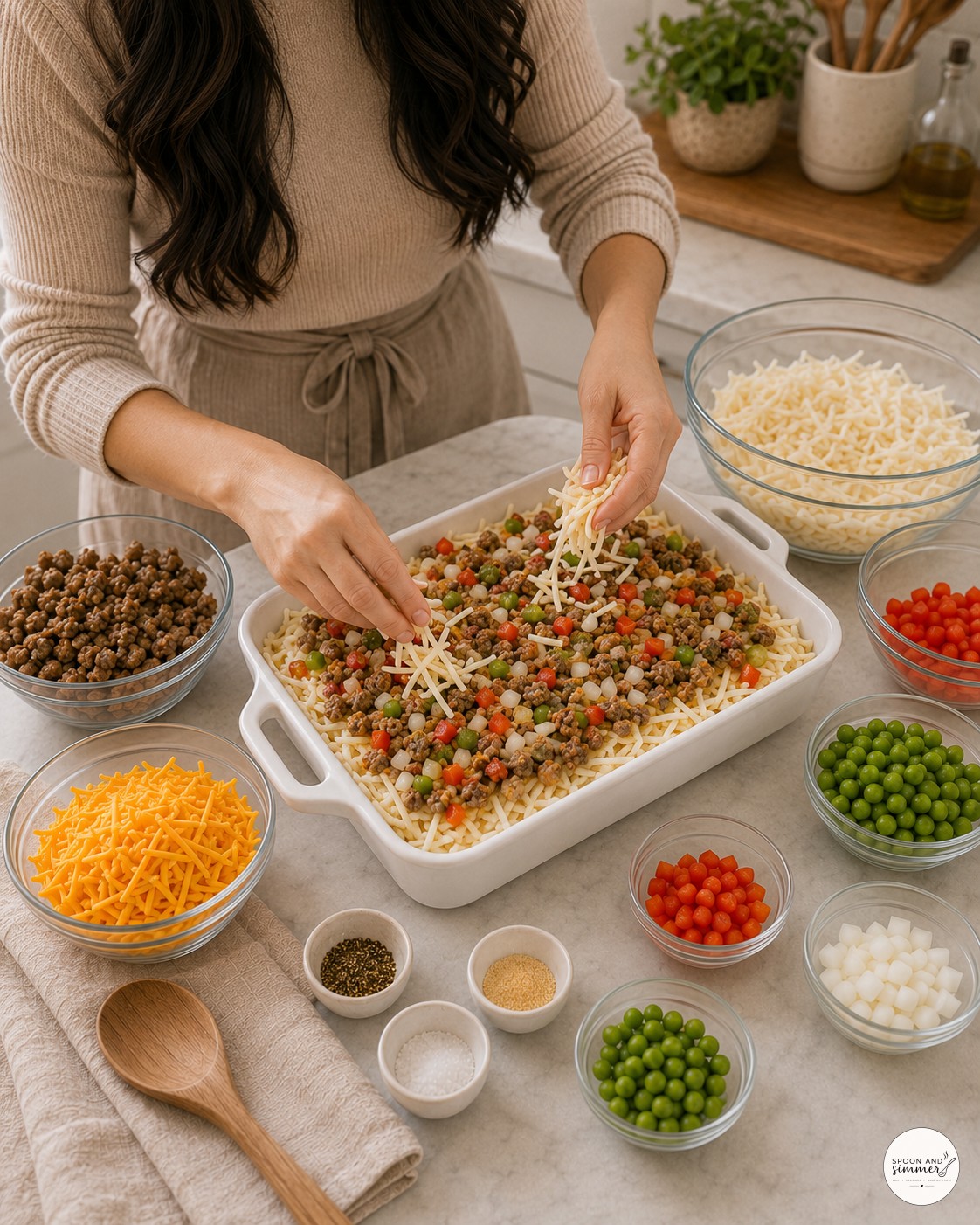
Sprinkling the cheese by hand instead of pouring it from the bowl lets me actually see where the bare spots are and fill them in. My kids always hover at this stage hoping for a pinch of extra cheddar on the side.
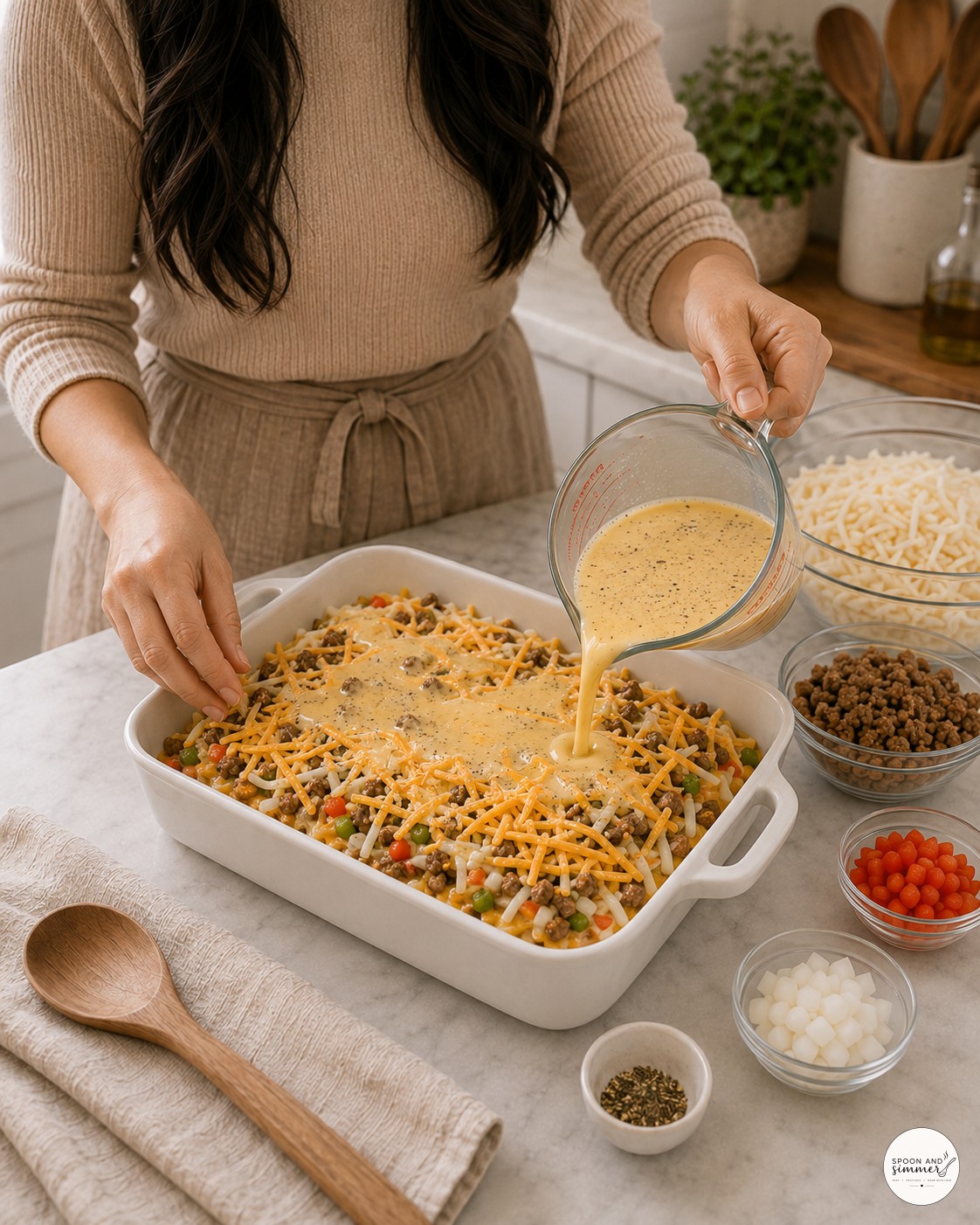
I pour the custard slowly into one corner first and let it spread on its own rather than dumping it across the whole top — it settles into the layers more evenly that way instead of just sitting on the surface.
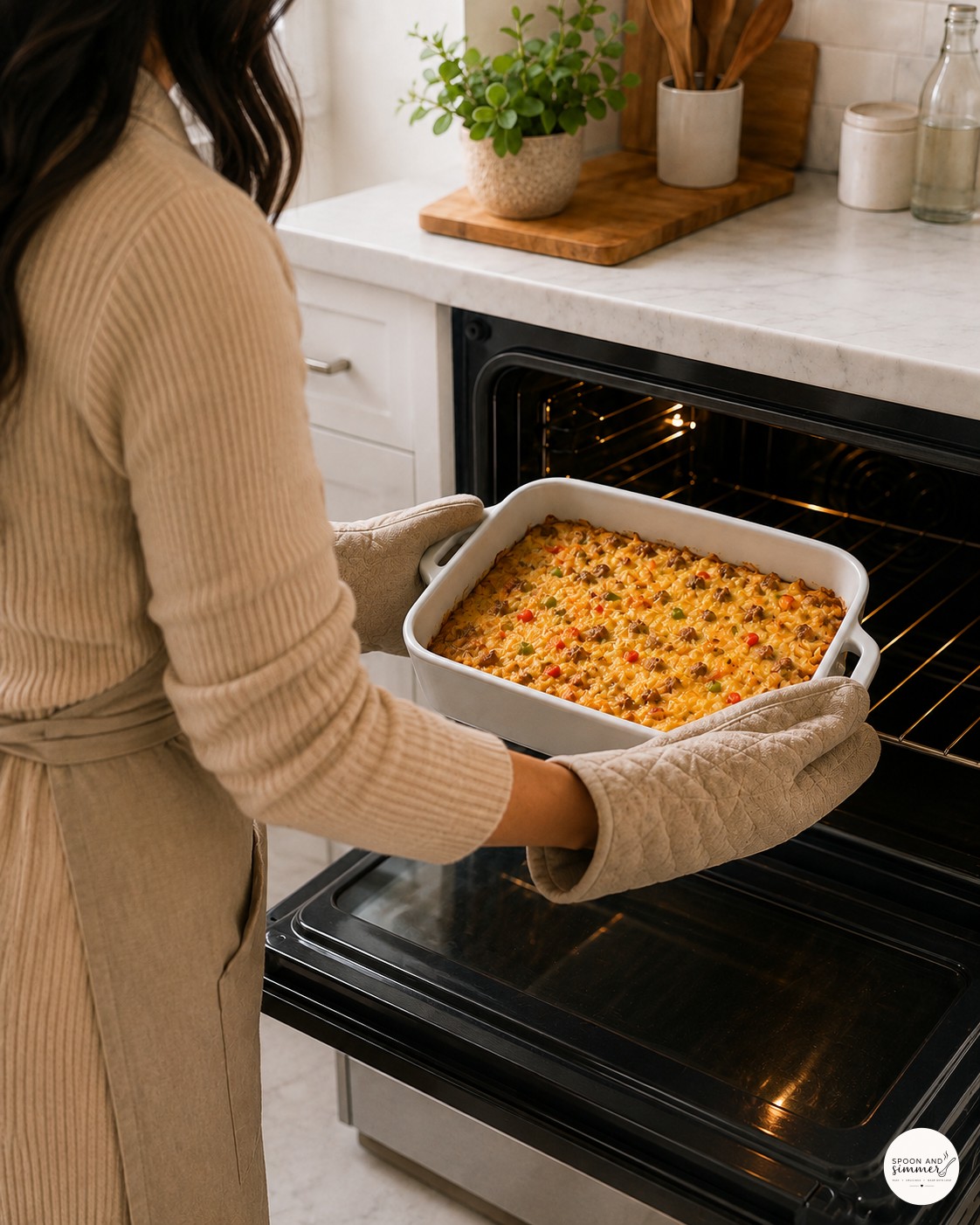
Middle oven rack, always, for even browning on both the top and bottom of the casserole. This is the point where the kitchen starts smelling like the whole reason we're all getting out of bed on a Sunday.
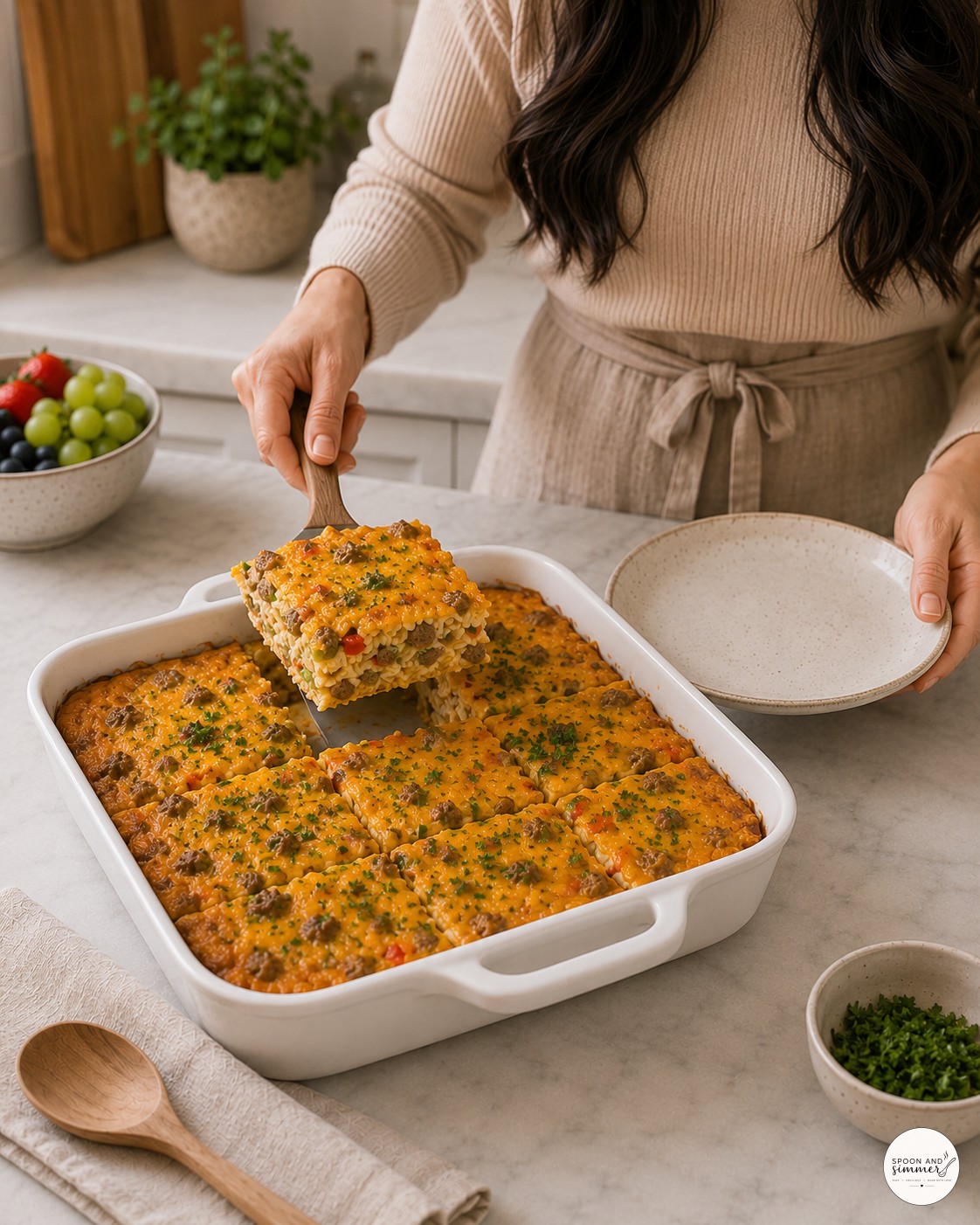
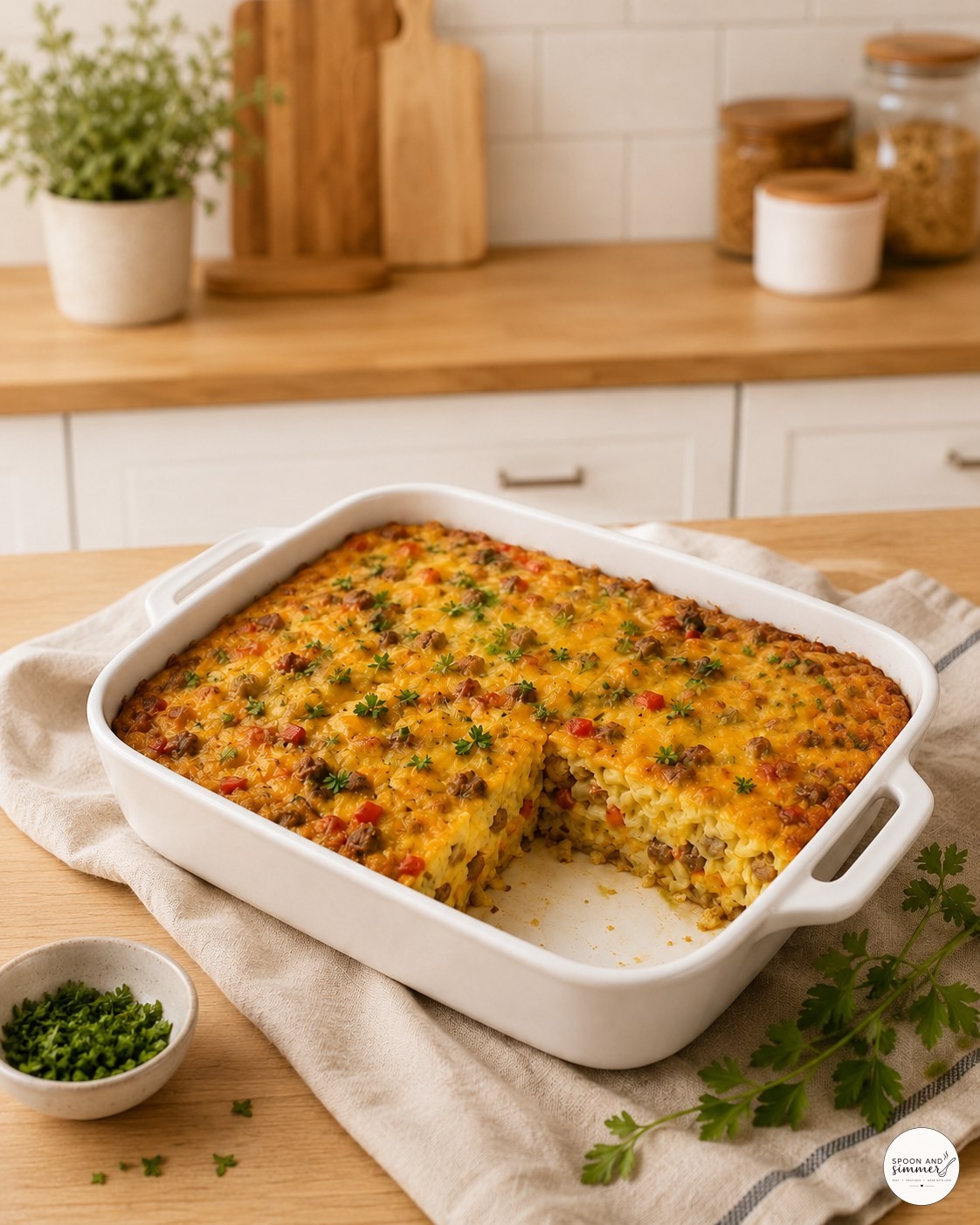
The edges always come out slightly crisper than the center, and that's the piece Leo fights his sister for every single time. Cutting into it after the rest, you can actually see the layers hold their shape instead of collapsing into mush.
Final Thoughts
This casserole has bailed me out of more crowded Sunday mornings than I can count, and it always disappears fast — squares and all. Make it once the regular way, then let yourself try the overnight version; I think you'll end up doing that one every time.

- For the casserole

Frequently Asked Questions
Can I use fresh hash browns instead of frozen?
You can, but squeeze them very dry in a towel first — fresh shredded potatoes hold more water than the frozen ones, and that extra moisture will make your custard layer runny instead of set.
What if I don't have breakfast sausage on hand?
Ground pork or turkey sausage seasoned with a little sage and fennel works fine, or swap in cooked and diced ham for a milder, saltier version.
Can I freeze this casserole?
Bake it fully, cool completely, then freeze individual squares wrapped tightly for up to 2 months. Reheat from frozen in a 350°F oven, covered, until warmed through.
My center still looked wet at 45 minutes — what now?
Tent the top loosely with foil so it doesn't over-brown, and keep baking in 5-minute increments until a knife near the center comes out mostly clean.