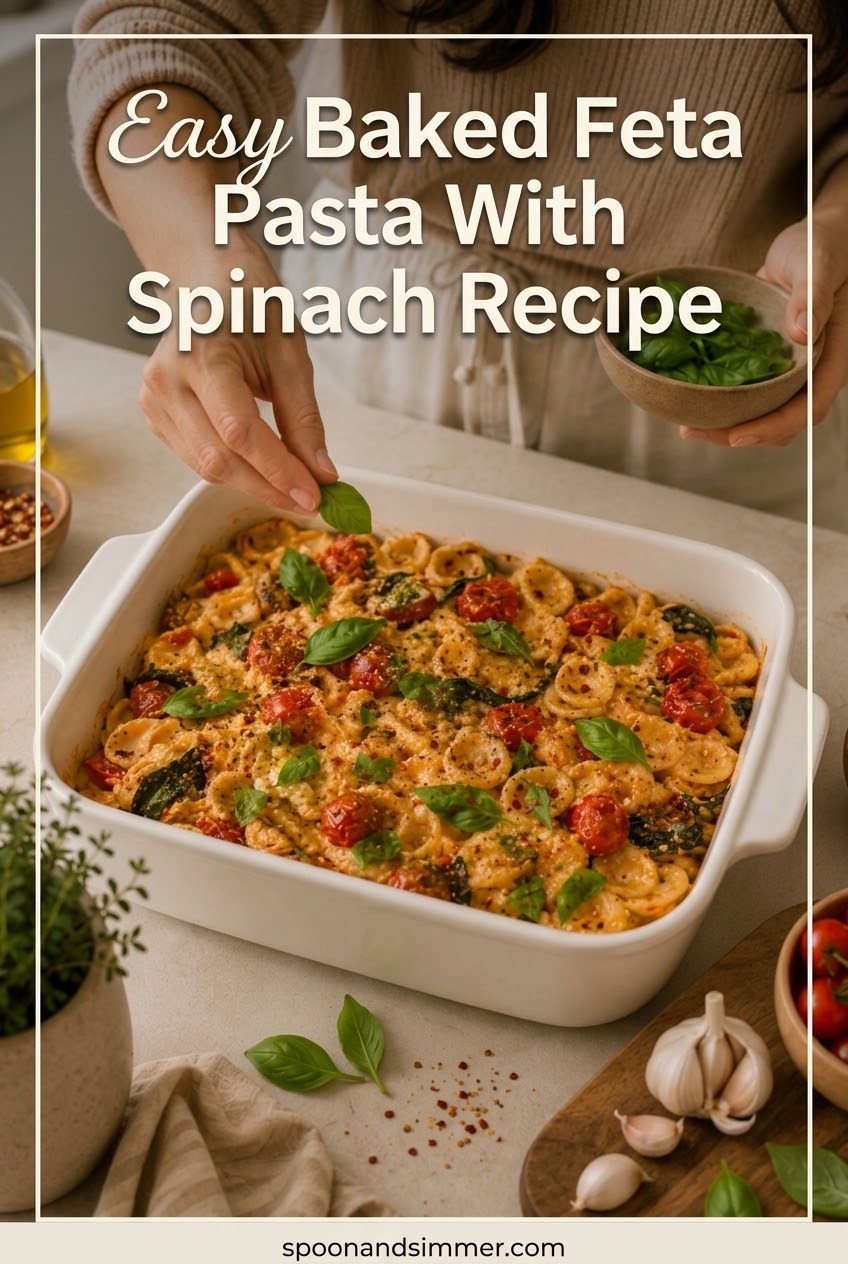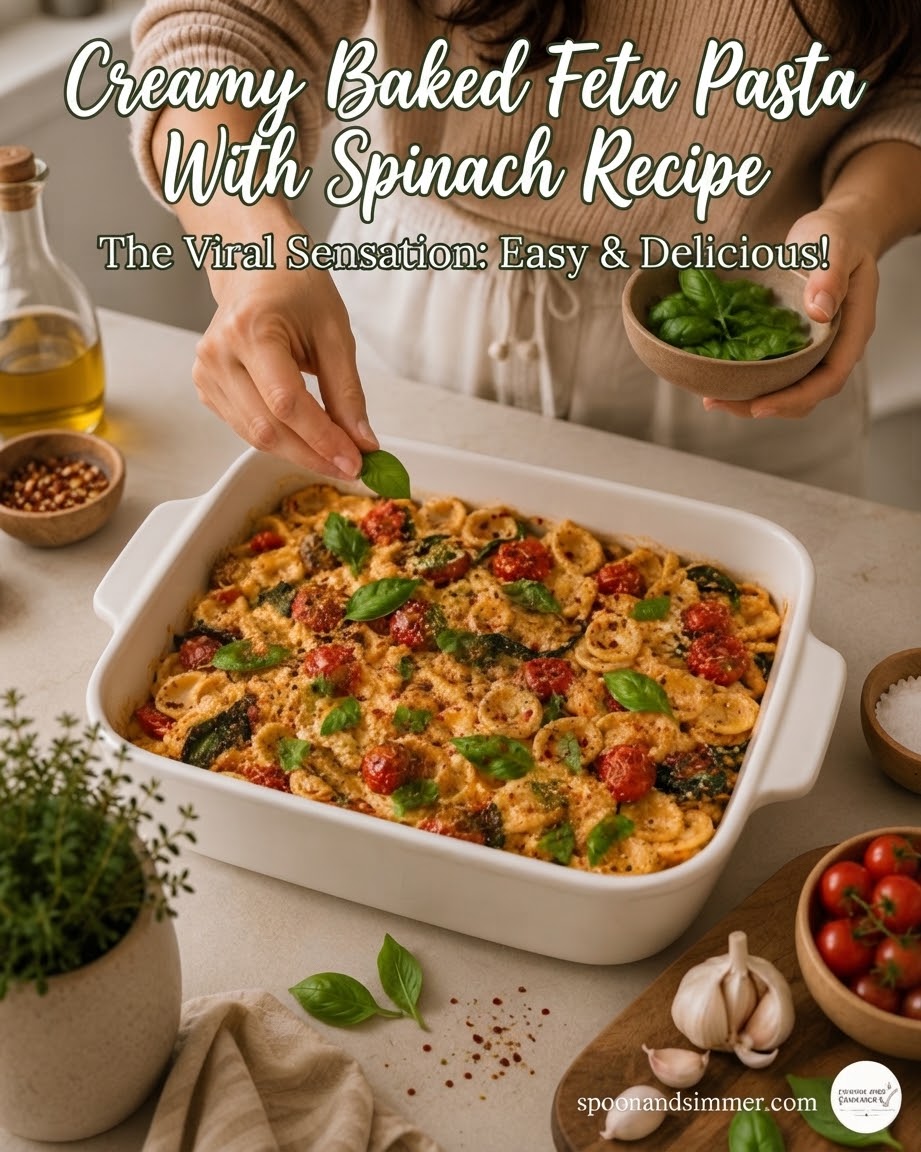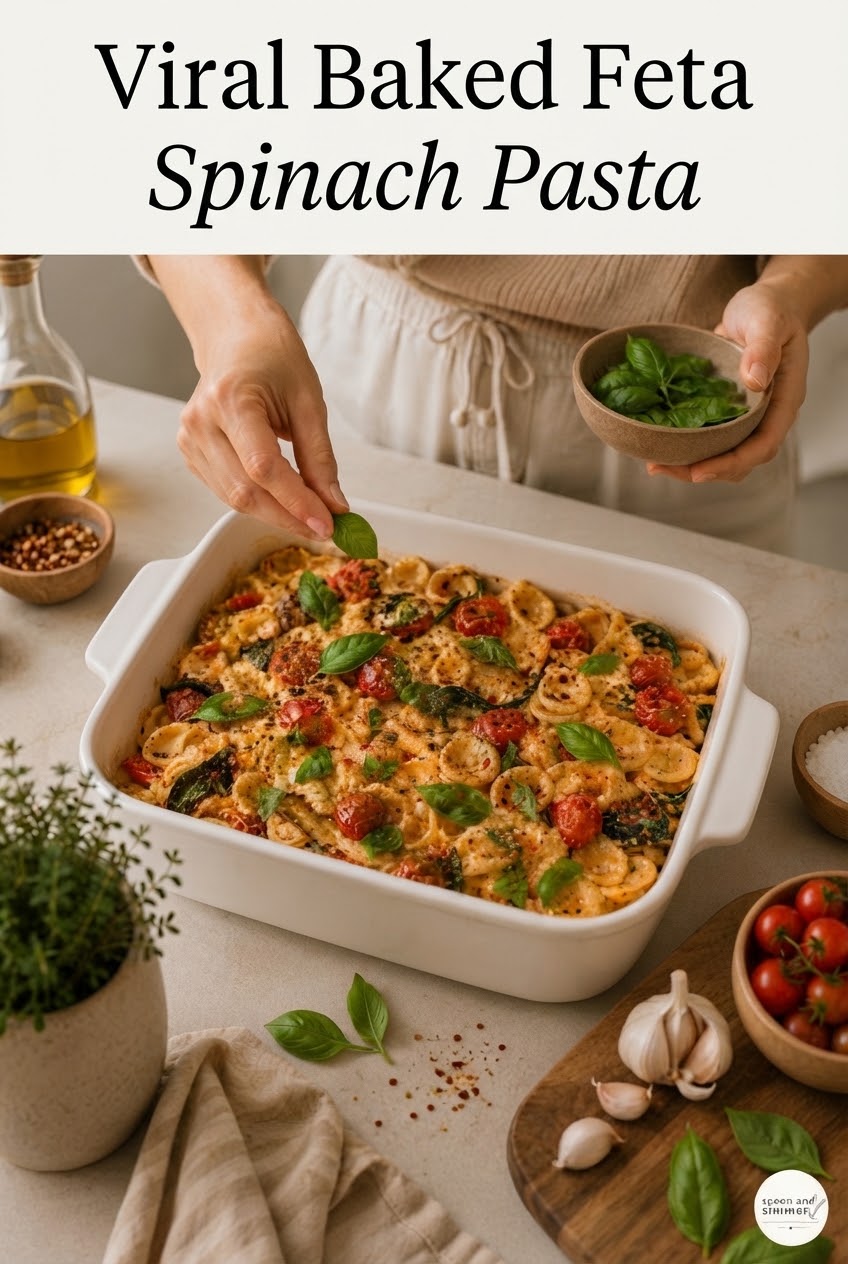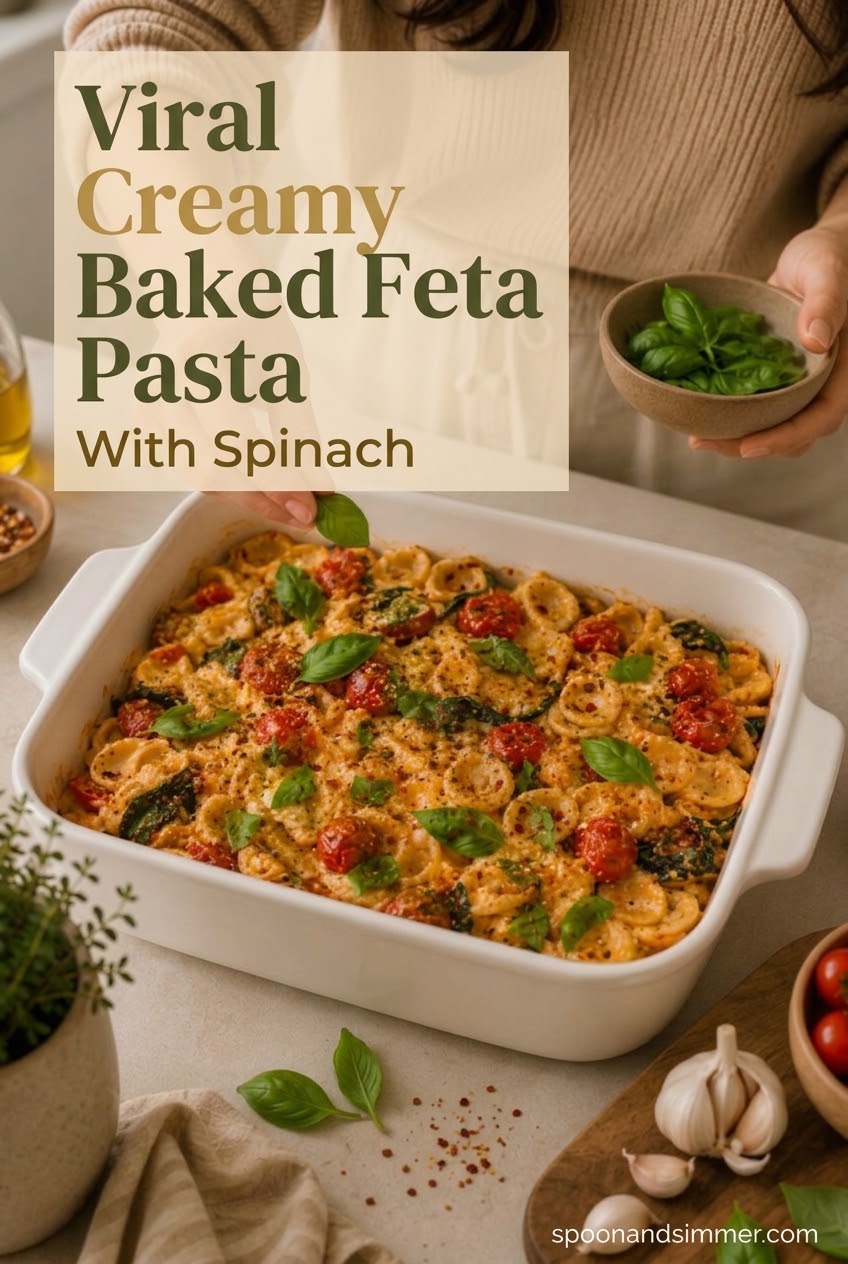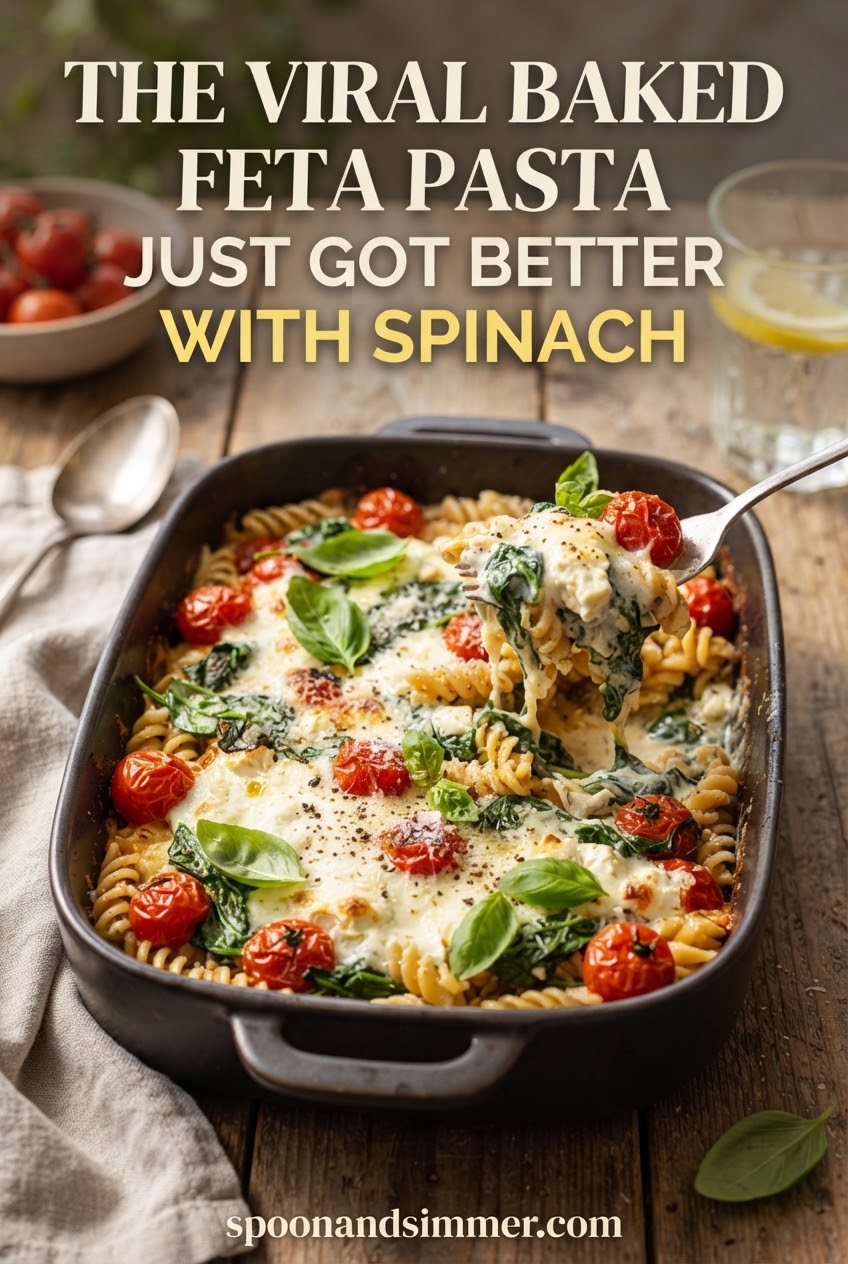
I came to baked feta pasta late, mostly out of stubbornness — I figured a viral pasta couldn't possibly earn its hype three years running. It can. What sold me wasn't the feta melting into a pool (though that's the fun part), it's that the sauce basically builds itself in one dish while you do literally nothing but boil pasta. This is the version I've made enough times that I stopped measuring the olive oil, though I've written it down properly for you here.
Building the Base: Tomatoes, Feta, and a Good Pour of Oil
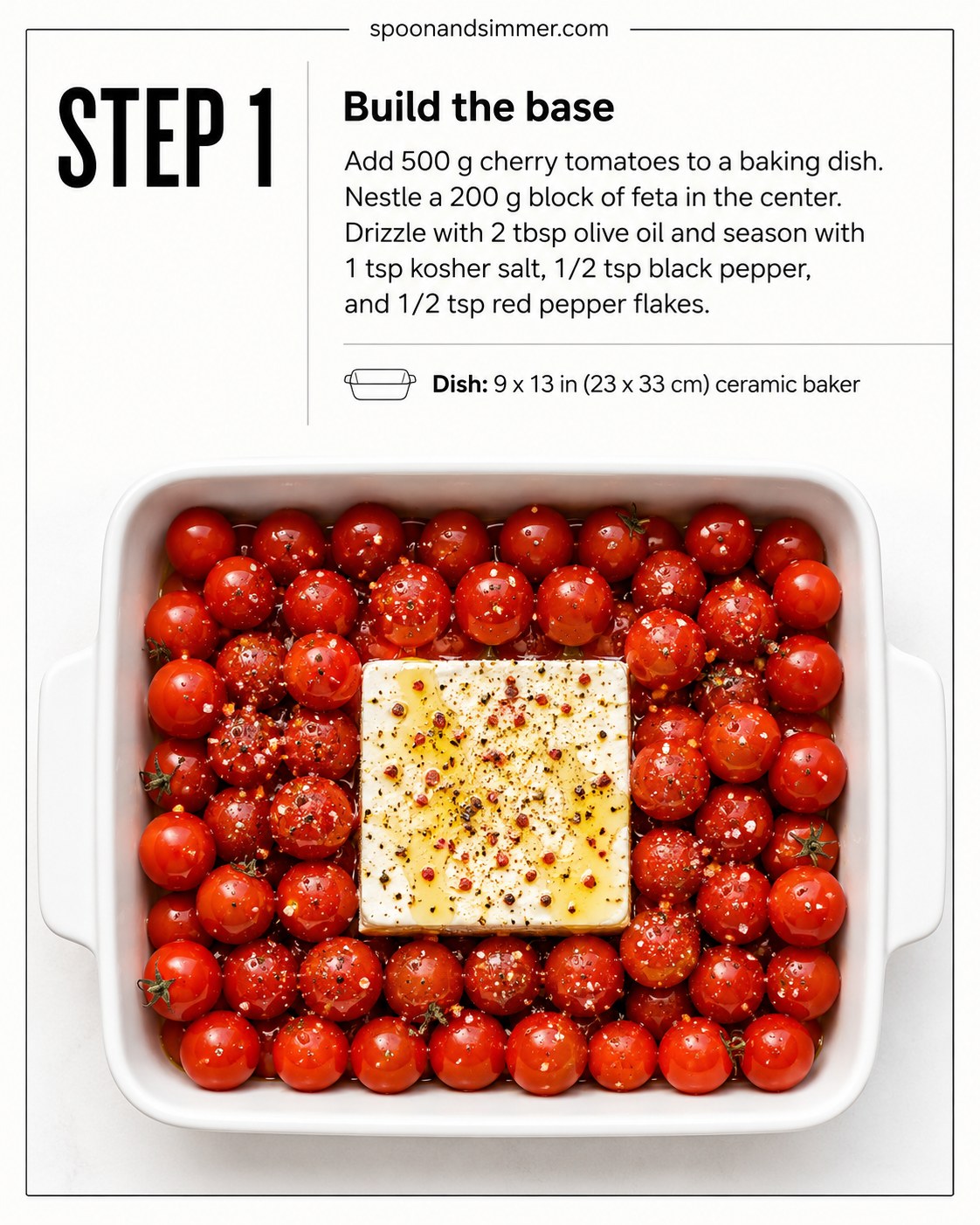
Everything starts cold, right in the baking dish, which is the whole appeal of this recipe. I ring 500 g cherry tomatoes around the edges of a 9x13 in (23x33 cm) ceramic baker, then nestle a whole 200 g block of feta in the center — not the crumbled kind, which dries out and never gives you that pool of melted cheese you want. Drizzle with 2 tbsp olive oil, then season with 1 tsp kosher salt, 1/2 tsp black pepper, and 1/2 tsp red pepper flakes.
- Use a real block feta, sold in brine, not pre-crumbled.
- Cherry tomatoes over regular — they burst evenly and don't need chopping.
- Season now, not later; the salt draws out juice as it bakes.
The dish looks almost too simple at this stage — a tidy ring of red around a golden square — but that's exactly the point.
Roasting Until the Tomatoes Go Jammy and the Feta Turns Gold
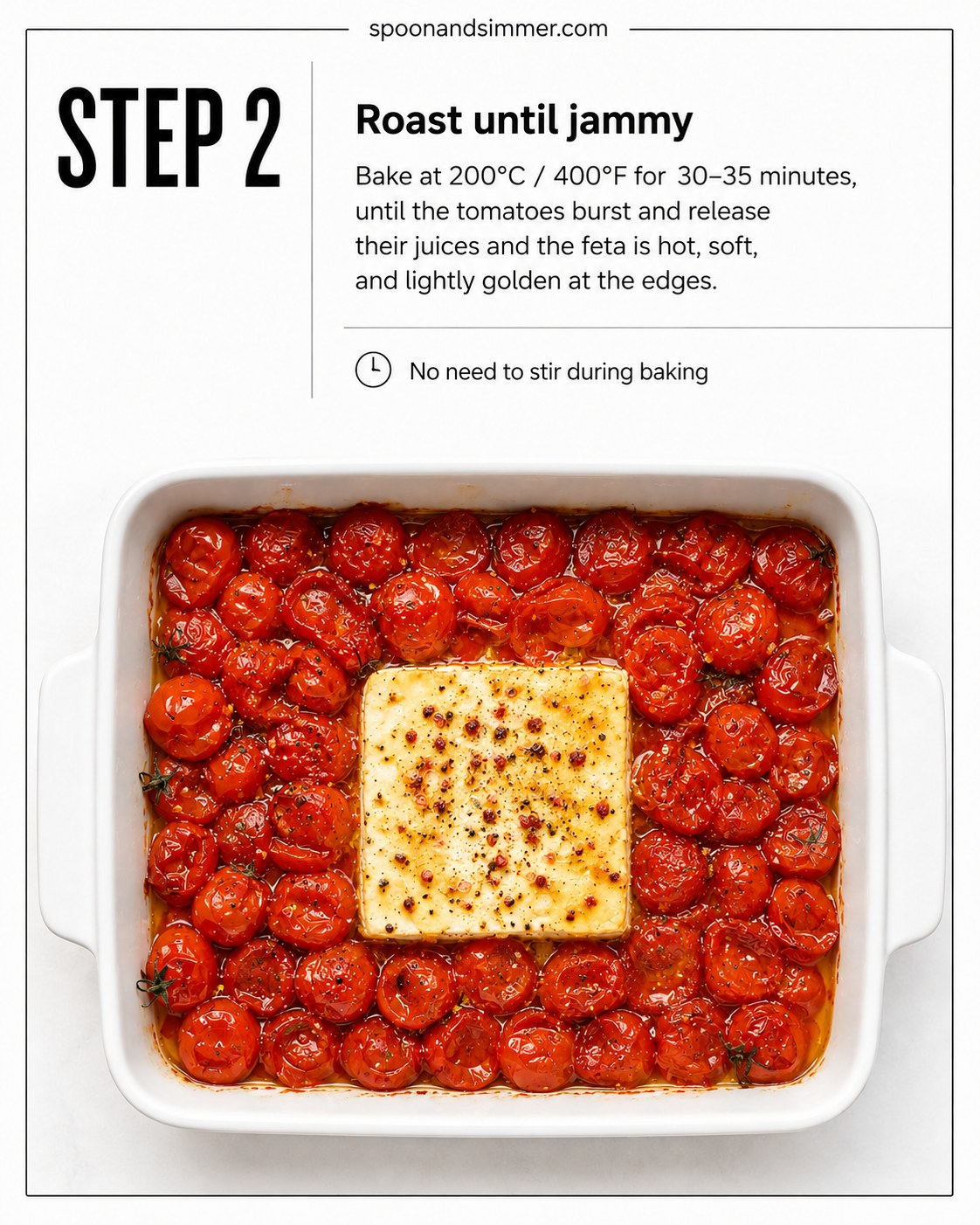
Into a 200°C / 400°F oven for 30-35 minutes, no stirring required. This is the step where I usually walk away and start the pasta water, because there's genuinely nothing to do. You'll know it's ready when the tomatoes have collapsed and released a thin, oily-red juice that pools at the bottom, and the feta has gone soft and lightly golden at the edges — not browned, just relaxed and glossy.
If your tomatoes still look tight and whole at 30 minutes, give them another 5; ovens vary more than we like to admit, and mine runs a touch cool in the back left corner (every oven has a corner like that, I swear).
The block should wobble slightly when you nudge the dish — that's how you know it's ready to become sauce, not just a topping.
Boiling the Orecchiette While the Oven Does the Work
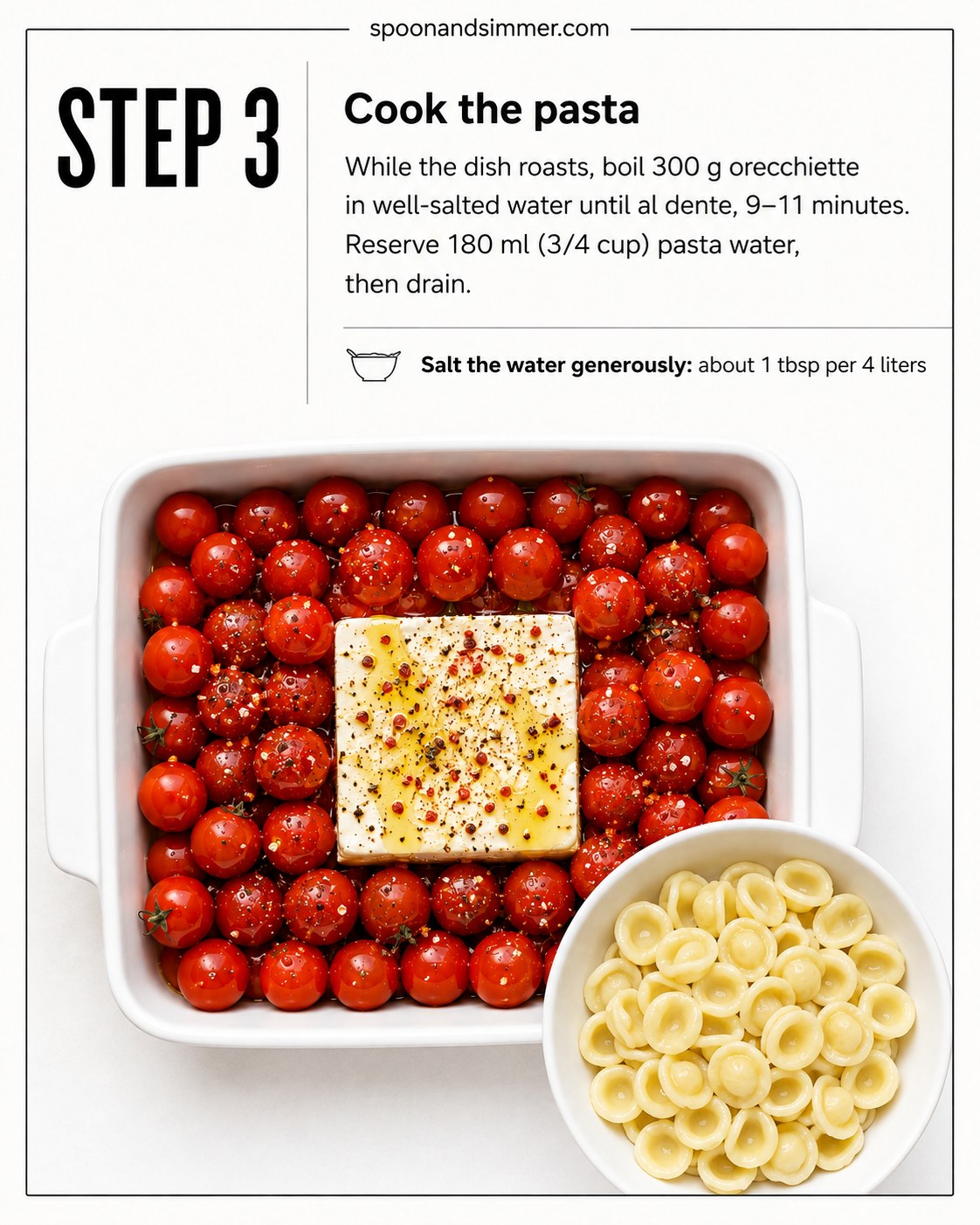
While the dish roasts, boil 300 g orecchiette in well-salted water — about 1 tbsp salt per 4 liters, which sounds like a lot until you taste the water and realize it should taste like the sea. Cook 9-11 minutes, until al dente with a little bite left in the center; orecchiette's little cups are made for catching sauce, so don't overcook them into mush.
- Reserve 180 ml (3/4 cup) pasta water before draining — you'll use it in three separate additions.
- Drain, don't rinse. That starchy coating is doing work for you later.
Time this so the pasta finishes right around when the oven timer goes off; a minute or two of overlap won't hurt anything.
Wilting the Greens in the Residual Heat
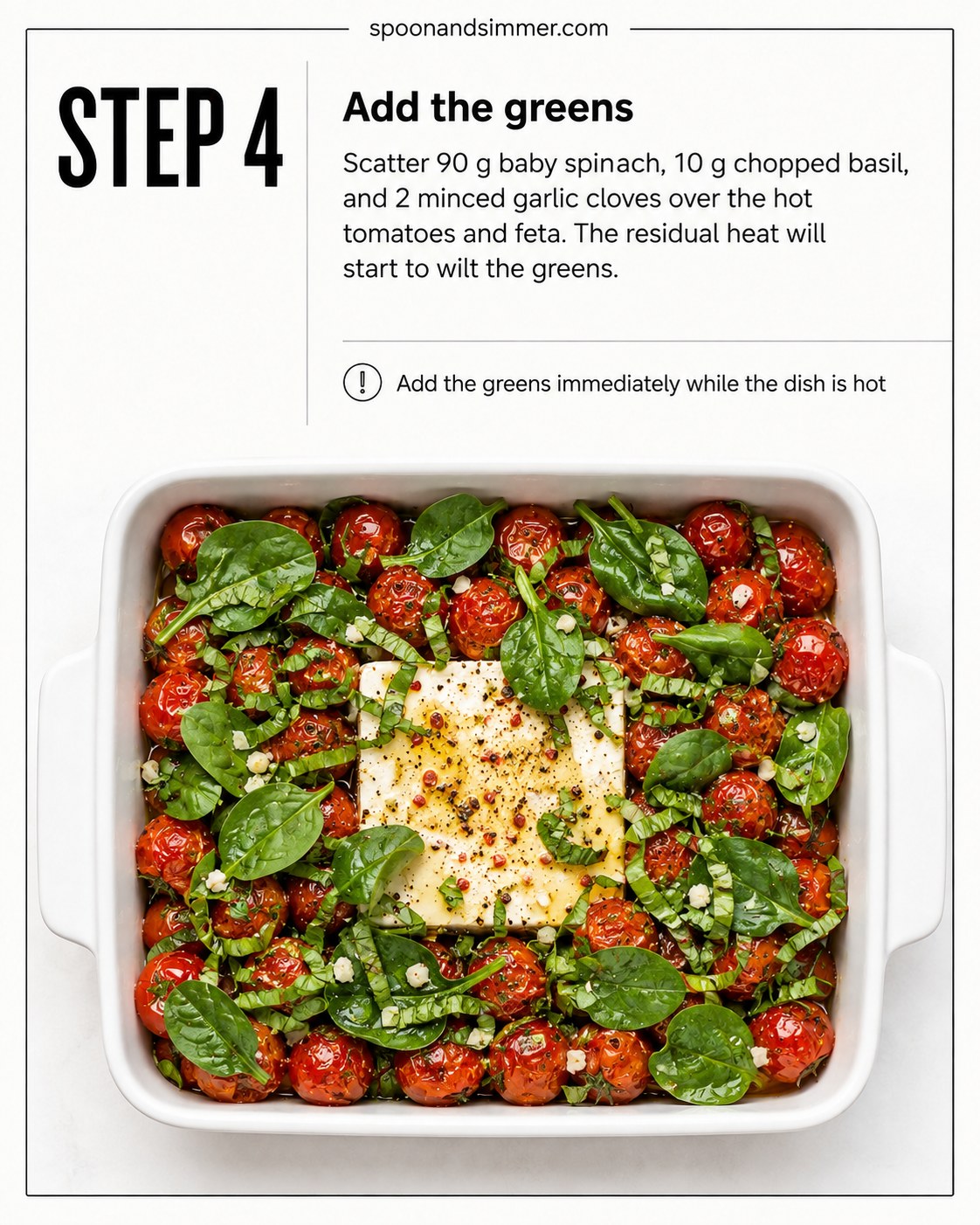
The moment the dish comes out of the oven, scatter 90 g baby spinach, 10 g chopped basil, and 2 minced garlic cloves directly over the hot tomatoes and feta. Do this immediately — the residual heat is what wilts the spinach and takes the raw edge off the garlic without cooking either into submission. Wait even five minutes and you'll be stirring in stiff, unwilted leaves.
My daughter Ivy has decided spinach is acceptable only when it's basically invisible, and this is the one way I've found to sneak it past her — it collapses down so much you'd never guess there was almost a cup of it in there. Small victories.
Mashing It All Into a Creamy Sauce
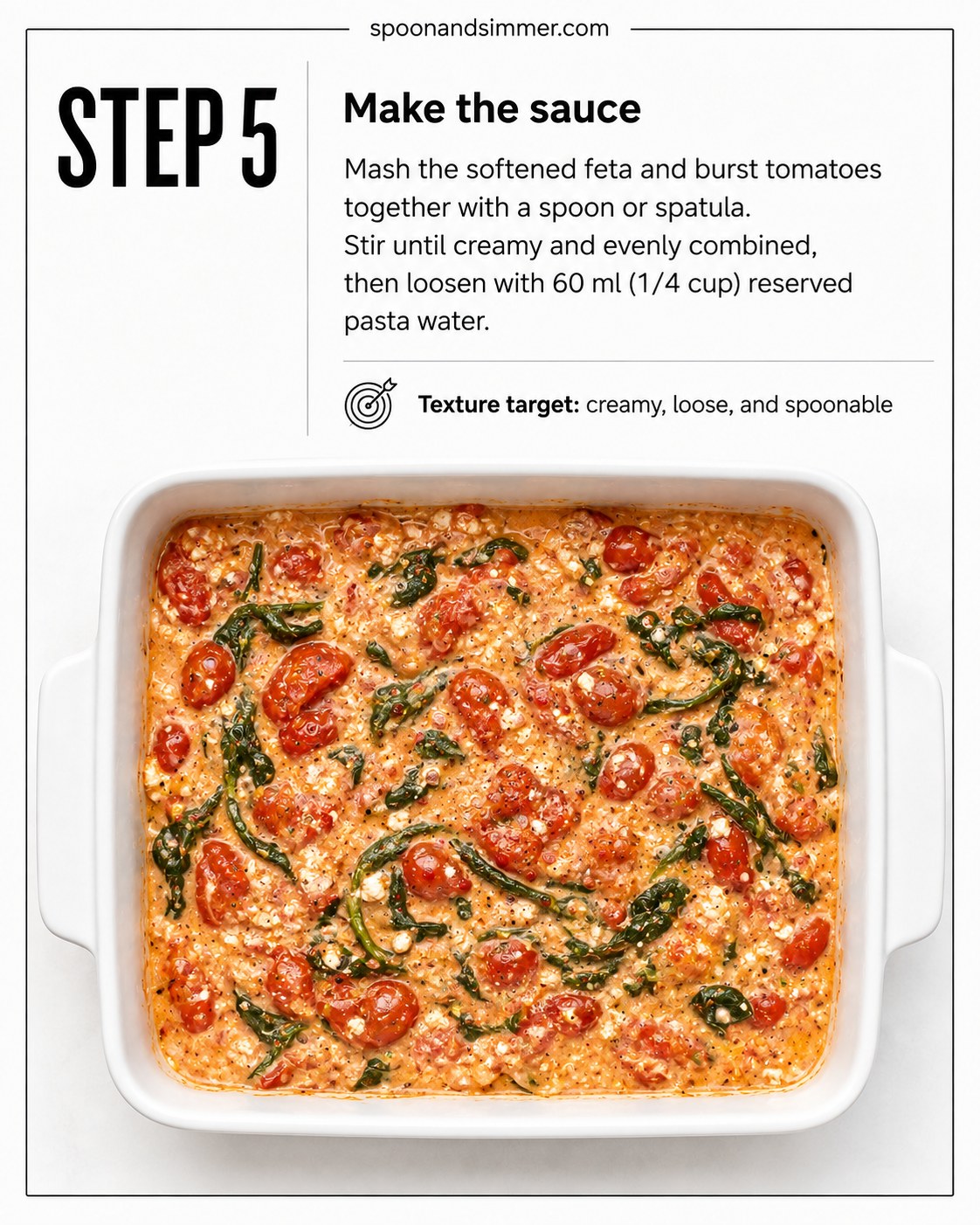
Now the fun part. Take a spoon or spatula and mash the softened feta and burst tomatoes together right in the dish, folding in the wilted spinach as you go. Stir until everything looks creamy and evenly combined, then loosen it with 60 ml (1/4 cup) of your reserved pasta water. The texture target here is creamy, loose, and spoonable — not thick and pasty, not soupy.
This is the same trick I leaned on constantly during my line cook years: starchy pasta water emulsifies fat and cheese into something silky instead of greasy or clumped. If your sauce looks broken or grainy at this point, a splash more warm water and a vigorous stir almost always brings it back together.
Adding the Pasta
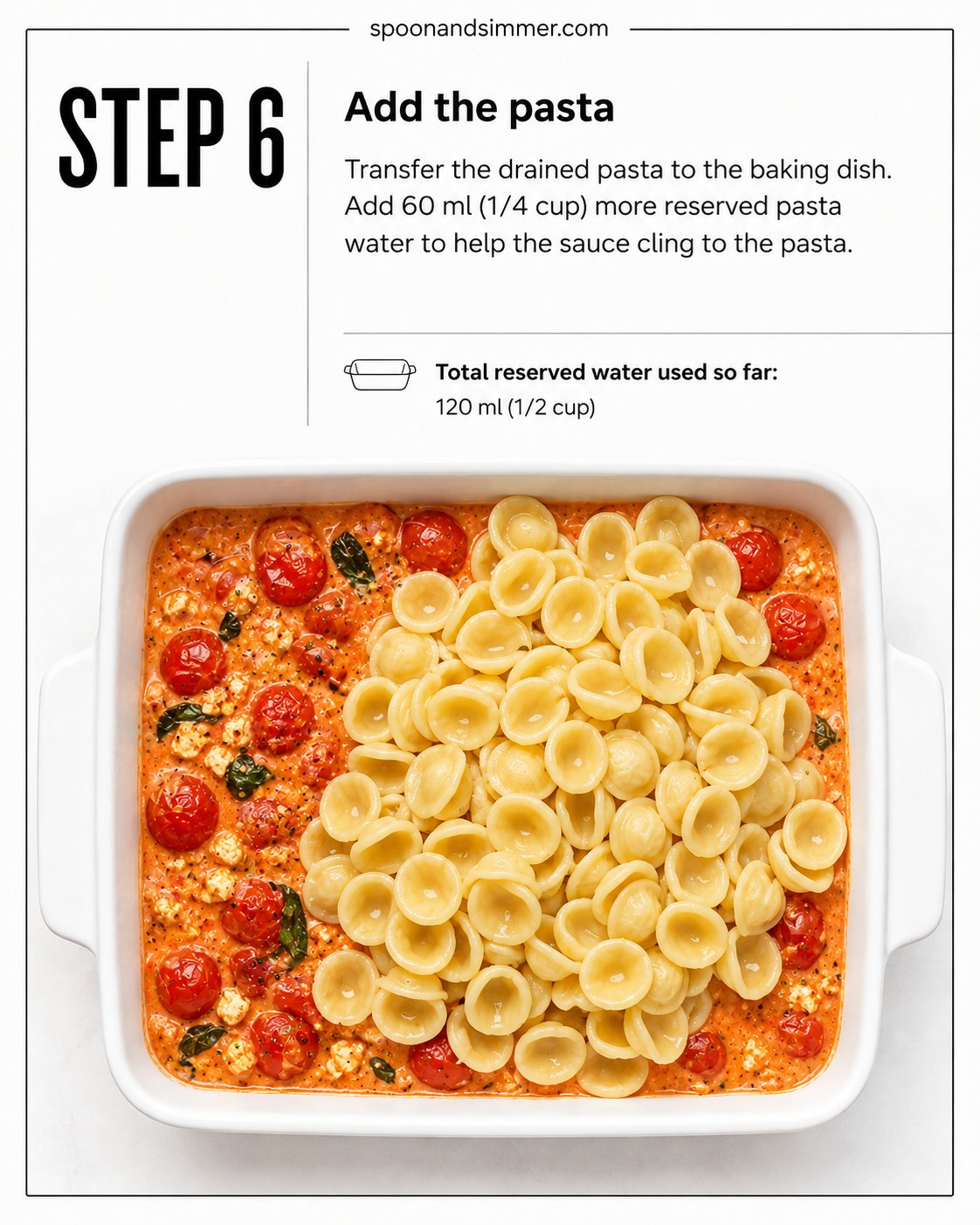
Transfer the drained orecchiette straight into the baking dish with the sauce — no need for a separate bowl, one less thing to wash. Add another 60 ml (1/4 cup) reserved pasta water, which brings your running total to 120 ml (1/2 cup) used so far. This second addition helps the sauce actually cling to each little pasta cup instead of pooling at the bottom of the dish.
Why not add all the water at once?
Because the pasta keeps absorbing liquid as it sits, and adding it in stages lets you control exactly how loose or tight the final sauce ends up — you can always add, but you can't take water back out.
Tossing and Adjusting the Seasoning
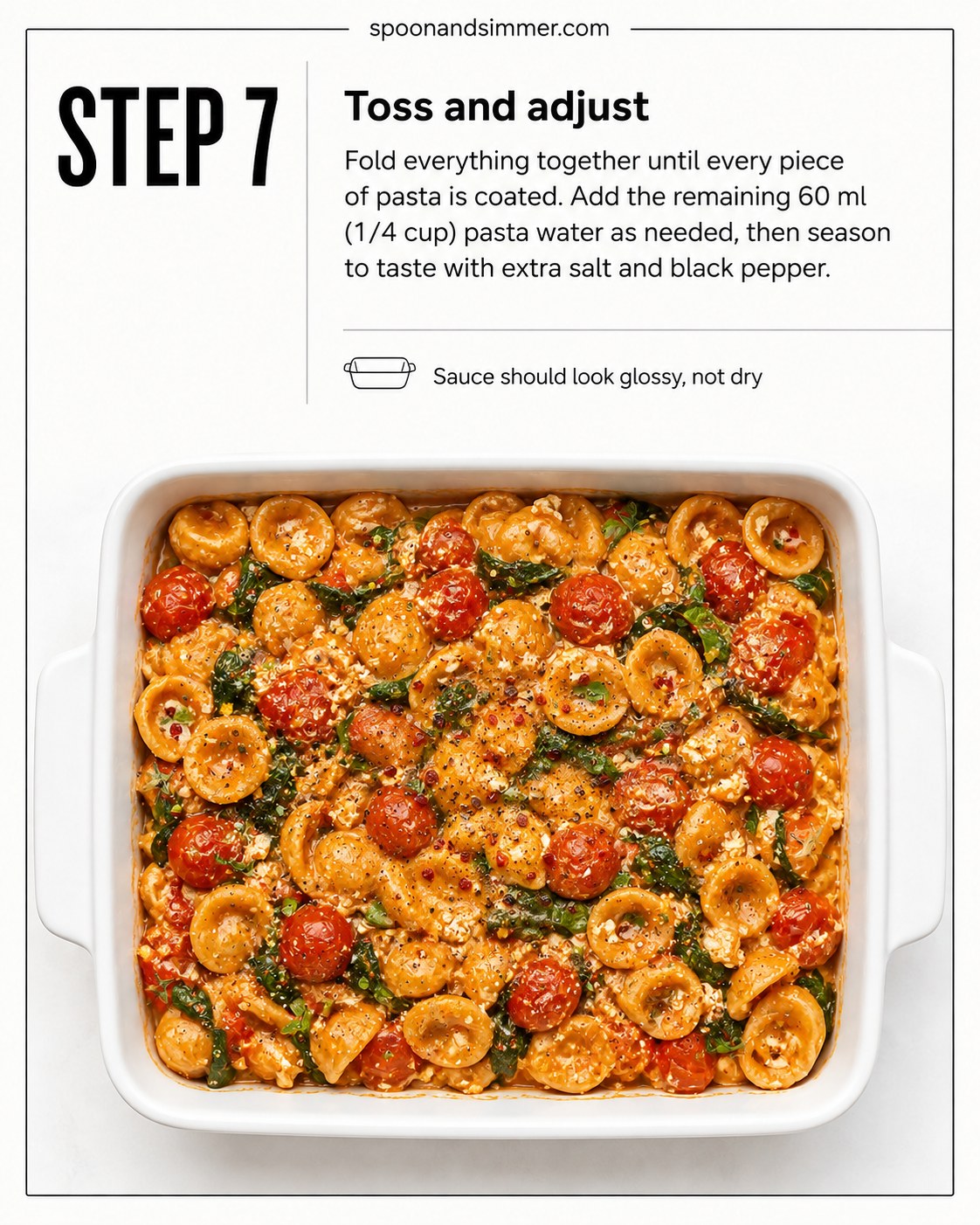
Fold everything together until every piece of pasta is coated in that rosy, creamy sauce. Add the remaining 60 ml (1/4 cup) pasta water as needed — you may not need all of it, depending on how much liquid your tomatoes gave off. Taste, then season with extra salt and black pepper; feta is salty but tomatoes and pasta water dilute it more than you'd expect.
- Glossy, not dry — that's the visual cue you're after.
- Taste before adjusting, since feta brands vary a lot in saltiness.
- Fold, don't stir hard, to keep the orecchiette shapes intact.
Resting, Finishing, and Serving
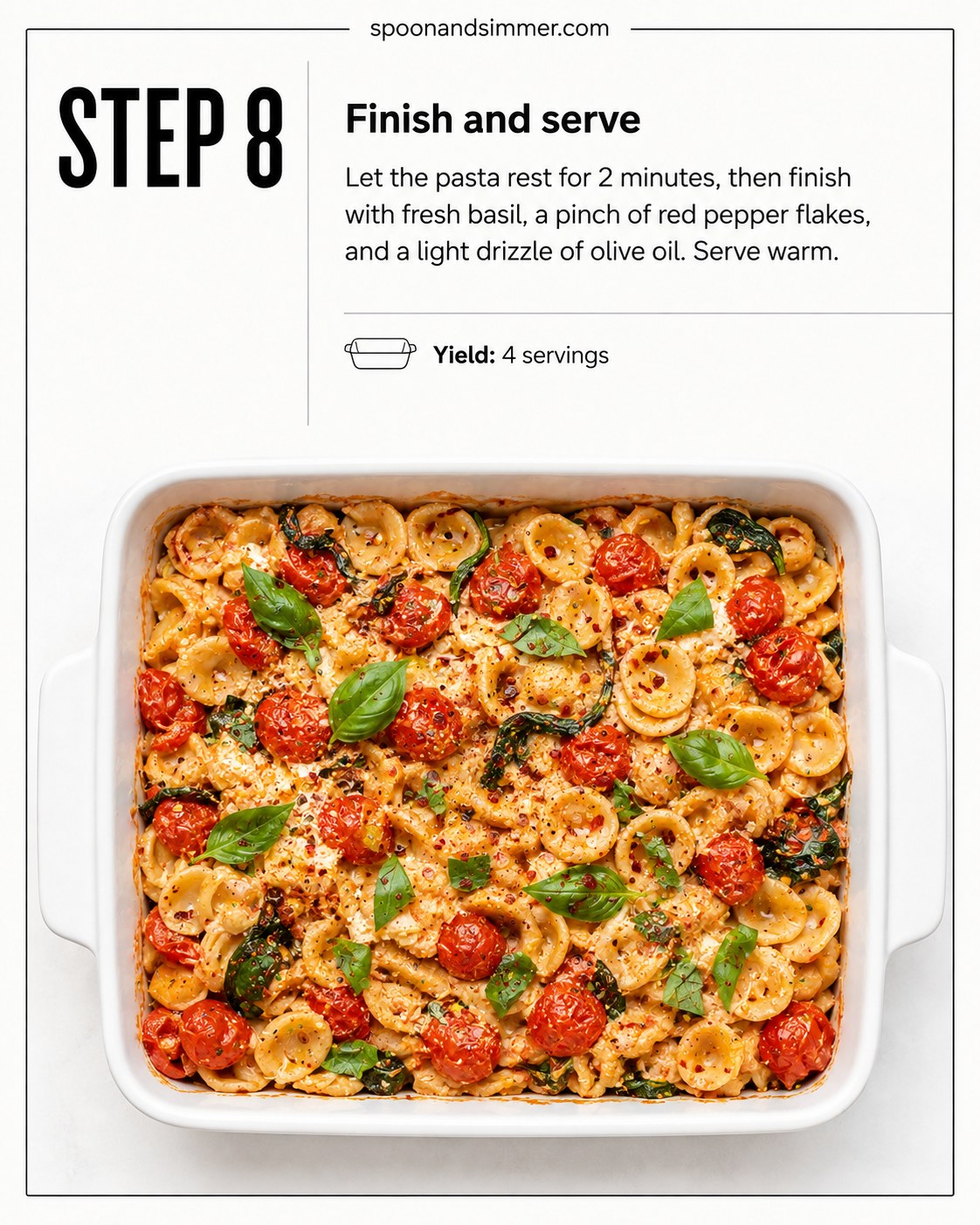
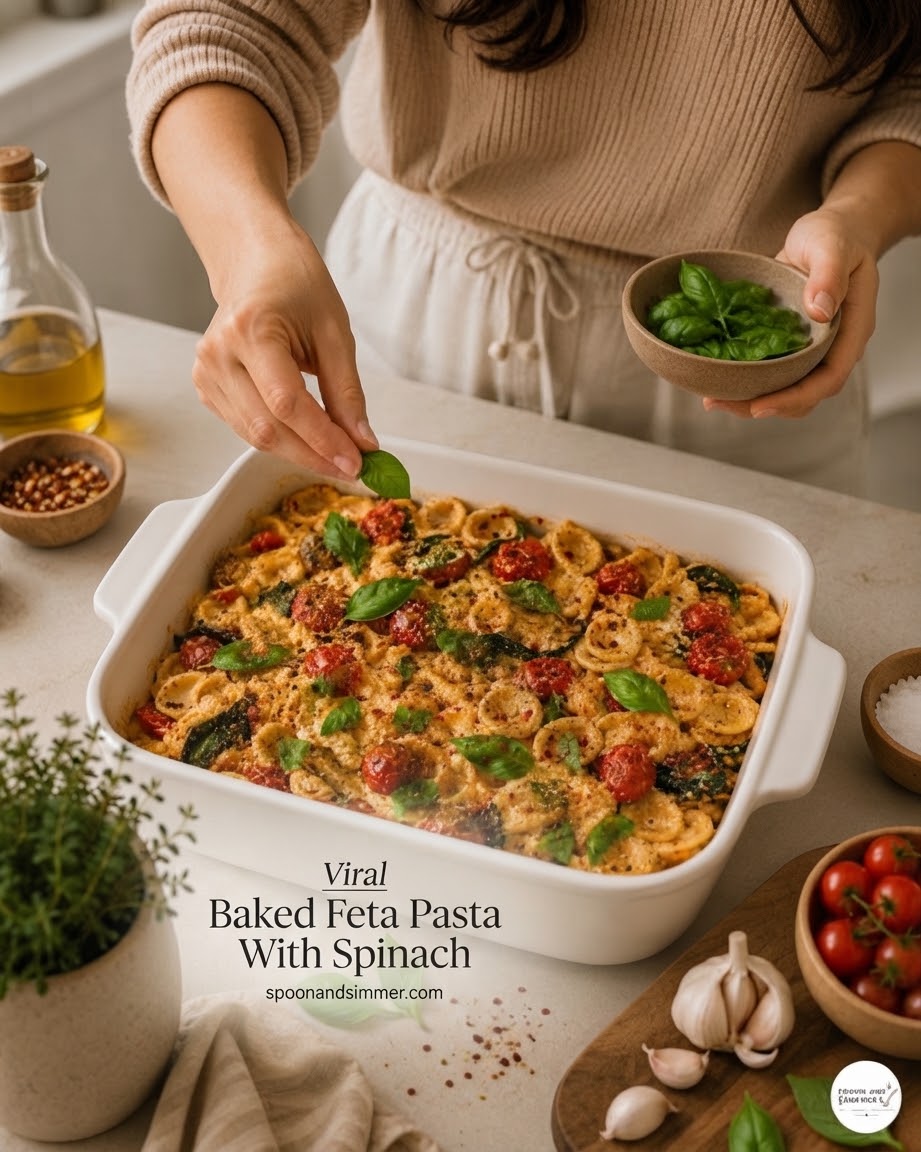
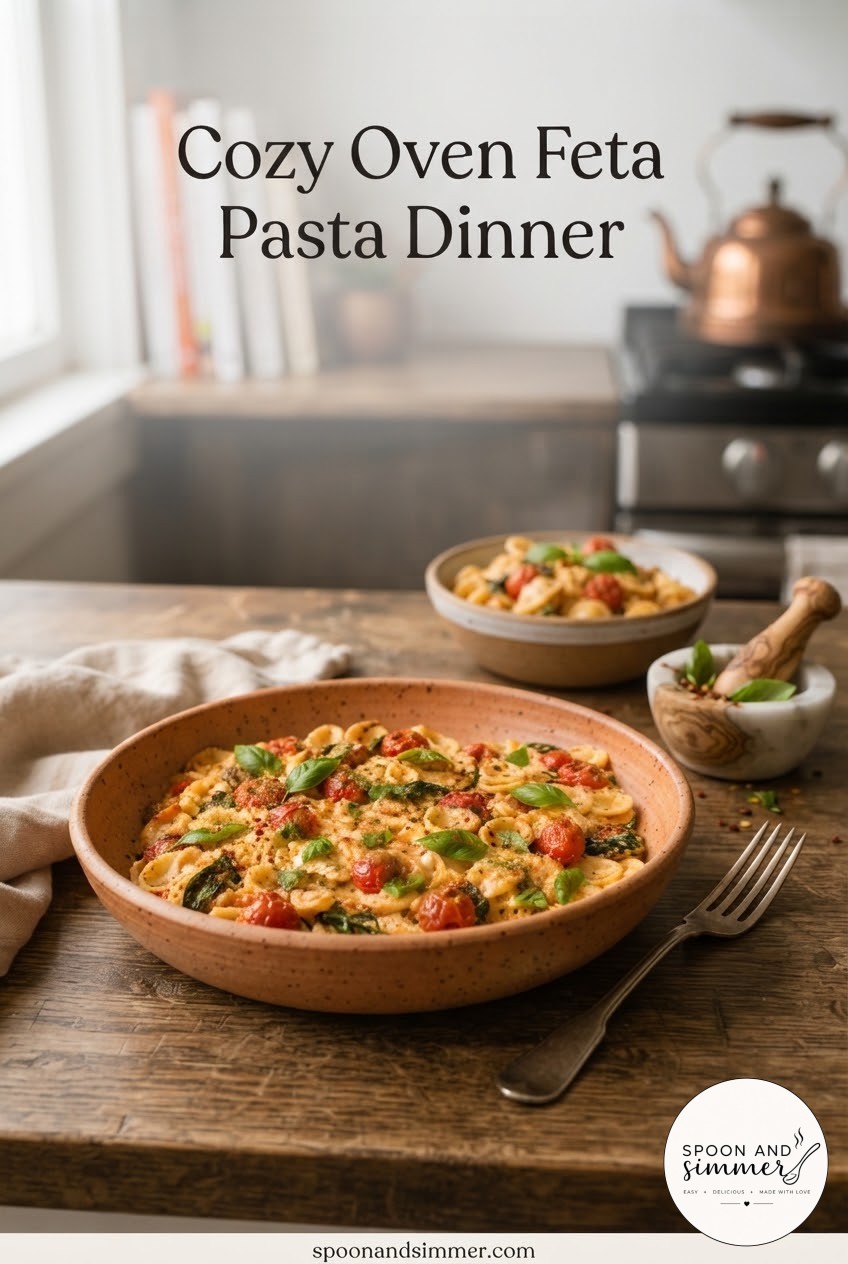
Let the pasta rest for 2 minutes before serving — it sounds like a throwaway step but it lets the sauce settle into the pasta instead of sliding off the spoon. Finish with fresh basil leaves, a small pinch of red pepper flakes for color and a little more heat, and a light drizzle of olive oil right over the top.
This makes 4 servings as a main, or stretch it to six with a big green salad and crusty bread alongside. Leftovers keep in the fridge for up to 3 days and reheat well with a splash of water to loosen the sauce again.
What This Actually Looks Like on My Counter
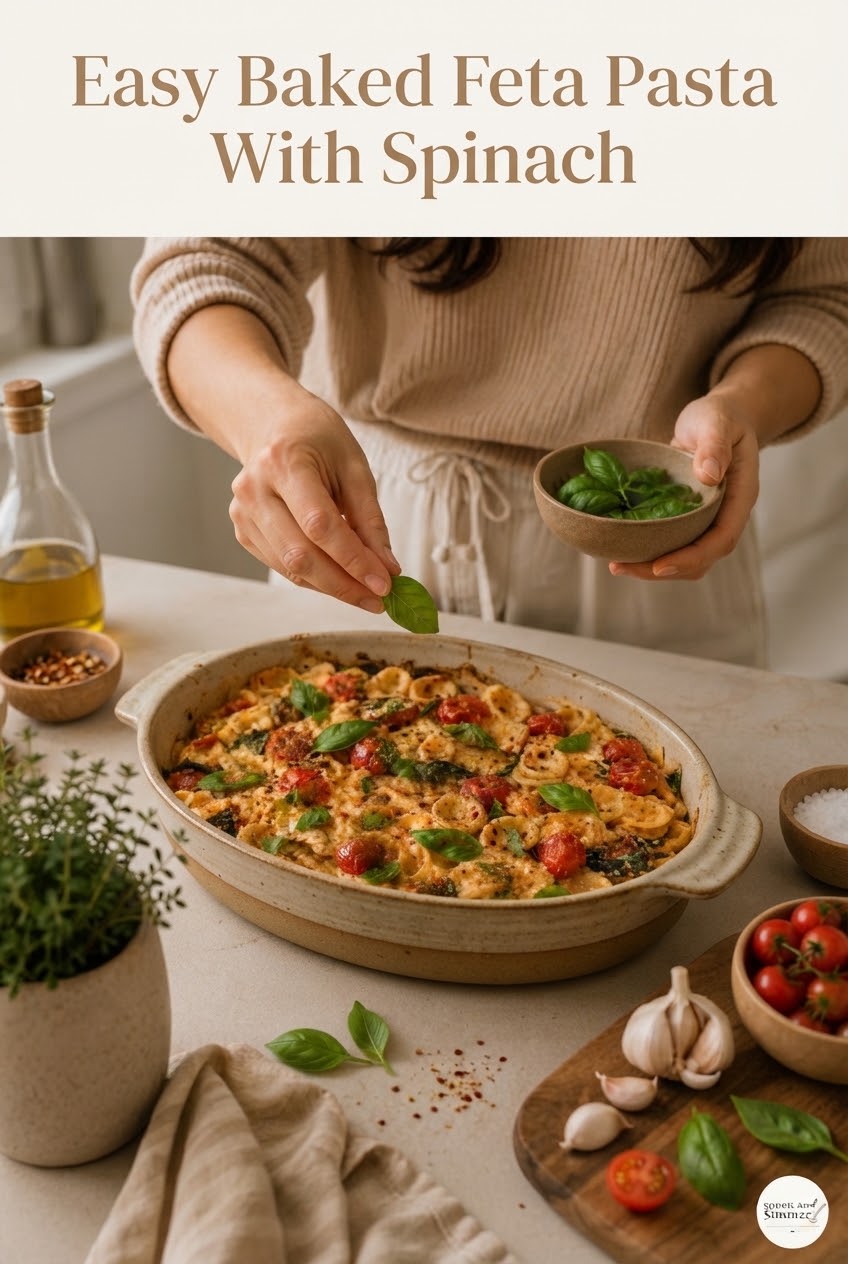
Step photos make everything look tidy, but I wanted you to see the real version too — the one with garlic bulbs crowding the cutting board and a dish towel doing double duty as an oven mitt. These shots are from an actual Tuesday in my kitchen, not a staged run, so you'll see the small real-world details that never make it into a numbered step.
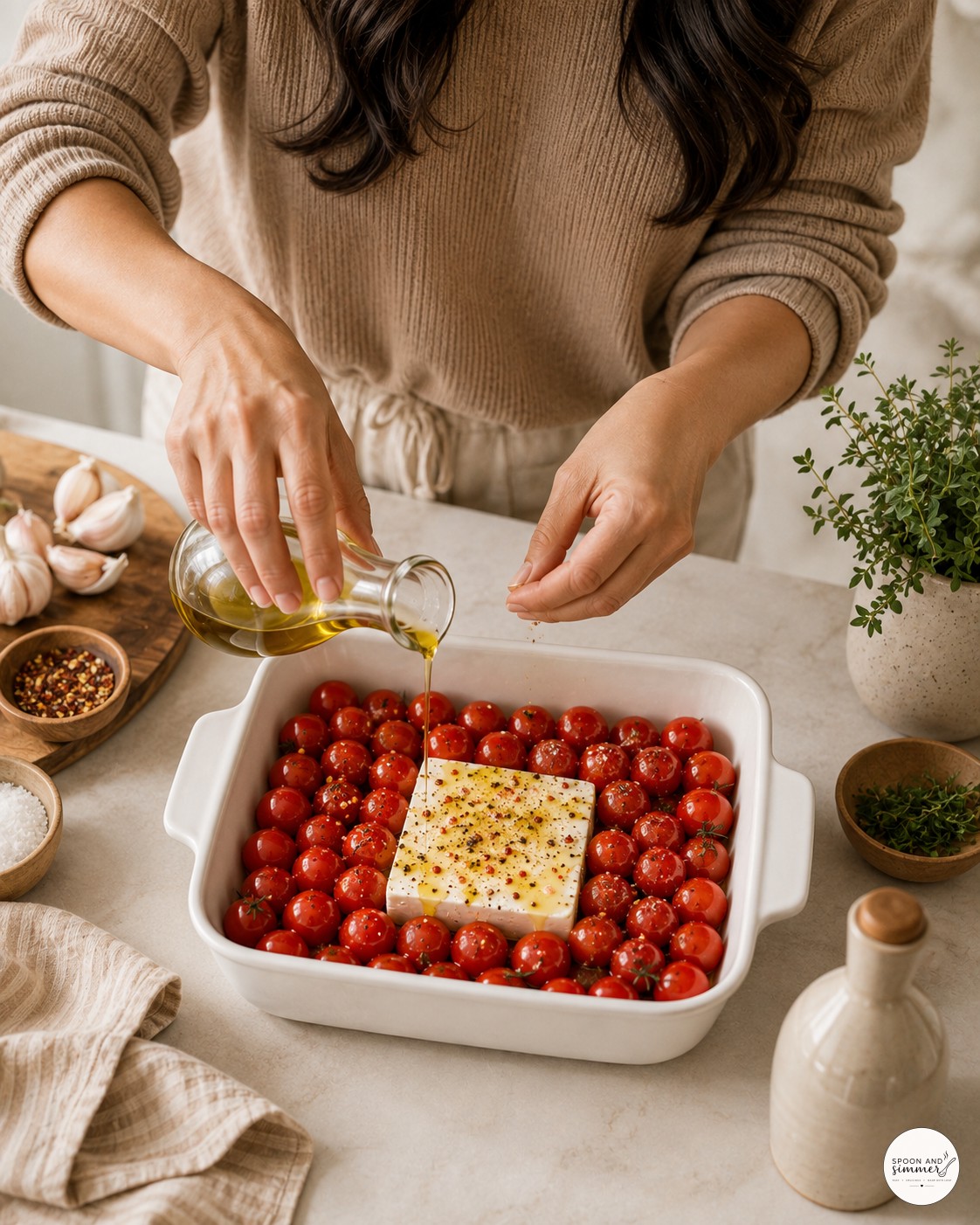
That's my everyday olive oil bottle, not a fancy finishing one — I pour generously because the tomatoes need it to roast properly and not stick. My feta was cold from the fridge here; I've since started pulling it out ten minutes early so it softens a touch faster in the oven.
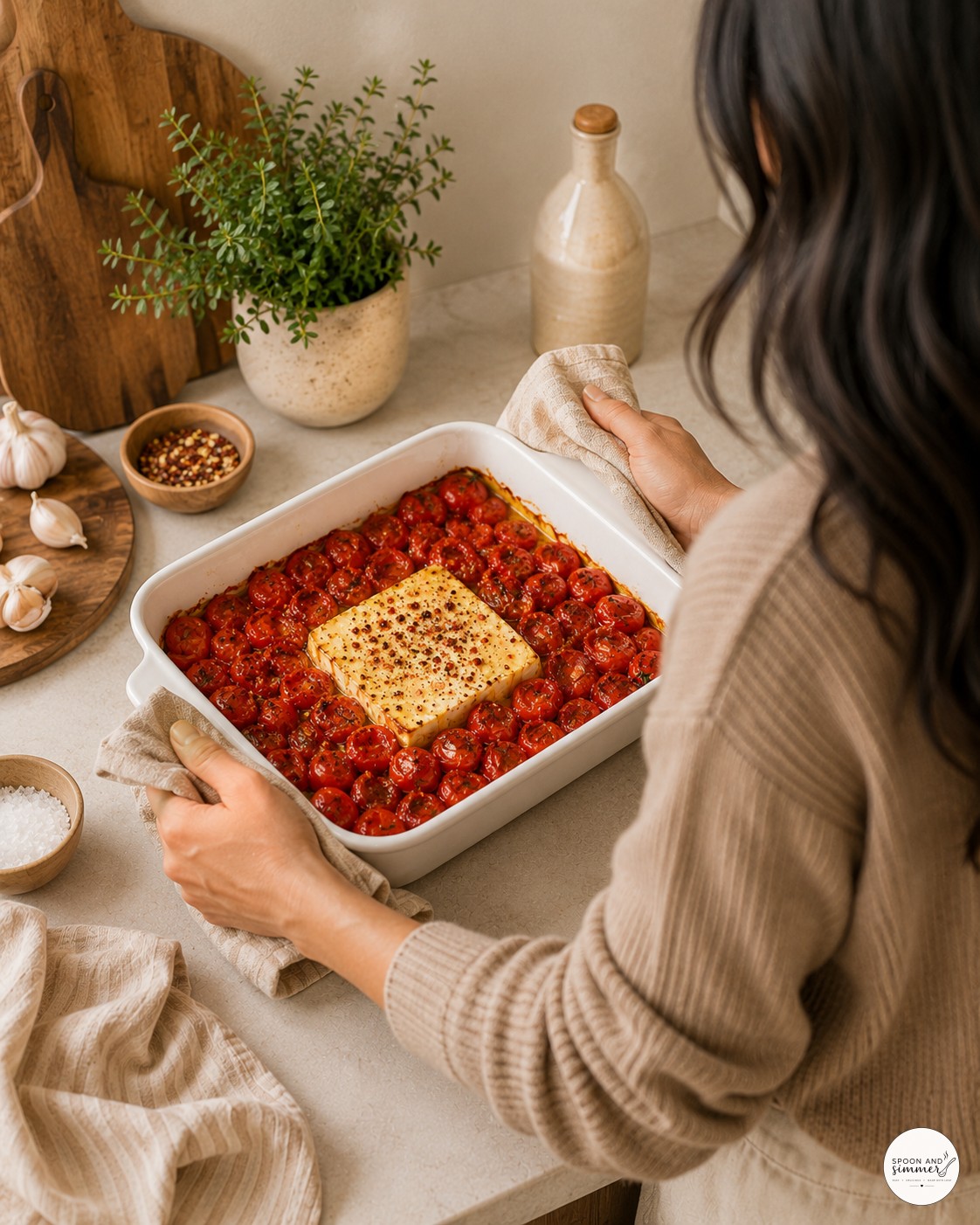
I always grab the dish with a folded towel instead of proper oven mitts, which Dave gives me grief about constantly. You can see the oil has turned a deep orange-red from the roasted tomatoes — that color is exactly what you want before pulling it out.
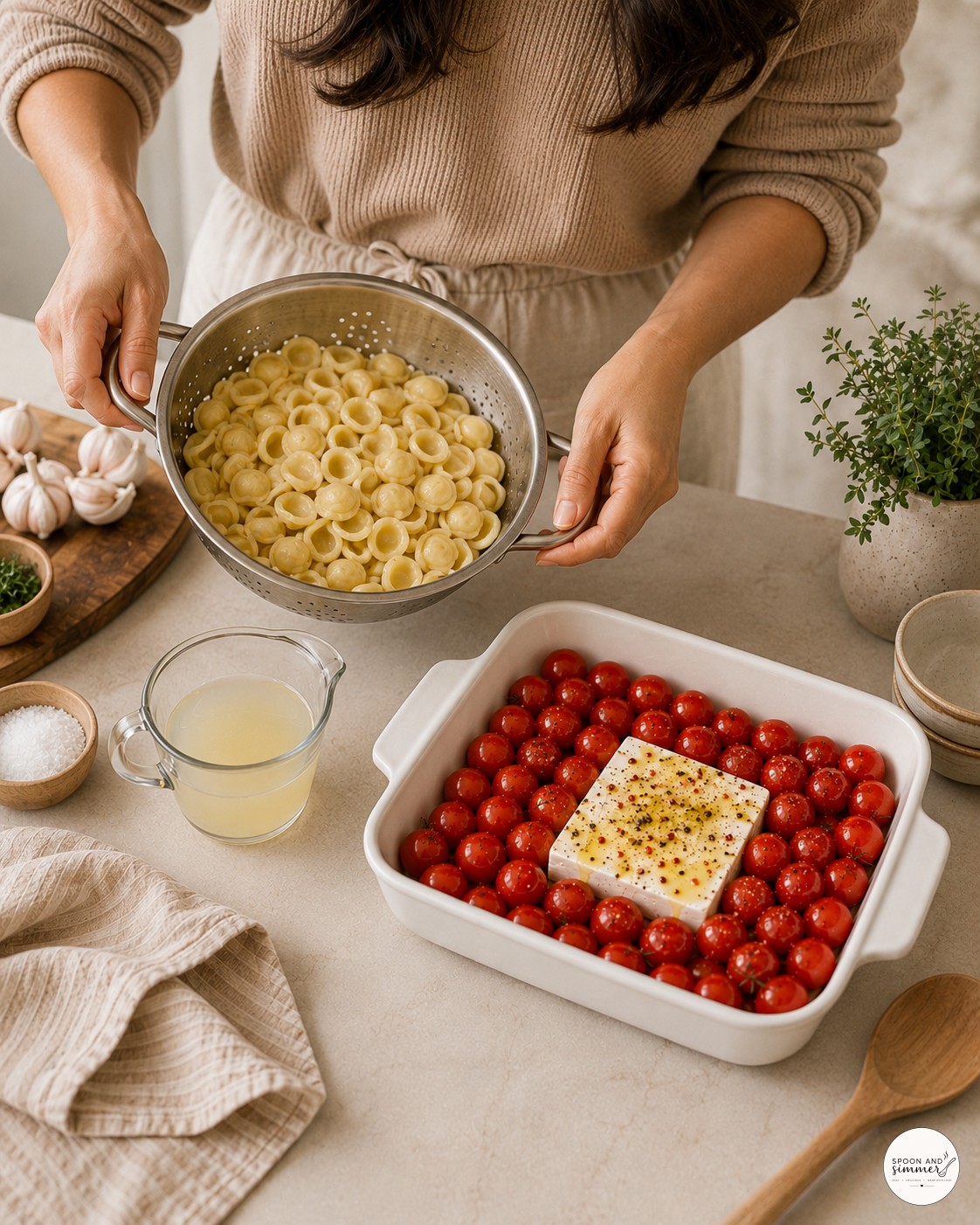
Draining the orecchiette over the sink and catching the starchy water in a measuring cup at the same time is a two-hand juggle I've gotten weirdly good at. If you forget to reserve it before draining, don't panic — plain tap water works in a pinch, just add a little extra salt.
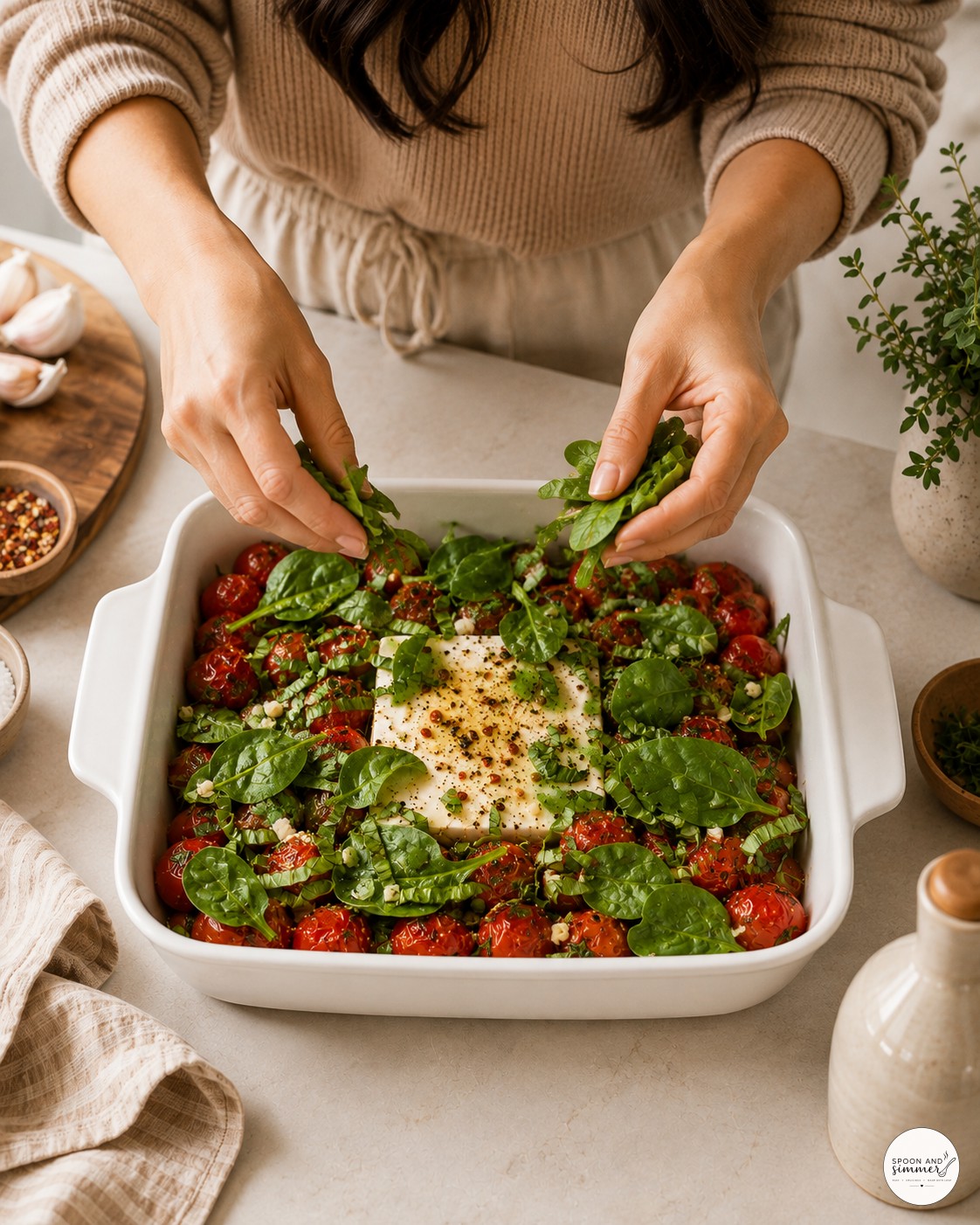
I scatter the spinach by hand rather than dumping it from the bag, which lets me distribute it more evenly over the tomatoes instead of it clumping in one corner. Minced garlic goes in right alongside it, not before, so it doesn't scorch on hot dish edges.
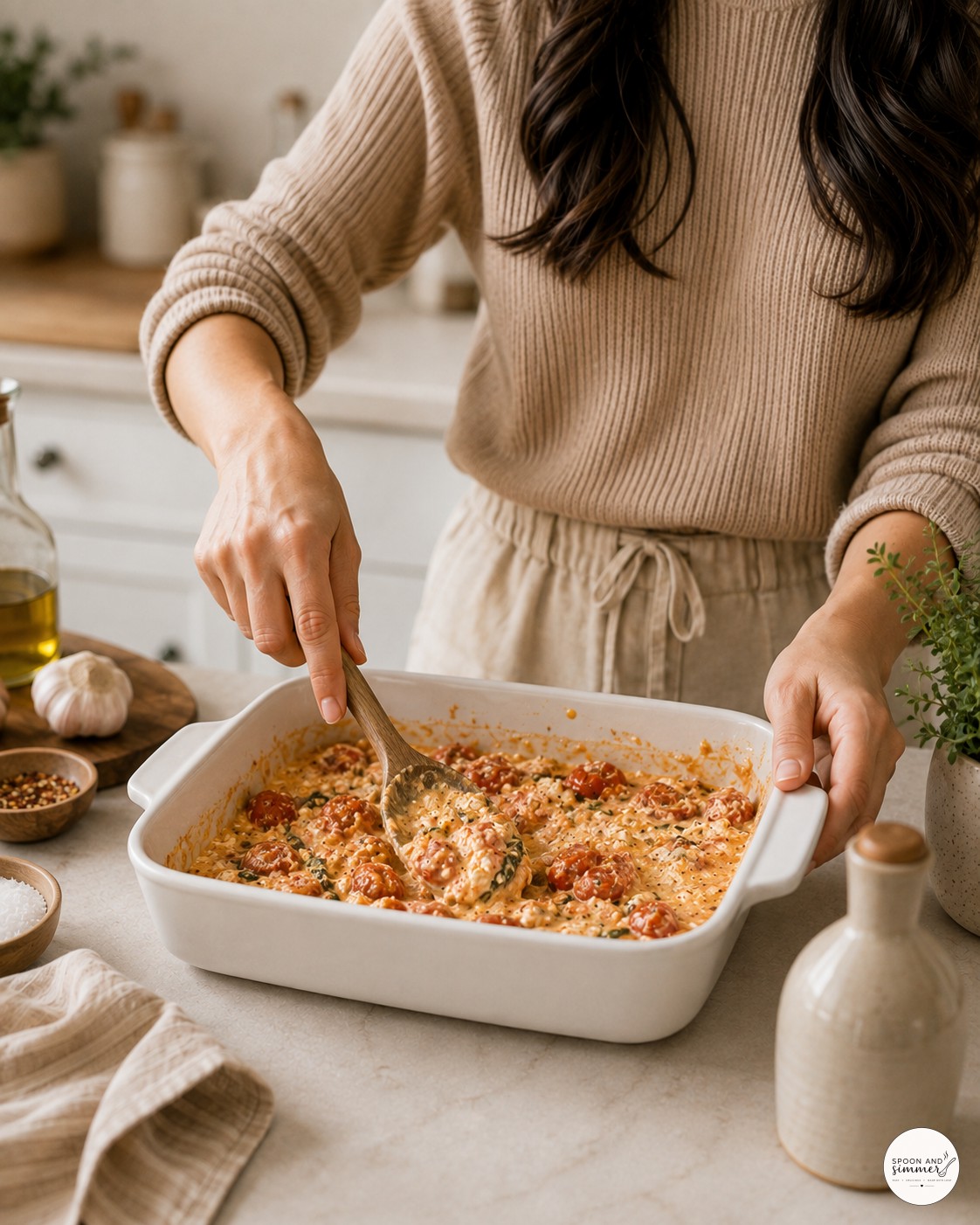
This is the moment the dish stops looking like separate ingredients and starts looking like an actual sauce. I use a wooden spoon here instead of a spatula because it lets me really press into the feta without scratching the ceramic dish.
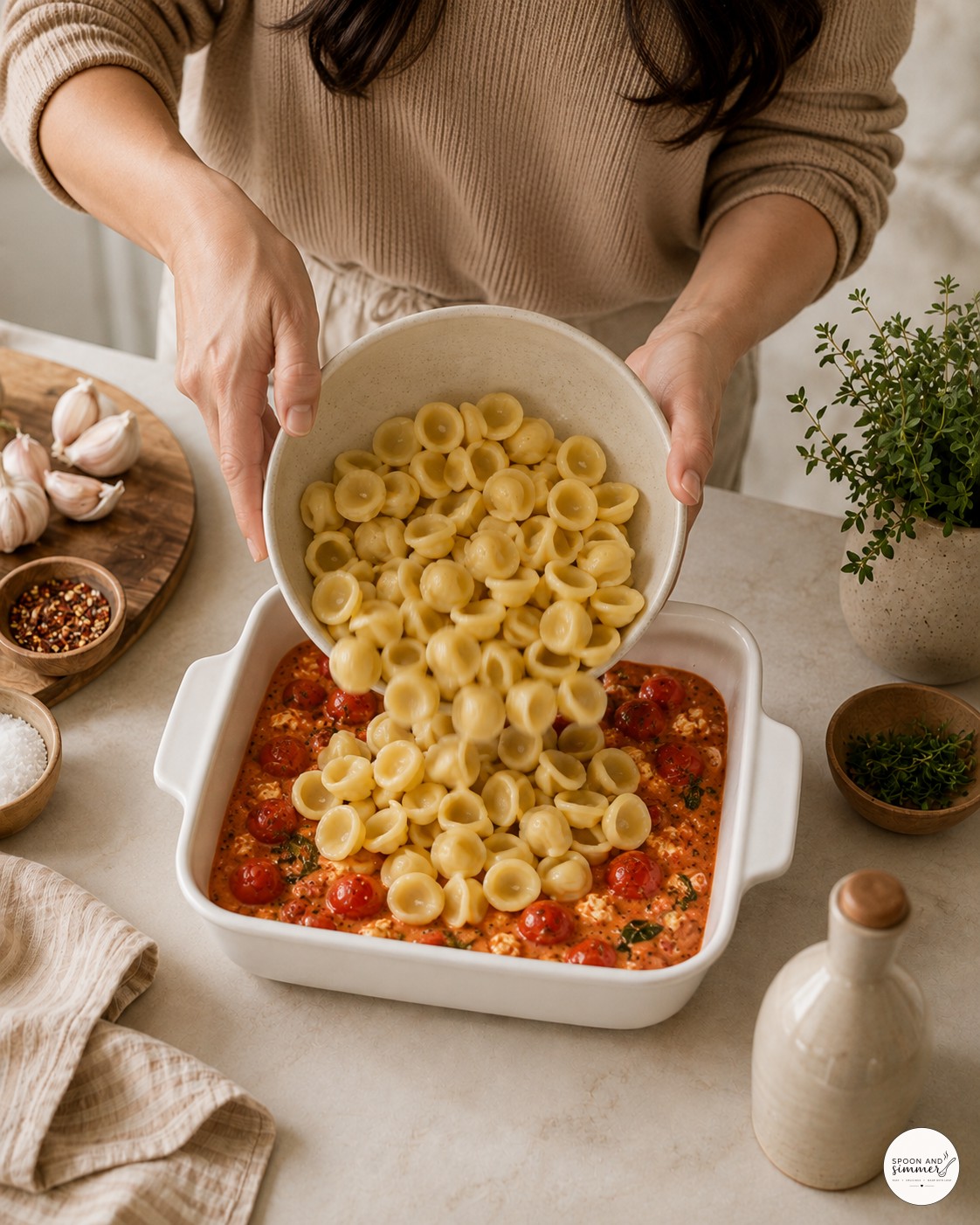
Pouring the pasta straight from the bowl instead of a colander cuts down on dishes, which matters more to me on a weeknight than it probably should. Do this while the sauce is still warm so the pasta doesn't have to work as hard to reheat.
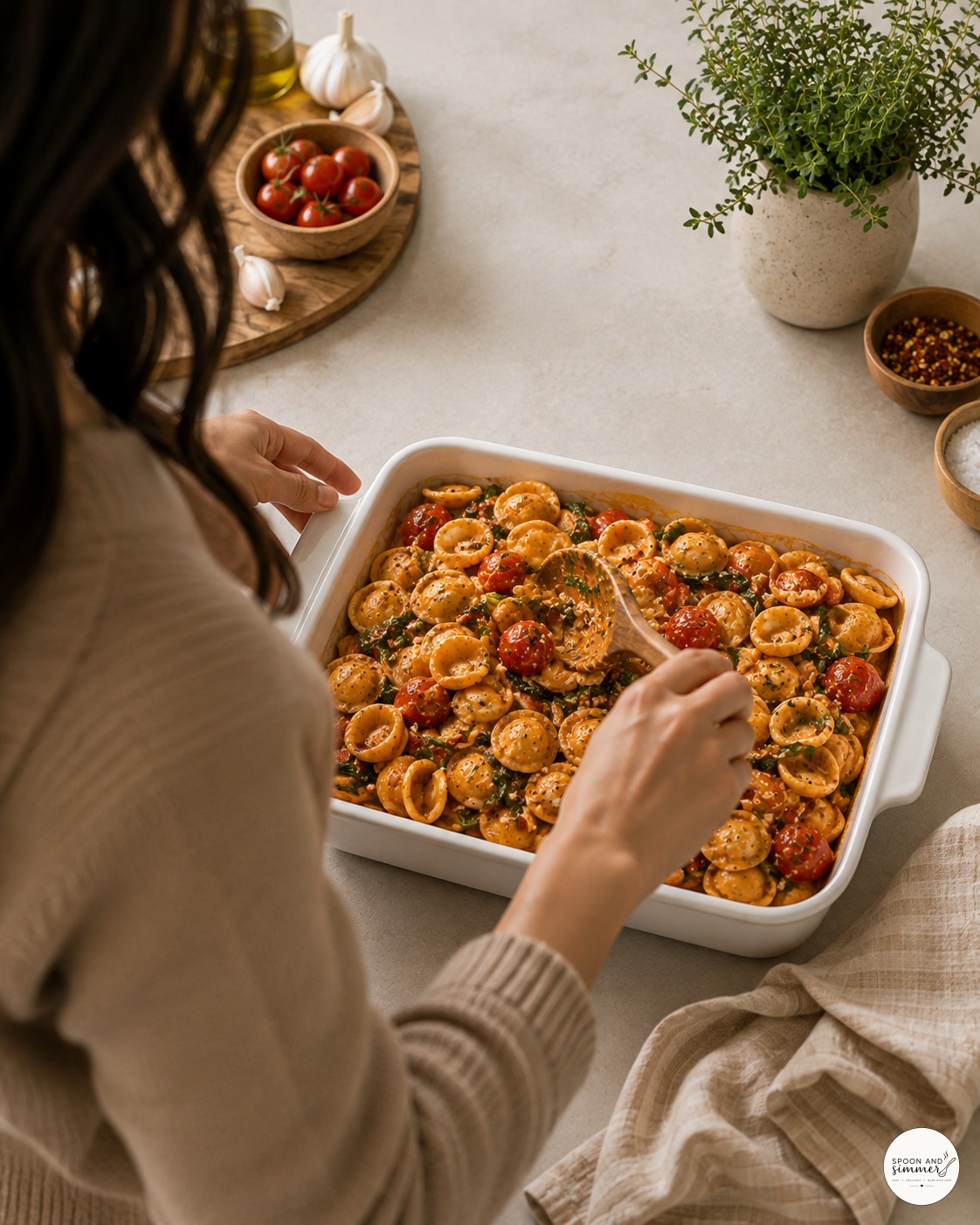
I fold from the edges toward the center here, which keeps the sauce from splashing over the sides of the dish — learned that the messy way early on. You can see the glossy sheen developing on the pasta, which is exactly the cue I'm watching for.
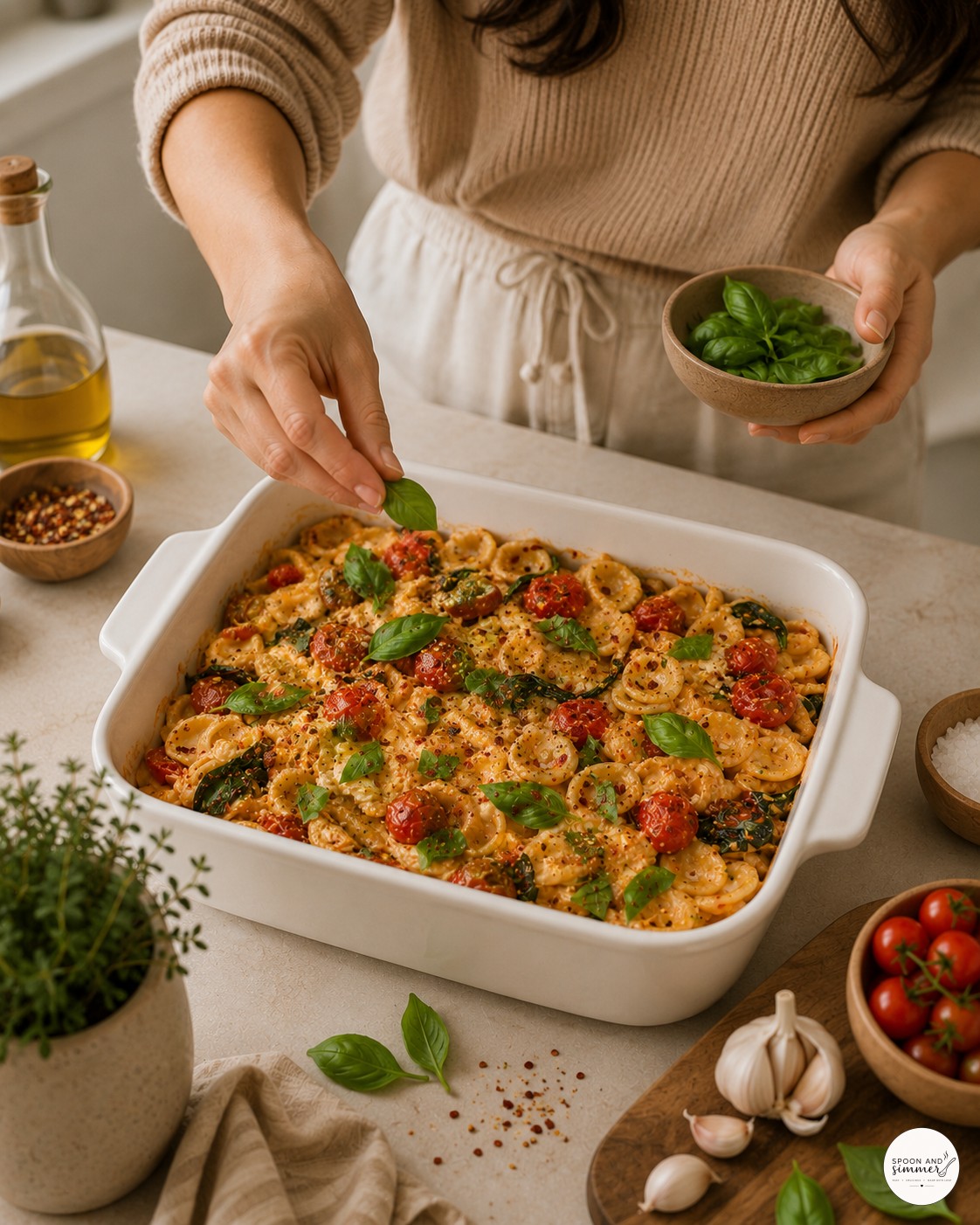
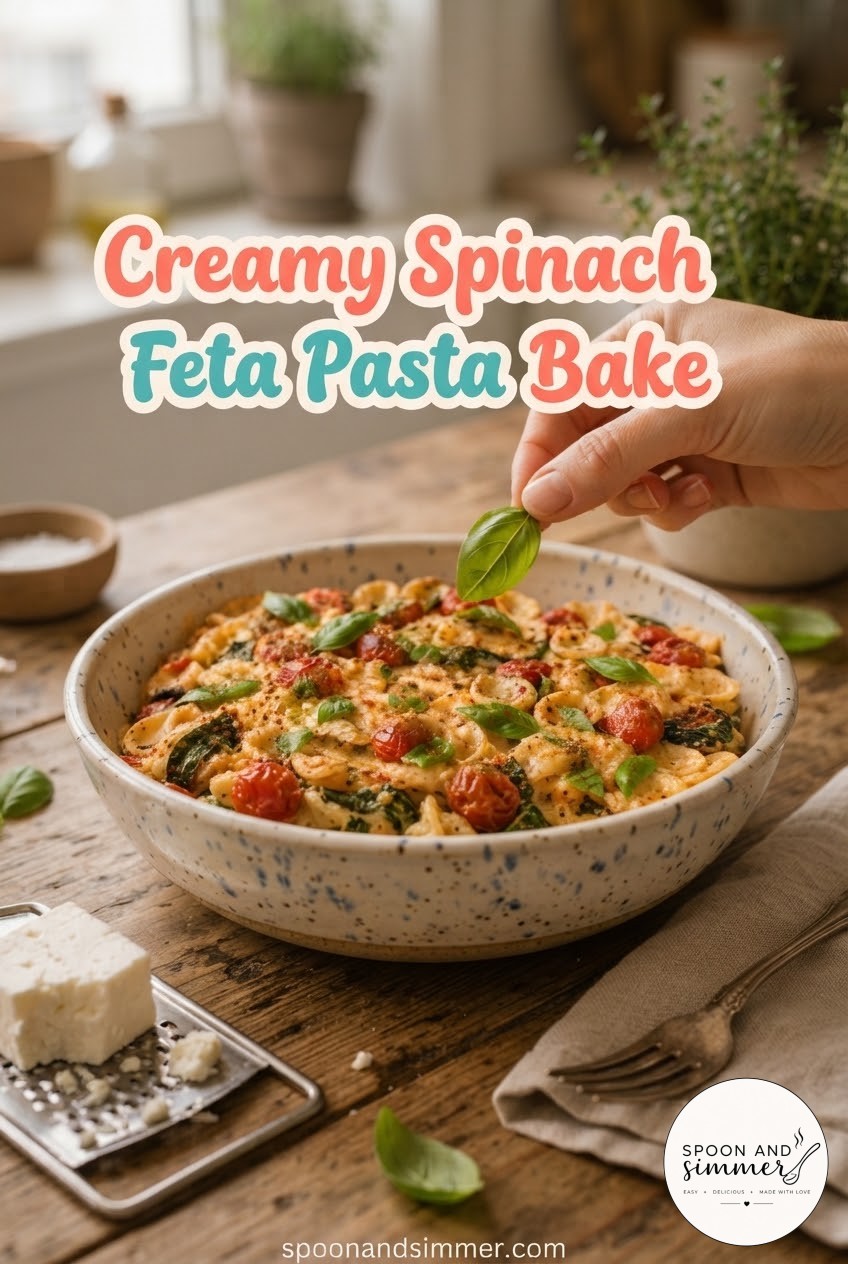
Fresh basil goes on right at the table, not in the oven, because it wilts and browns almost instantly against the heat. I keep a small bowl of extra leaves nearby specifically for this last scattering, since the kids always ask for more on top.
This one earns its spot in my regular rotation because it genuinely asks almost nothing of me — a baking dish, a pot of water, and a spoon. Make it once and you'll understand why it's still showing up on dinner tables years after it first went viral.

- For the Bake
- For the Pasta
- For the Finish

Frequently Asked Questions
Can I use crumbled feta instead of a block?
You can, but the texture suffers — crumbled feta dries out faster and won't give you that soft, melty center. If it's all you have, use a bit more (about 250 g) and check it a few minutes early.
What if my sauce looks broken or oily after mashing?
Add a splash more warm reserved pasta water and stir firmly — the starch re-emulsifies the fat almost every time. This is the same fix I'd use on any cream or cheese sauce that's separated in a restaurant kitchen.
Can I make this ahead for a busy weeknight?
Roast the tomatoes and feta up to a day ahead and refrigerate covered. Reheat gently, then add the fresh spinach, garlic, and pasta right before serving so the greens stay bright, not tired.