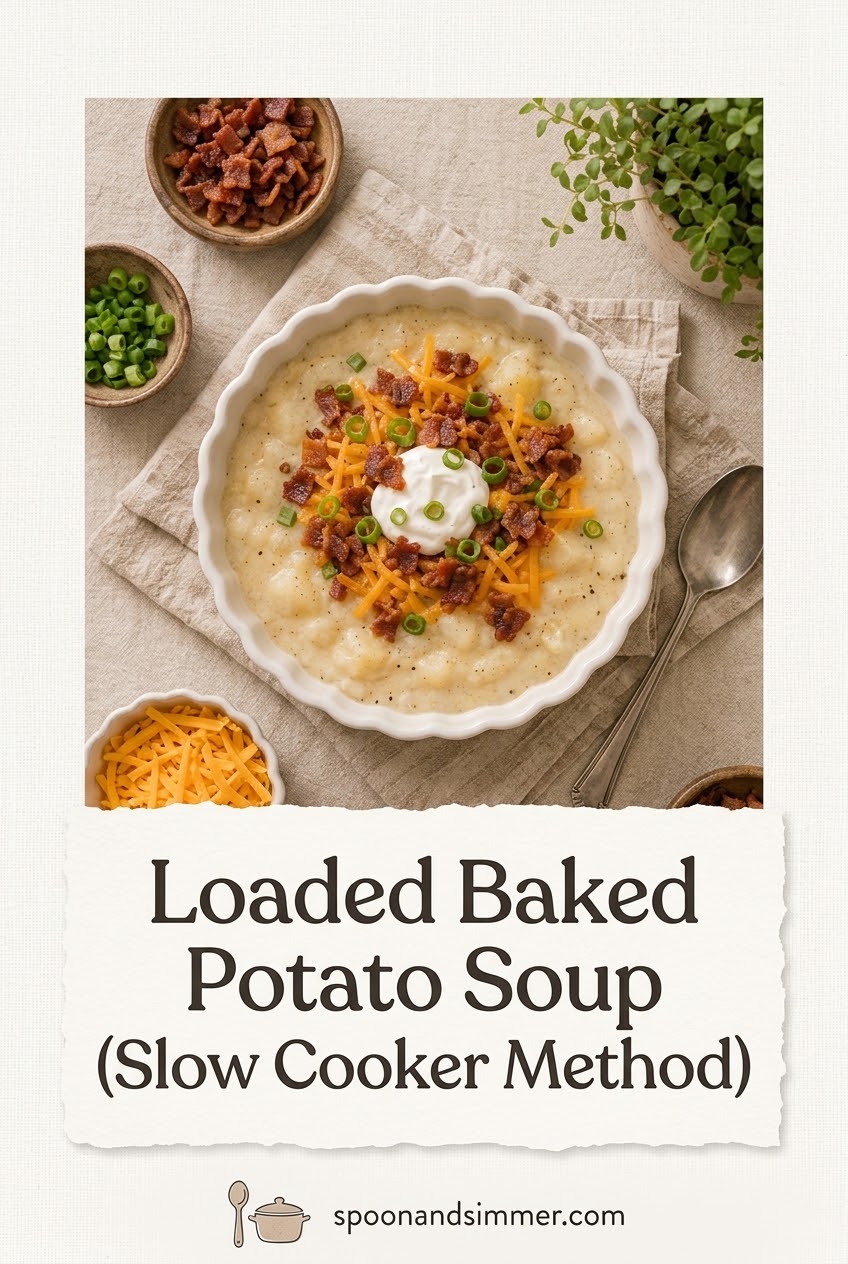
Loaded baked potato soup is one of those big pot night regulars at my house — the kind of soup that feeds a crowd, needs almost no babysitting, and disappears in one sitting anyway. This version comes together in a 6-quart slow cooker, which means the potatoes go soft and starchy on their own schedule while I do literally anything else. The one non-negotiable: dairy goes in at the end, not the beginning, or you will end up with a curdled, grainy mess instead of the silky bowl in these photos.
Prepping Everything Before the Cooker Even Turns On
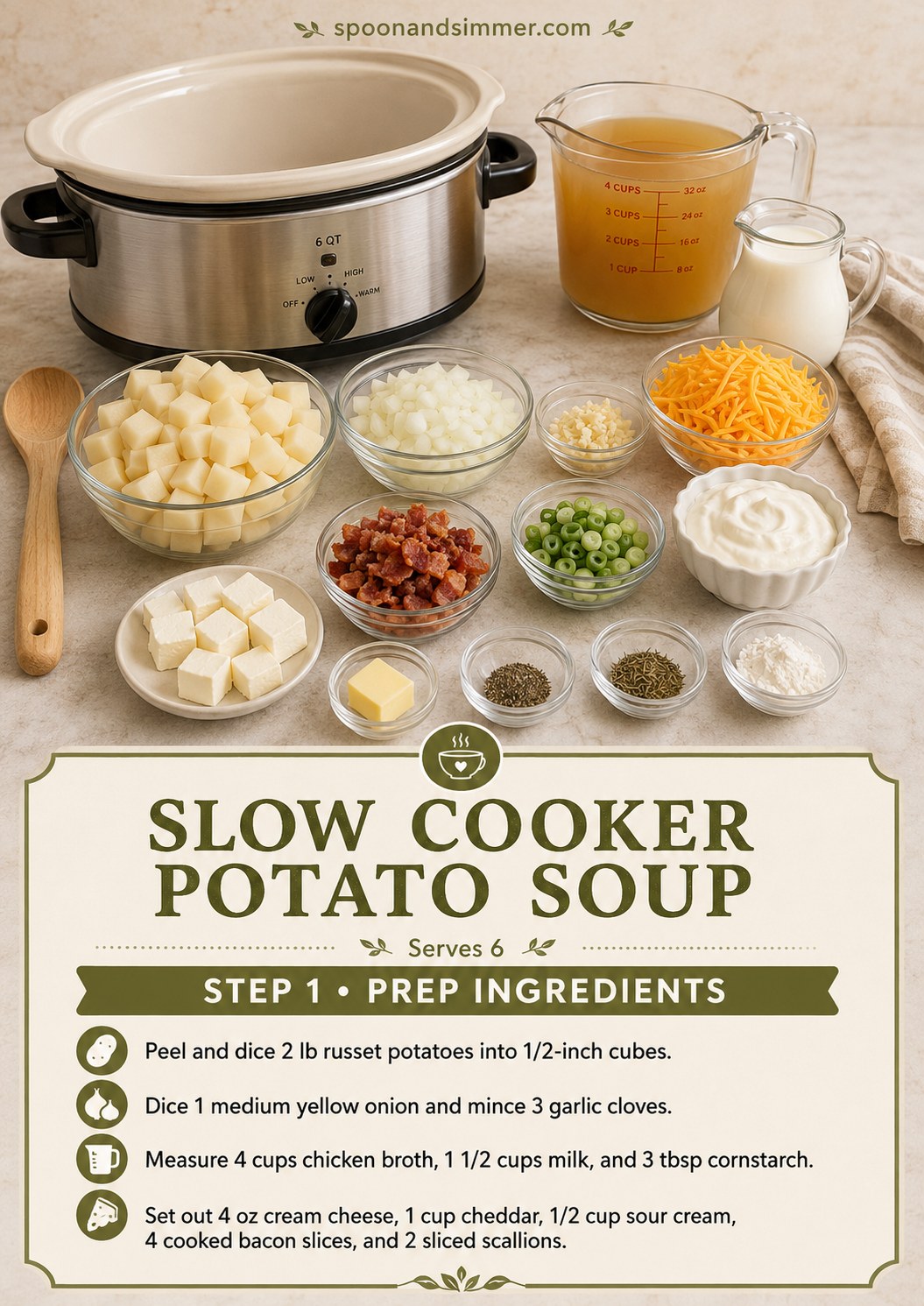
Every good slow cooker soup starts with ten minutes of unglamorous prep, and this one is no exception. I peel and dice 2 lb russet potatoes into 1/2-inch cubes — russets because they break down just enough to thicken the broth without turning to mush, which is exactly the texture you want here and not, say, a waxy Yukon gold that holds its shape too stubbornly.
- Aromatics: 1 medium yellow onion, diced, and 3 cloves garlic, minced
- Liquids, measured ahead: 4 cups chicken broth, 1 1/2 cups milk, 3 tbsp cornstarch
- The loaded part: 4 oz cream cheese cubed, 1 cup shredded sharp cheddar, 1/2 cup sour cream, 6 cooked bacon slices, 2 sliced scallions
Lining everything up like this — the way it looks in my kitchen every single time — means once the cooker starts, I am not scrambling through drawers looking for cornstarch three hours in.
Loading the Slow Cooker
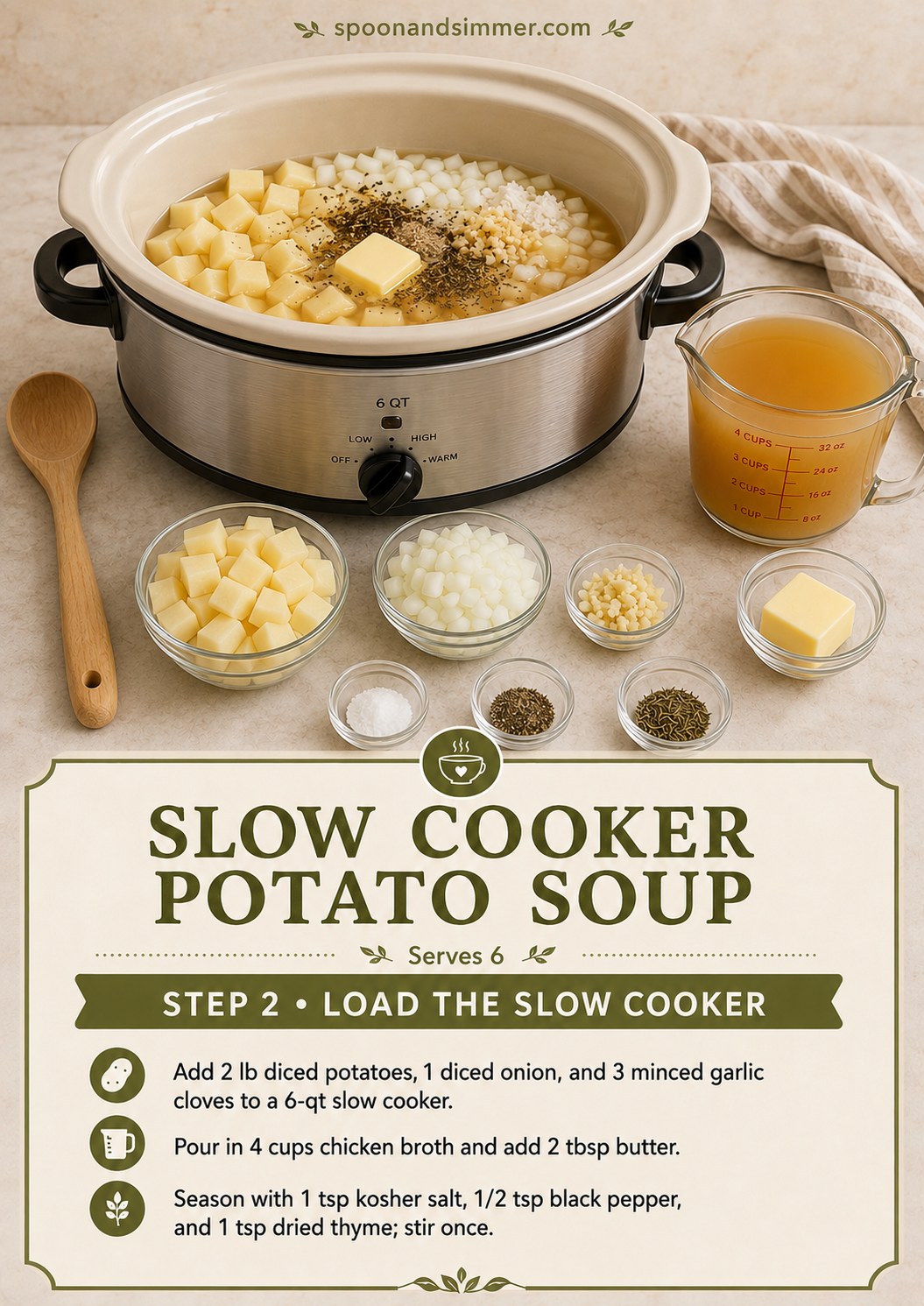
This is the step where the soup basically builds itself. I add the diced potatoes, onion, and garlic straight into the 6-quart slow cooker, pour in 4 cups chicken broth and 2 tablespoons butter, then season with 1 teaspoon kosher salt, 1/2 tablespoon black pepper, and 1 teaspoon dried thyme. One stir to distribute everything evenly, and that is genuinely the whole job.
Notice what is not in the cooker yet: no milk, no cheese, no sour cream. That is deliberate. Dairy simmered for six-plus hours over direct heat breaks and turns grainy, and there is no fixing that once it happens — you would be starting the soup over. Patience here pays off later.
Letting the Slow Cooker Do the Work
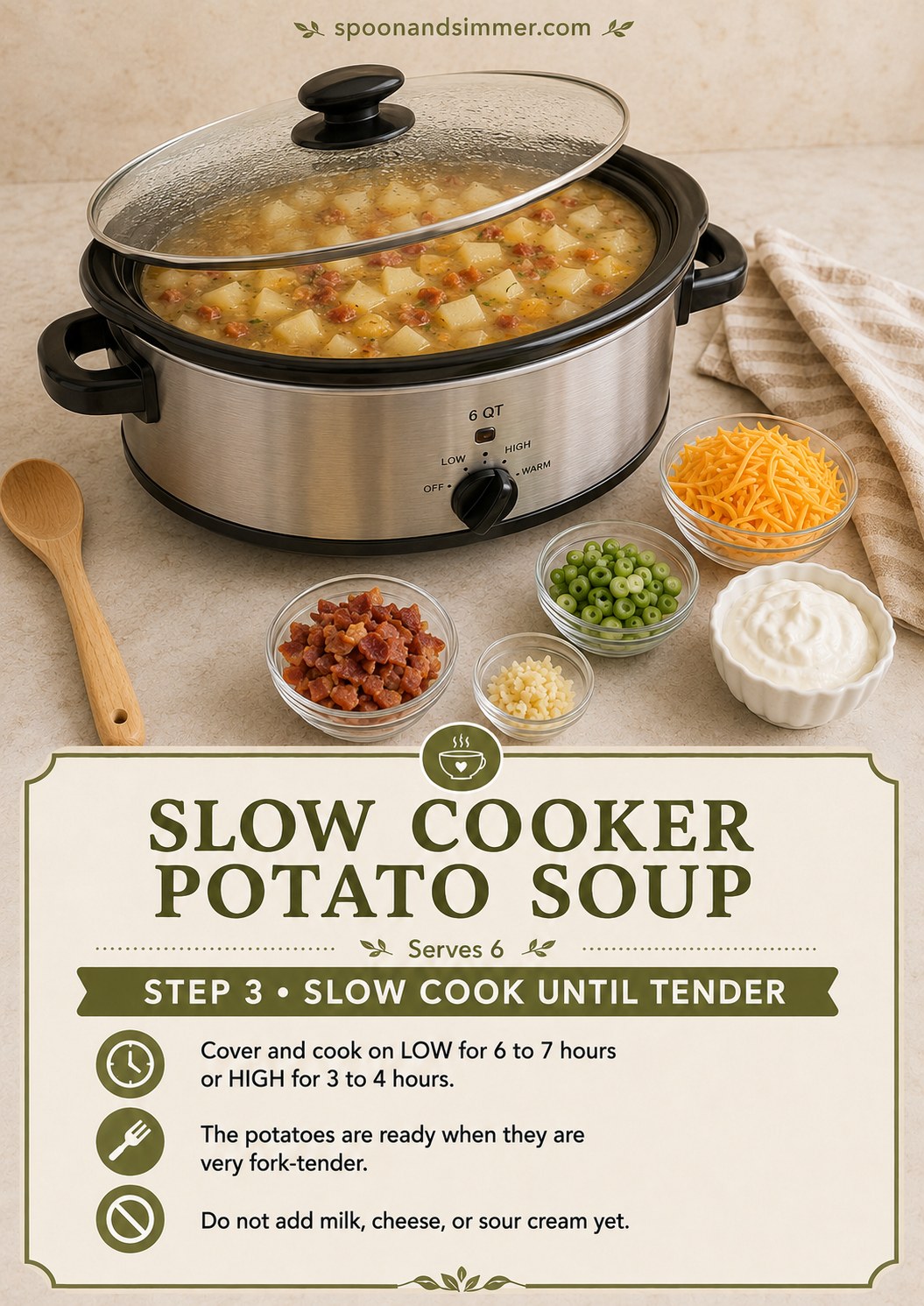
Cover and walk away: LOW for 6 to 7 hours or HIGH for 3 to 4 hours, lid on the whole time. I lift the lid exactly once, near the end, to check doneness — every peek lets out heat and adds cooking time, which matters more than people think with a soup this size.
The potatoes are ready when they are very fork-tender, the kind that falls apart with almost no pressure, and the broth around them has gone slightly cloudy and thickened just from the starch. Resist any urge to stir in milk, cheese, or sour cream at this stage.
In six years of restaurant kitchens, the one rule that never changed: dairy comes last, heat comes down, or you are remaking the dish.
Mashing Right in the Insert
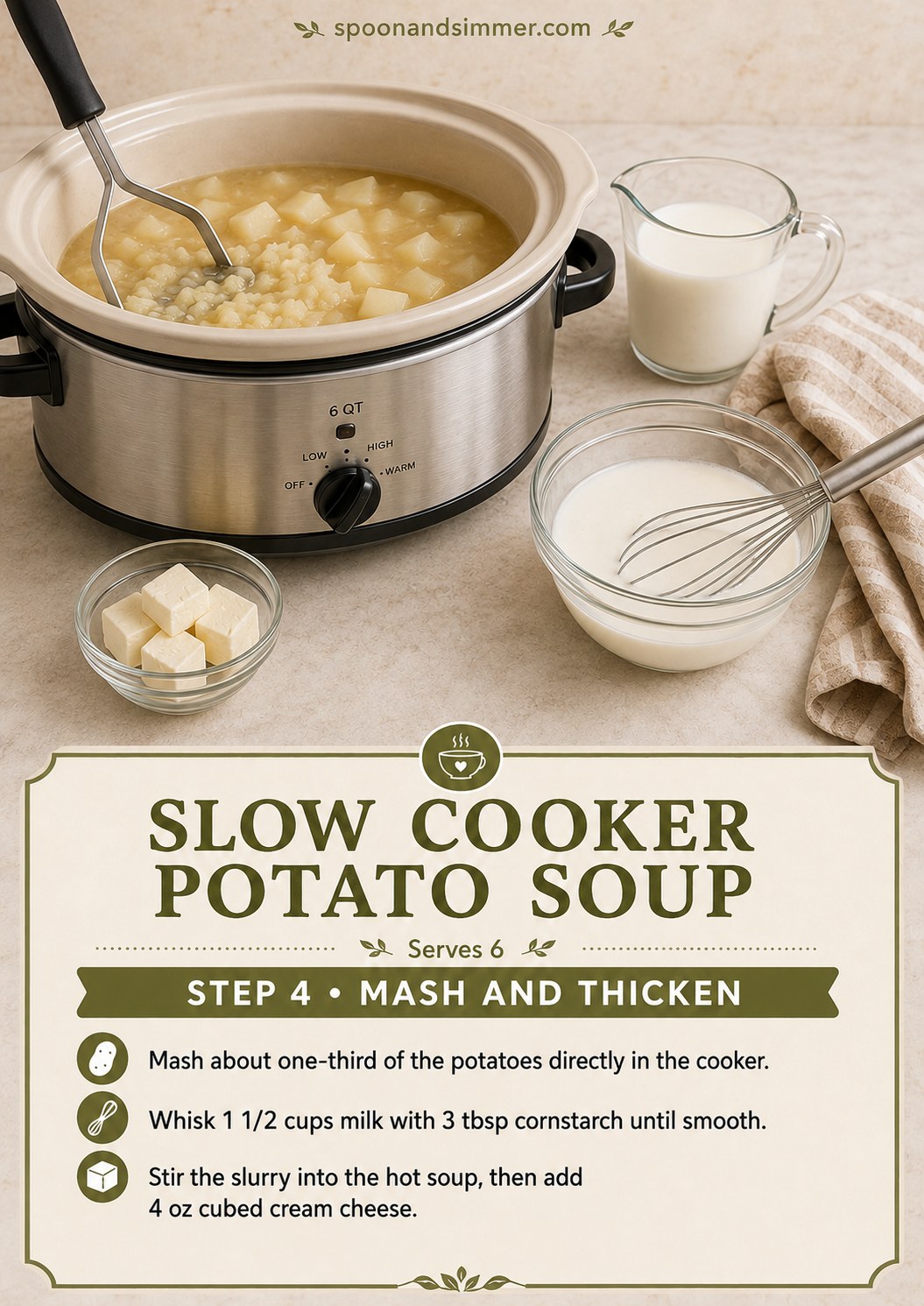
Once the potatoes are tender, I mash about one-third of them directly in the slow cooker with an old-fashioned potato masher — not a blender, not an immersion wand, just enough hand-mashing to release starch and thicken the broth while leaving plenty of soft potato cubes intact for texture.
Then I whisk 1 1/2 cups milk with 3 tablespoons cornstarch in a separate bowl until completely smooth, no lumps, and stir that slurry straight into the hot soup. This is the moment the broth visibly changes — thin and watery one minute, silky and coating the back of a spoon the next. I add 4 oz cubed cream cheese right after, while everything is still hot enough to melt it.
Working In the Cheese
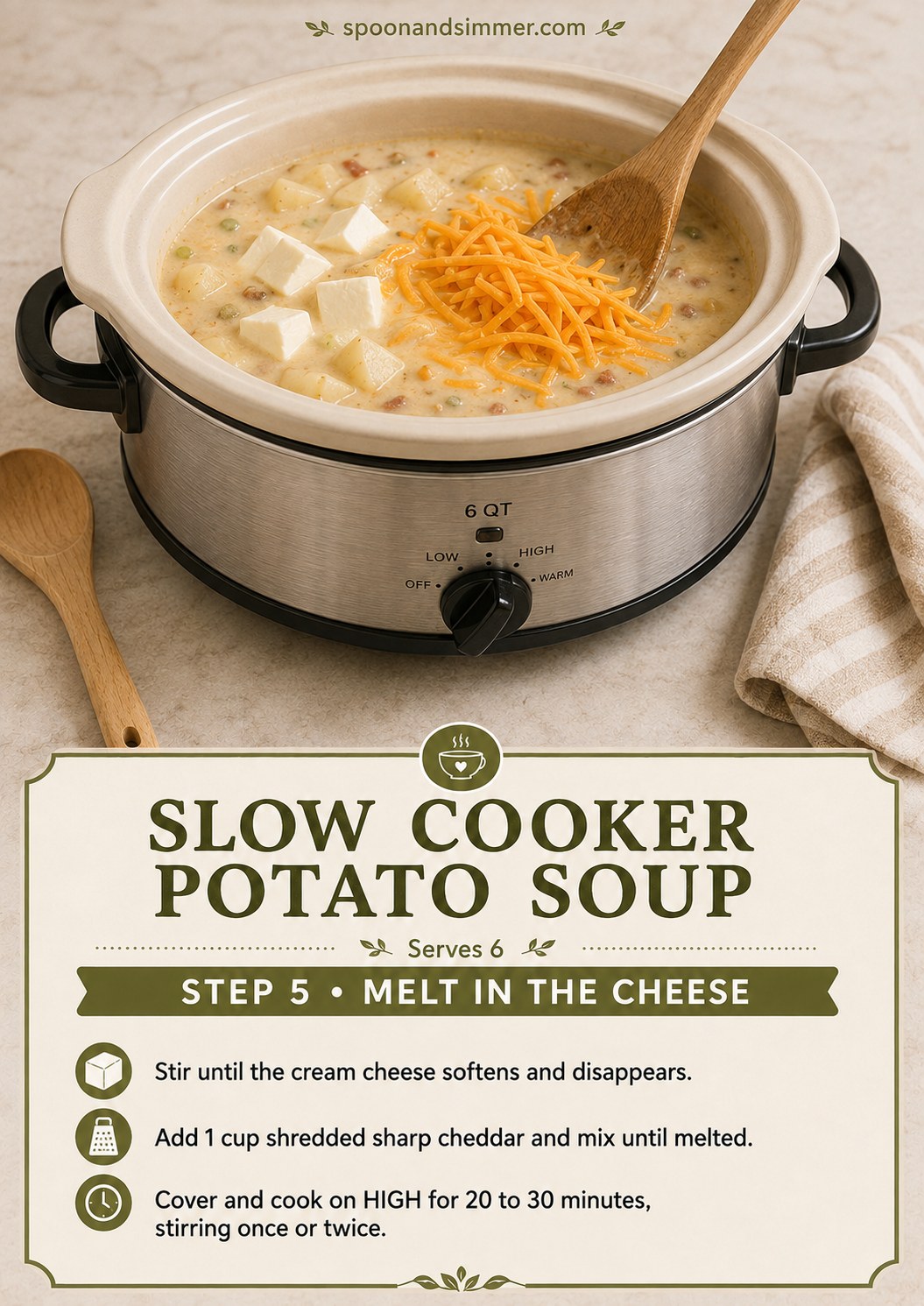
I keep stirring until the cream cheese fully softens and disappears into the broth — no white streaks left, no lumps sitting on the surface. Then in goes 1 cup shredded sharp cheddar, and I cover the cooker and switch it to HIGH for 20 to 30 minutes, stirring once or twice so nothing sticks to the bottom.
- Shred your own block cheese if you can — the anti-caking starch on pre-shredded bags is the usual reason cheese sauces turn grainy instead of silky.
- Stir gently, not vigorously, to avoid breaking the potato cubes down further than you want.
By the end of this step the soup should look exactly like the pot in this photo — pale gold, glossy, with the cheese fully folded in rather than floating on top.
The Sour Cream Finish
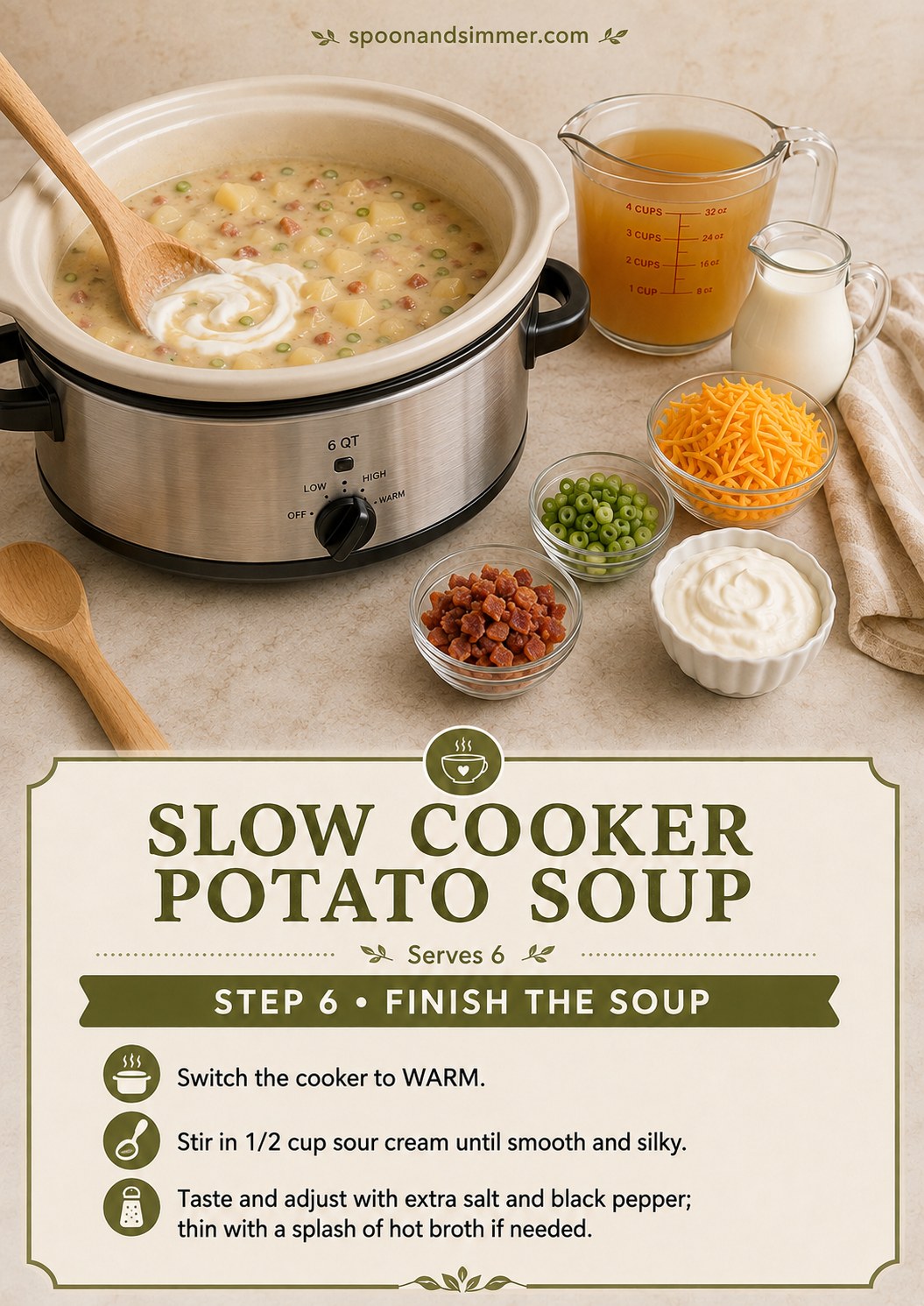
Switch the cooker to WARM before this last addition — sour cream is even more heat-sensitive than the cheese was, and simmering it can separate the whole pot in seconds. Stir in 1/2 cup sour cream until it disappears into a smooth, slightly tangy finish; you will see the surface go from matte to that glossy swirl shown in the photo.
Taste it now. This is where I add extra salt and black pepper if the broth needs it, and if the soup has thickened more than I like while sitting, a splash of hot broth loosens it right back up without watering down the flavor.
Garnishing Like It Actually Matters
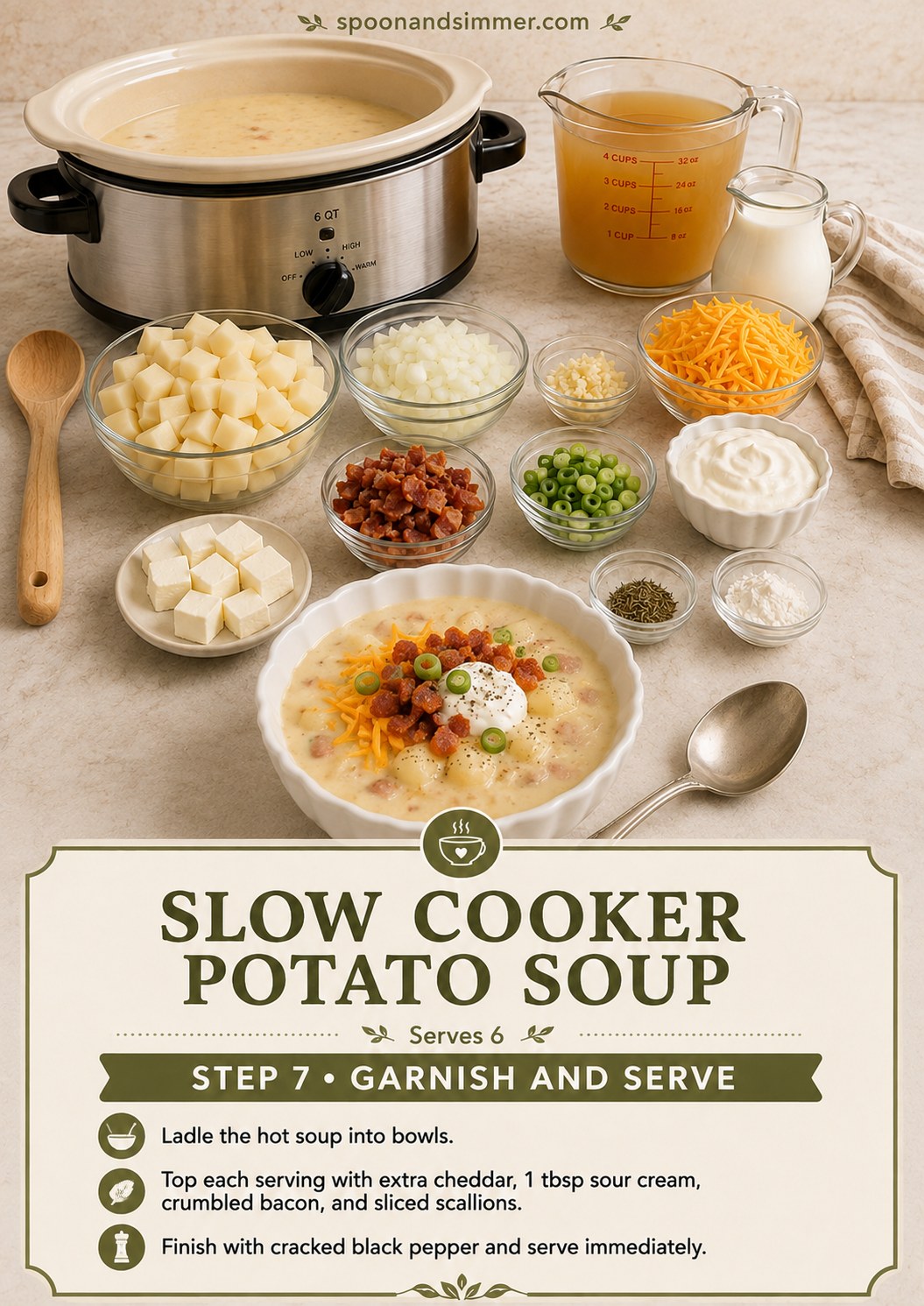
Loaded is the whole point of this soup, so I do not skimp at the bowl. Each serving gets extra shredded cheddar, a tablespoon of sour cream, crumbled bacon, and sliced scallions, finished with a crack of black pepper right at the table.
At my house this is where the negotiating starts — Leo wants triple bacon and no scallions, Ivy wants the scallions picked out entirely, and somehow everyone still calls it their favorite soup. Serve it immediately, while the cheese on top is just beginning to soften from the heat underneath.
What You End Up With
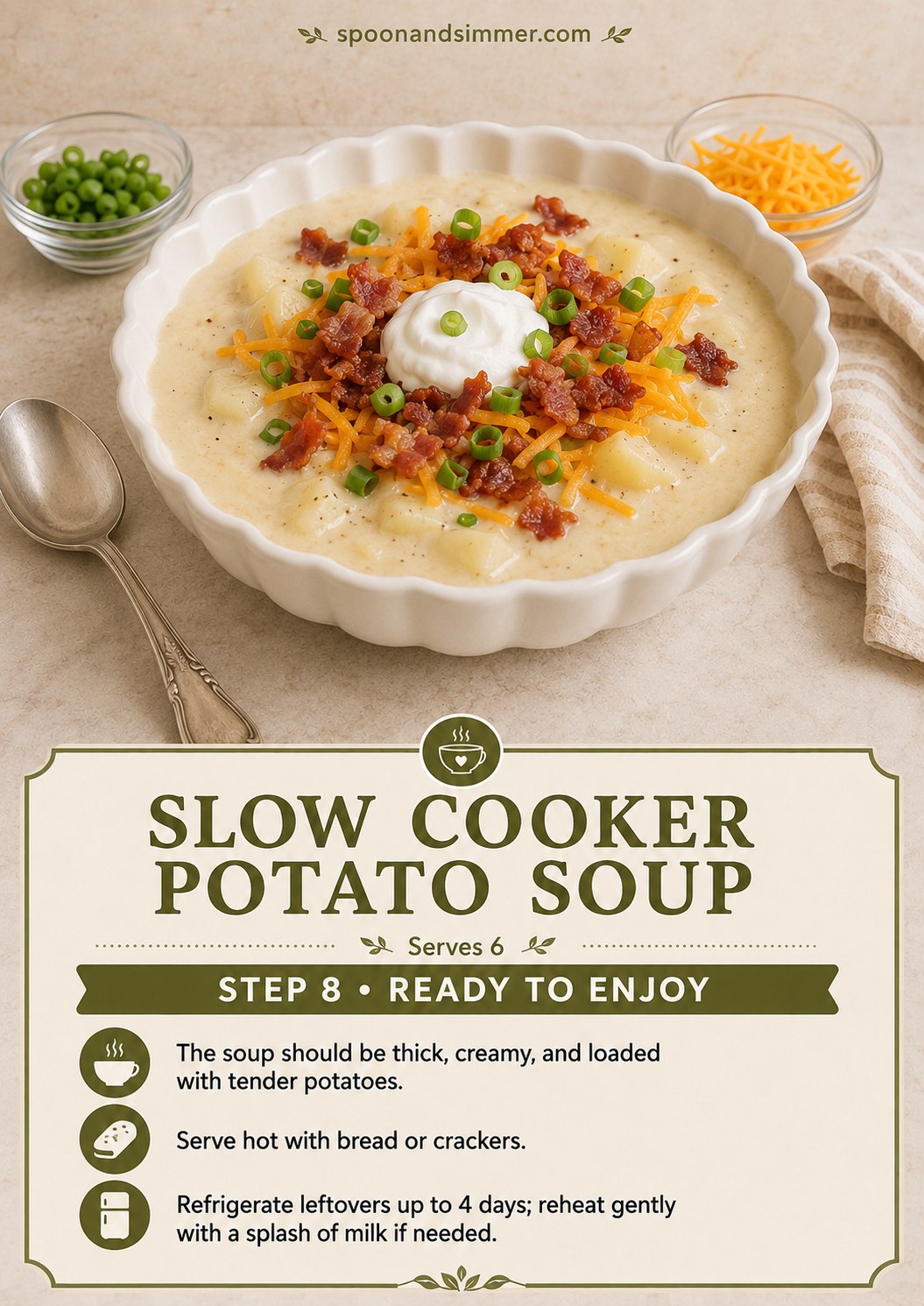
The finished bowl should be thick enough to hold its toppings without them sinking, creamy all the way through, with tender potato cubes still visible rather than fully pureed. I serve it with crusty bread or crackers for scooping up the last bit of broth.
- Storage: refrigerate leftovers up to 4 days in a sealed container
- Reheating: gently, on the stove or in the microwave, with a splash of milk stirred in to loosen the soup back to its original consistency
It reheats better than most cream-based soups I make, which is exactly why it survives leftover night at my house without complaint.
What Big Pot Night Actually Looks Like at My House
Step photos are useful, but they cannot show you what a real Tuesday in my kitchen looks like while this soup is going. So here is the unstaged version — same slow cooker, same ingredients, shot on an ordinary afternoon at my house instead of a clean studio counter. If you have ever wondered whether soup night is actually calm or just looks that way in photos, keep scrolling.
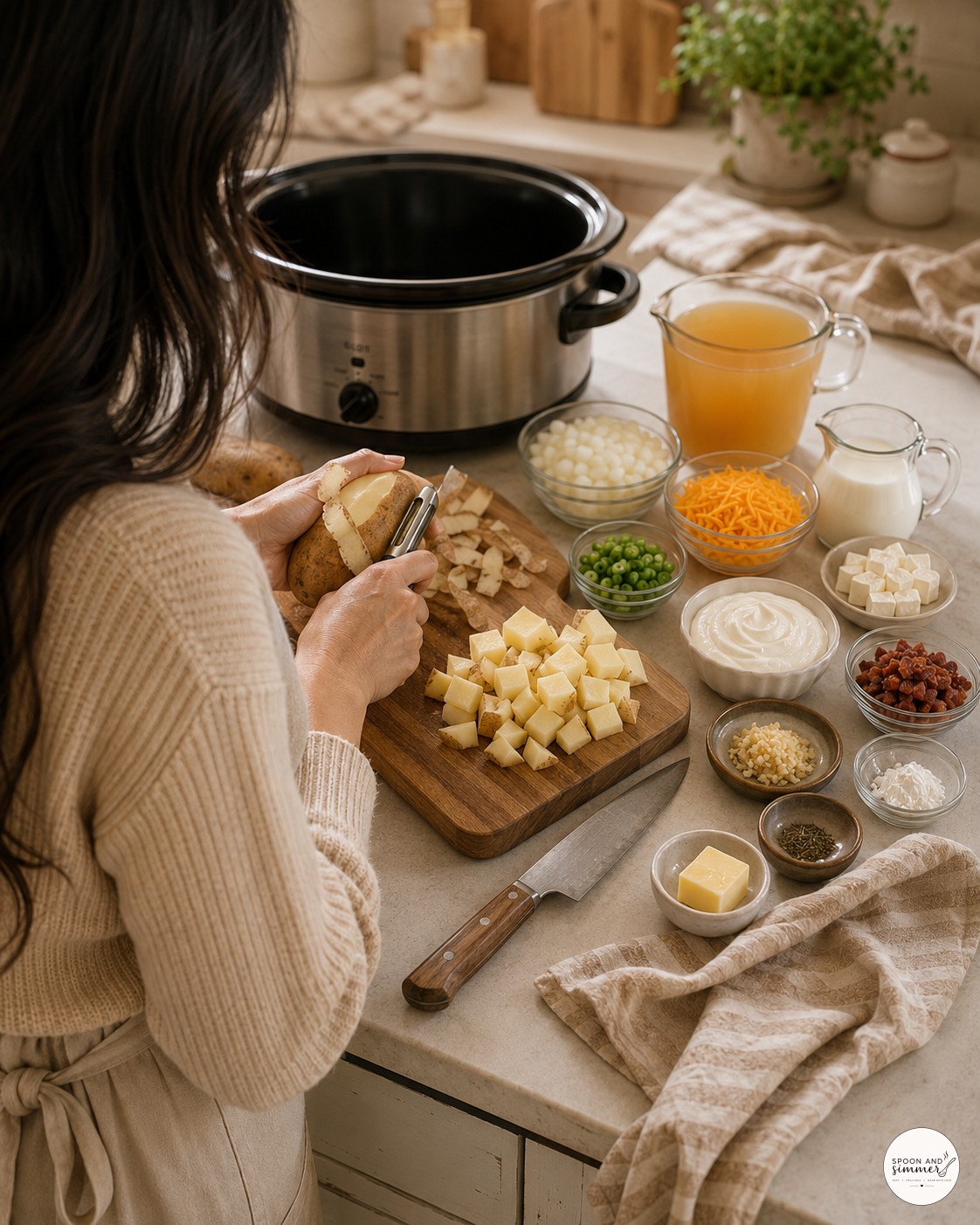
I peel potatoes over the sink so the scraps do not end up all over my cutting board, and I always dice a little bigger than I think I need because they shrink down as they cook. This is also the point where Biscuit the beagle parks himself by my feet, just in case.
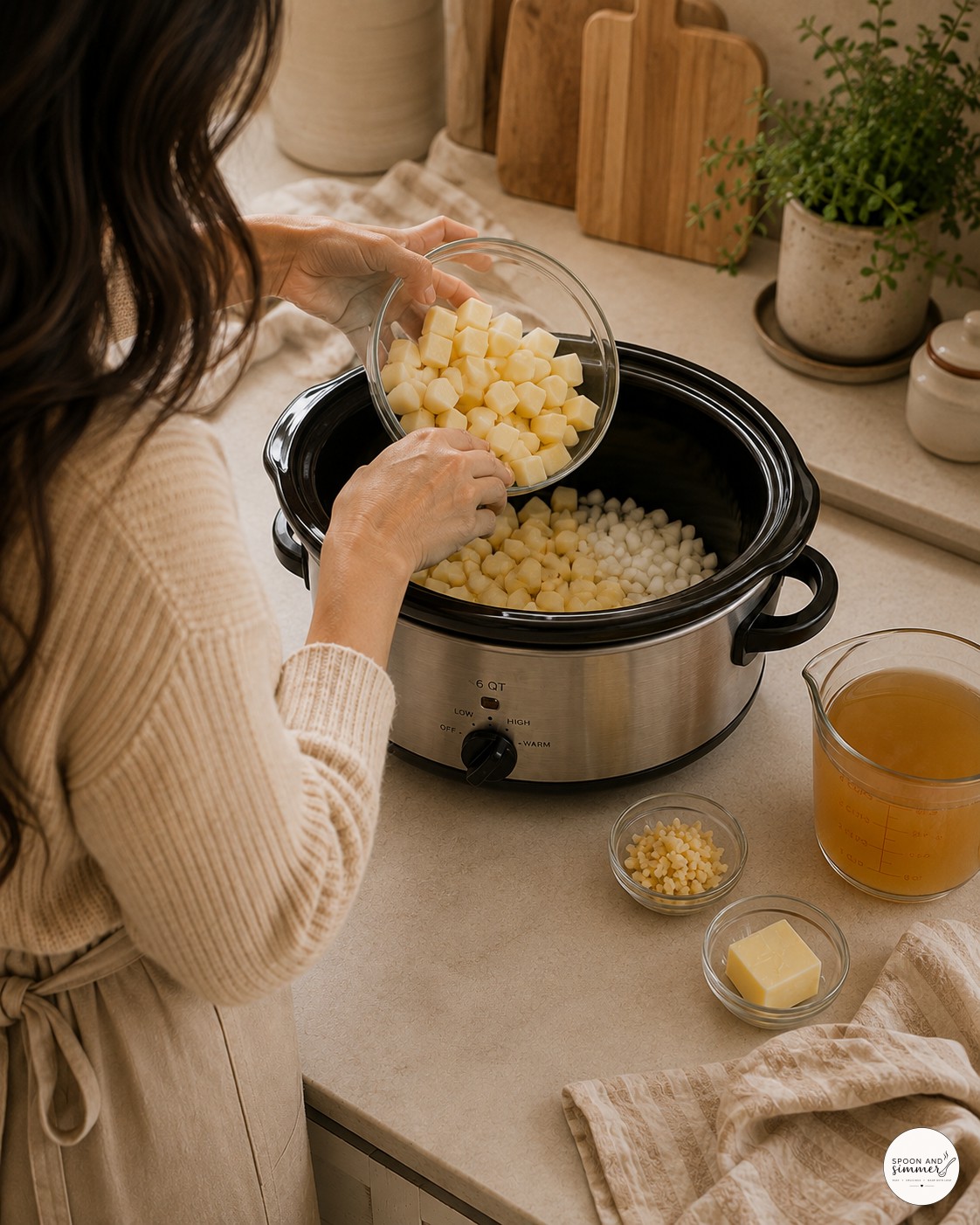
I load the diced potatoes into the insert first thing in the morning, usually before coffee, since this is the step that lets me forget about dinner for the next six hours. If I am prepping the night before, I keep the insert covered in the fridge instead of leaving it out on the counter.

I try to only lift the lid once, right around hour six, to check with a fork instead of stirring constantly out of nervous habit. The steam that escapes when you finally open it is your reminder that every peek before that was letting heat and time out.
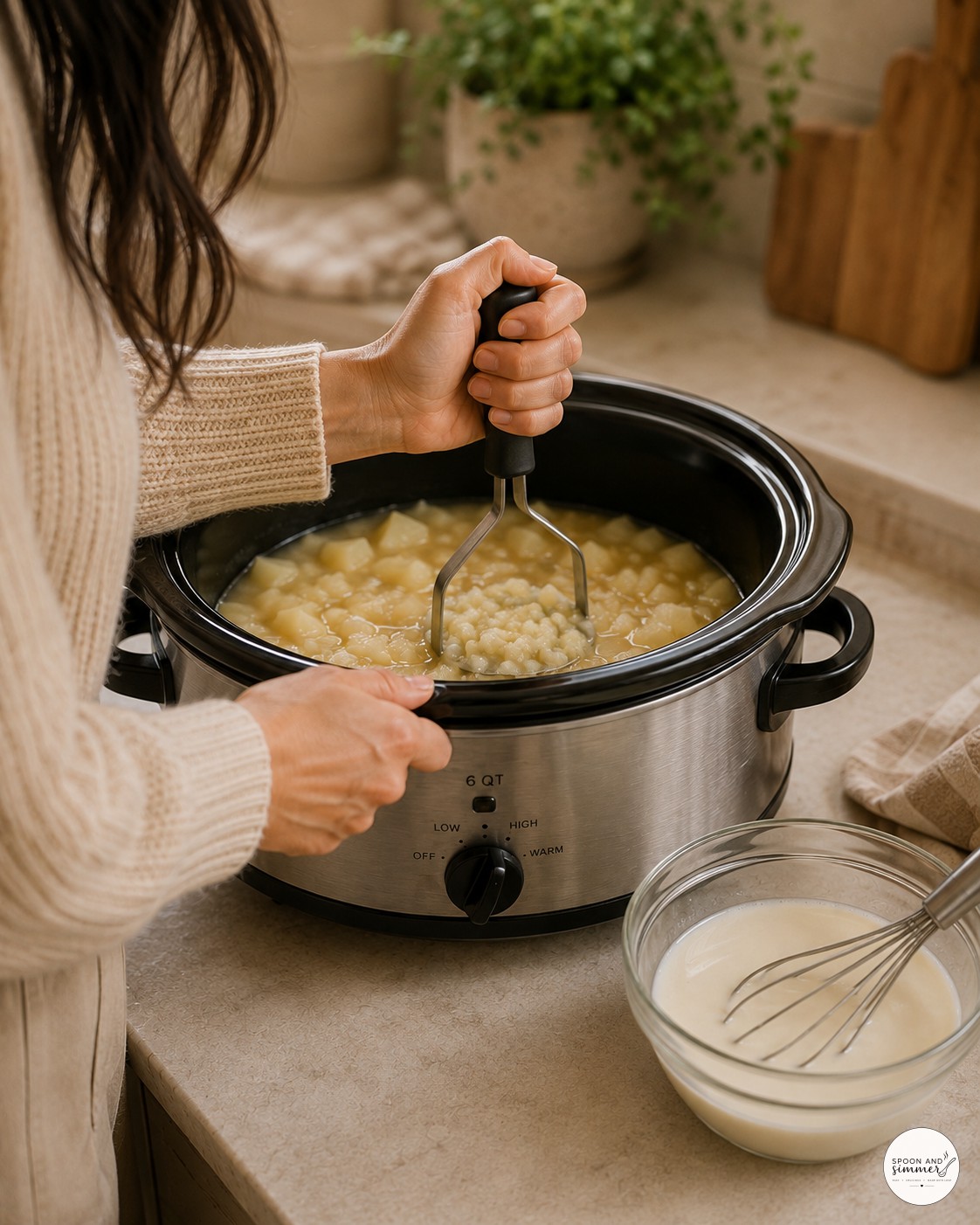
I use an old-fashioned potato masher here, not my immersion blender, because it is too easy to over-process the potatoes into paste with a blade running directly in a hot metal insert. A few firm presses is really all it takes.

This is the point in the process where my arm actually gets tired, stirring cheddar into a full six-quart pot of hot soup until every strand melts in. I usually have a true crime podcast going in the background by this stage of a Sunday prep.
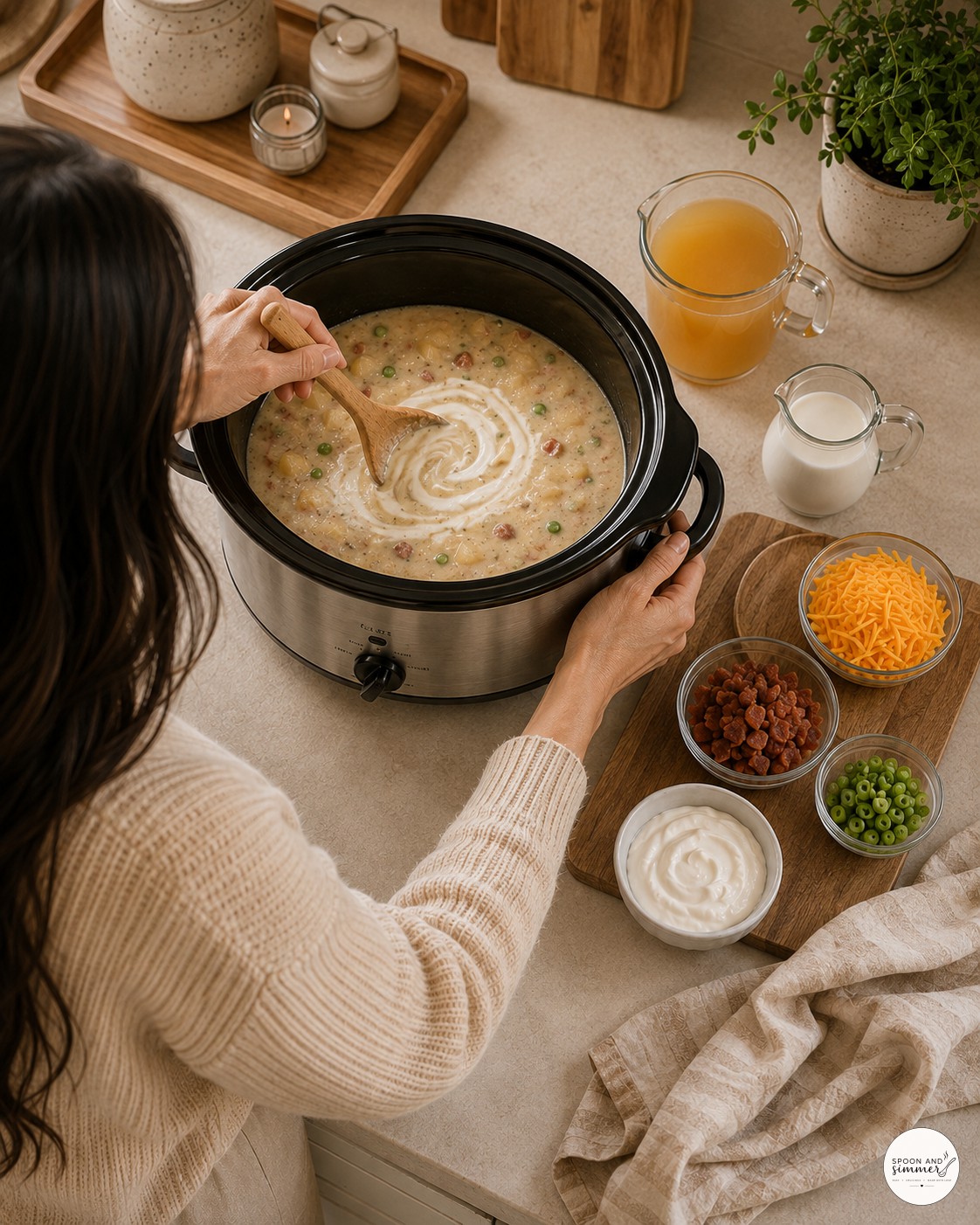
That swirl of sour cream on top only lasts a few seconds before it melts into the soup, so this is the moment I always try to catch on camera before stirring it in for real. The whole kitchen smells like bacon and thyme by now.

I crisp the bacon in the oven while the soup finishes on WARM, which means it is still warm and crackling when it lands on each bowl instead of sitting around going soft. Ladling straight from the insert keeps the potato cubes from breaking apart further.

This is usually the first bowl I actually sit down with, before anyone else is even at the table, just to taste it properly instead of standing at the counter. Dave gets the next bowl, and he is the one who tells me honestly if it needs more salt.
The Takeaway
This is the soup I make when the week has been long and everyone just needs a hot bowl with too many toppings on it. Set it up in the morning, forget about it, and by dinner the hardest decision left is how much bacon is too much bacon.

- For the soup
- For garnish


Common Questions
Can I use Yukon gold potatoes instead of russets?
You can, but the soup will be less thick since Yukon golds hold their shape and release less starch than russets. If you swap, mash a bit more of the potatoes in the mash-and-thicken step to make up the difference.
My cheese turned grainy instead of silky, what went wrong?
Almost always it is pre-shredded cheese, since the anti-caking coating resists melting smoothly, or too much direct heat. Shred a block yourself and add it after switching to a gentler stage of cooking, as I do in the melt-in-the-cheese step.
Can I freeze this soup?
I would not recommend it long-term. Cream cheese and sour cream based soups tend to separate after freezing and thawing. This one is best made for the week ahead and reheated gently with a splash of milk, refrigerated up to 4 days.